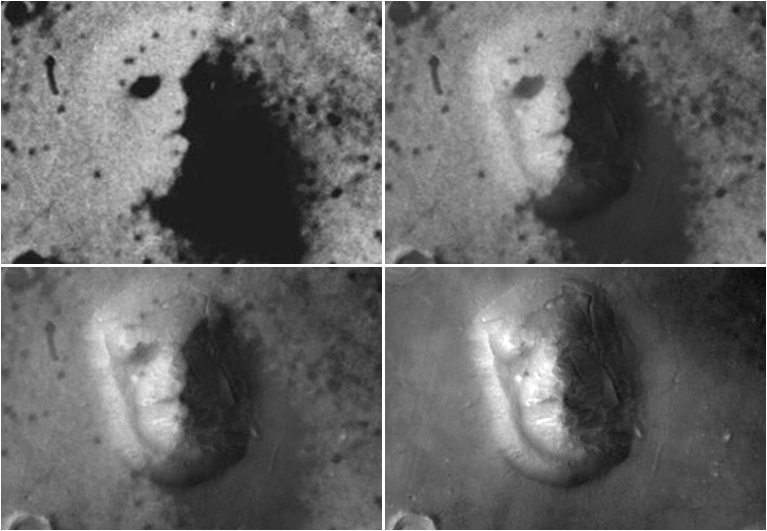
Together with Bat Boy, and Elvis the “Face on Mars” has haunted supermarket checkout Tabloids for years. NASA scientists call it merely an interesting rock formation that happens to look like a face. The faithful call it an artificial monument created by Martians as a sign, perhaps a warning, to us or other Aliens.
Where on Mars
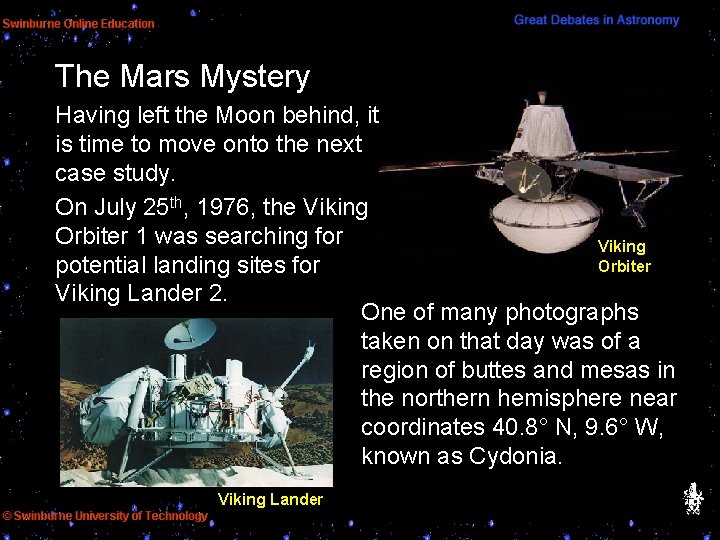
The Face is a large mountain or mesa in the Cydonia region of Mars. It is located at around the 40.8° N, 9.6° W, that’s 40.8°N of the Martian equator. Approximately 3 km long and 1.5 km wide the face was first photographed on July 25, 1976, when the Viking 1 space probe was in orbit taking pictures. The Viking 1 was snapping photos of possible landing sites for its companion ship, Viking 2 when it shot what appeared to be a giant head. The Viking spacecraft beamed the potential landing sites back to earth where NASA planners pored over the images to find a landing spot. When NASA scientists first saw the head the facial features were thought of as a neat coincidence. The decision was made to release the image in the hopes of spurring the public’s interest in Mars and space exploration in general.
Caption of JPL Viking Press Release P-17384 NATIONAL AERONAUTICS AND SPACE ADMINISTRATION VIKING NEWS CENTER PASADENA, CALIFORNIA (213) 354-6000 Viking 1-61 P-17384 (35A72) PHOTO CAPTION July 31, 1976
This picture is one of many taken in the northern latitudes of Mars by the Viking 1 Orbiter in search of a landing site for Viking 2. It shows eroded mesa-like landforms. The huge rock formation in the center, which resembles a human head, is formed by shadows giving the illusion of eyes, nose, and mouth. The feature is 1.5 kilometers (one mile) across, with the sun angle at approximately 20 degrees. The speckled appearance of the image is due to bit errors, emphasized by enlargement of the photo. The picture was taken on July 25 from a range of 1873 kilometers (1162 miles). Viking 2 will arrive in Mars orbit next Saturday (August 7) with a landing scheduled for early September.
Cydonia
Cydonia, the area of Mars where the face is located is covered with mesas that rise high in the air, the surrounding areas having been eroded by the thin Martian air, and possibly water, over billions of years. NASA Scientists saw the image as a simply a large mountain similar to mesa’s found in Arizona deserts. The low image resolution of Viking camera made the “face’s” features appear smoother than what they would be in real life. Plus the shadows give the perception of facial features. After all the brain is trained to find patterns, especially faces, in the things we see around us which is why we see things in clouds or the man on the moon. This brain’s function even has a name: pareidolia (payr.eye.DOH.lee.uh) n. The erroneous or fanciful perception of a pattern or meaning in something that is actually ambiguous or random. Finally, as talked about in the NASA caption, a bit error or a part of the image was lost in transmission appeared right where a nostril would be on a humanoid head. It is these lost “dots” or “bit errors” that give the original image a spotty appearance.
Face becomes famous
When the image was released it captured some attention but it wasn’t until the face was re-discovered three years later that it really captured the public’s imagination. Computer engineers Vincent DiPietro and Gregory Molenaar, under contract at NASA’s Goddard Space Flight Center, had been intrigued by the face and another nearby structure shaped like a pyramid, now called the D&M pyramid after its two discoverers. Poring over NASA picture archives they found 10 images taken of the face and surrounding area but only 2 where high-resolution of the face. Using a new software they had developed called SPIT (Starburst Pixel Interleave Technique) they were able to digitally enhance the images. The results of enhanced images appeared to reveal more detail of the face including, “mouth, teeth, eye sockets, eyeball and pupil, and hairline or headress, and the FACE appears to be bysymmetrical.”
The Monuments of Mars
Some of the "Monuments of Mars" see the so-called pyramid in the bottom right hand corner.
By this time public interest in the face and the potential of a lost civilization on Mars exploded. A cottage industry of books, conventions, science fiction plots about the Face on Mars quickly sprung up seemingly lead by Richard Hoagland. In his book The Monuments of Mars: A City on the Edge of Forever he talks about the face and other surrounding formations that he and others have deemed evidence of a lost civilization. Included in these other “structures” are a pyramid, fortress, ruins of a city, and much more. Fringe groups who have thought that the pyramids of Egypt and South America were either inspired by or actually built by Aliens quickly pounced on the pyramid civilization on Mars theory as proof that Aliens have visited both planets. Aerial images of the pyramid do look similar to the shots of the supposed pyramid on Mars. However, if the Face on Mars was an artificial structure why does it look straight up? The face itself is huge if you were to stand on the ground surrounding the structure you would have trouble making out the features so why would a civilization spend vast amounts of energy building something that they couldn’t even enjoy? Past civilizations on Earth have always built great monuments like this in a standing or upright sitting position i.e. Sphinx so that they could be viewed by worshippers/subjects on the ground. While Hoagland and his fellow band of believers were working themselves into a fevered pitch pointing out new artificial landmarks on the Martian landscape NASA was preparing to the next Mars visitor. The Mars Global Surveyor (MGS) began orbiting Mars on September 12, 1997, and much to the shock of the proponents of an artificial life on Mars NASA did not first go to Cydonia to re-map the Face of Mars. NASA scientists refused to acknowledge that the Face of Mars be a priority and stated something to the effect of, we’ll get around to it eventually. The public outcry was so great to revisit the Cydonia region that NASA was forced to change its timetable and agreed to re-photograph the Face of Mars and surrounding formations as soon as possible.
Picture Taken On:
July 25, 1976 as the Viking 1 space probe orbited Mars
Place:
40.8° N, 9.6° W Mars
Behind the Camera:
Viking I space probe
Picture Summary:
A mountain formation on Mars that looks like a face.
This image is in the public domain because it was taken by NASA
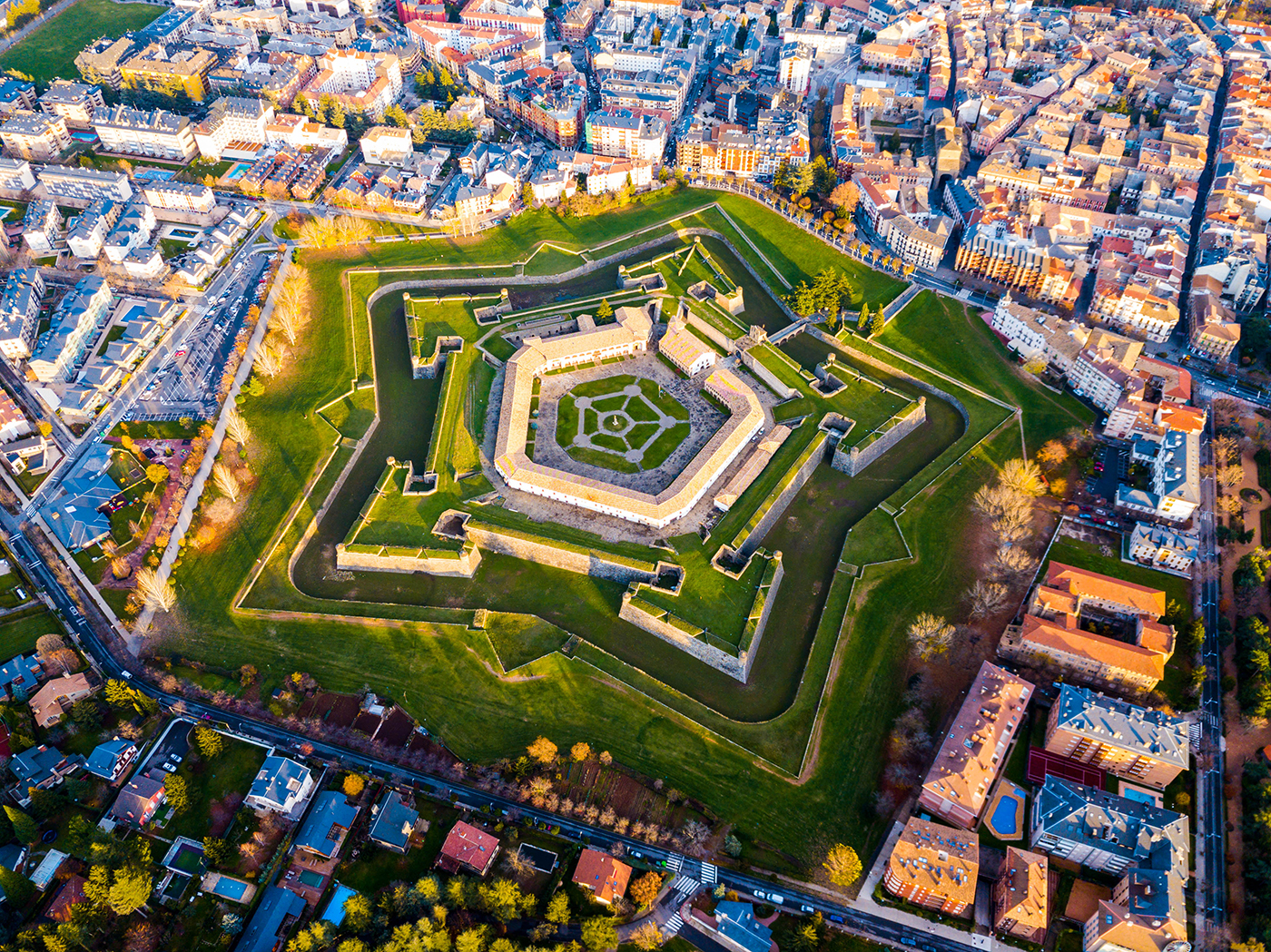
Pues sí, en la provincia de Huesca tenemos nuestro propio Péntagono, pero a diferencia del de EE.UU aquí no se localiza el departamento de Defensa de España (aunque antaño tuvo una función similar) en cambio es todo un espacio dedicado a la historia de este impresionante monumento y ocio para toda la familia con actividades muy muy divertidas.
El Castillo de San Pedro de Jaca, popularmente conocido como Ciudadela de Jaca, es una fortaleza militar construida en el siglo XVI que tiene la consideración de Bien de Interés Cultural, al amparo de lo dispuesto en la Ley 16/1985, de 25 de junio, de Patrimonio Histórico, y Decreto de 22 de abril de 1949.
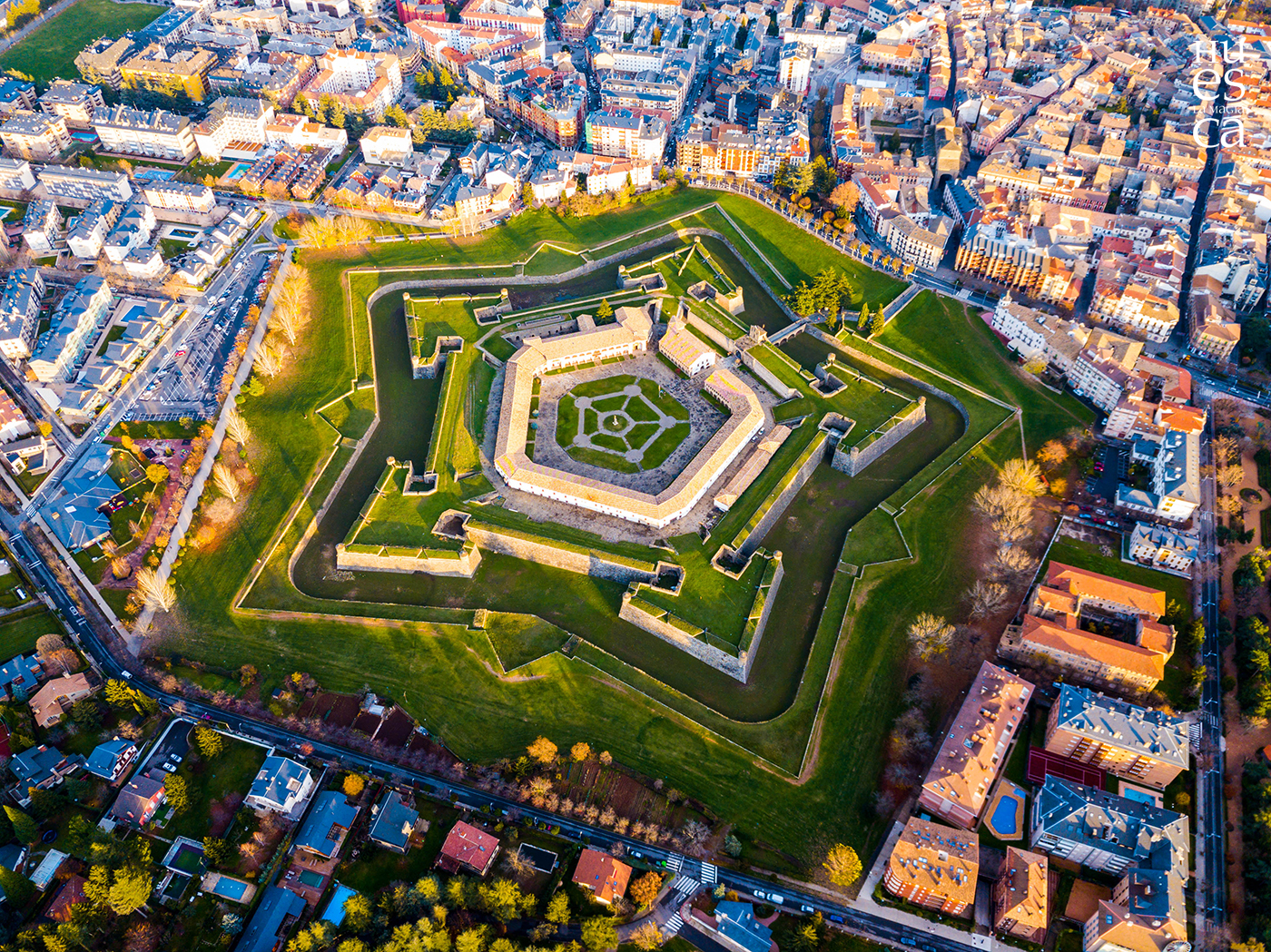
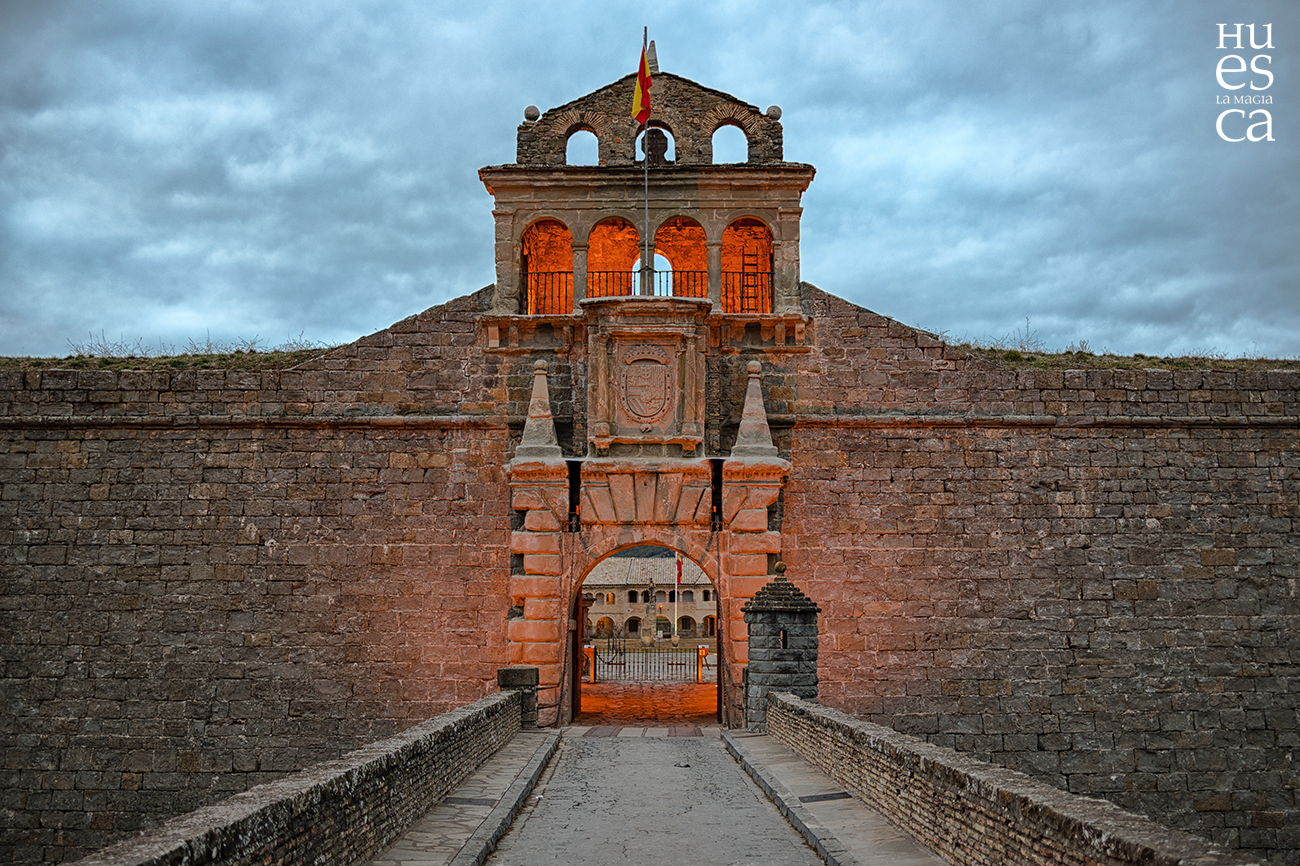
Esta fortificación, de planta pentagonal, fue construida a finales del siglo XVI (las obras se inician en 1592). Conserva todas y cada una de sus partes características: foso, baluartes, escarpas, cuarteles, polvorines, túneles… además de una hermosa entrada a la que se accede mediante un puente levadizo.
¿Cómo visitar la Ciudadela?
Visita guiada a la Ciudadela de Jaca
Visita con guía los rincones más emblemáticos de la fortaleza de la Ciudadela de Jaca con un recorrido de unos 45 minutos de duración.
Visita sin guía a la Ciudadela de Jaca, las Salas de Tropas de Montaña, la sala Premios Ejército, la sala de la batalla de Waterloo y las exposiciones temporales.
Vive una aventura histórica con Pequevisitas. Visita la Ciudadela y el Museo de Miniaturas de una manera didáctica, divertida y autoguiada, a través de dos retos.
TARIFAS
General: 3€ (no incluye entrada) Promoción con ‘Pack de Entrada‘: 2€
Visita teatralizada a la Ciudadela de Jaca. Un espectáculo que nos remonta a finales del siglo XVI, cuando Felipe II ordenó la construcción de esta fortaleza.
Visita teatralizada al Museo de Miniaturas Militares de la Ciudadela de Jaca. Un apasionante viaje a través de 32.000 figuritas, desde las civilizaciones antiguas hasta la actualidad.
Programa de educación ambiental con los ciervos de la Ciudadela, donde podrás disfrutar de la visita a ciervos de impronta humana, visita a la manada de los ciervos del foso y el visionado de un vídeo explicativo.
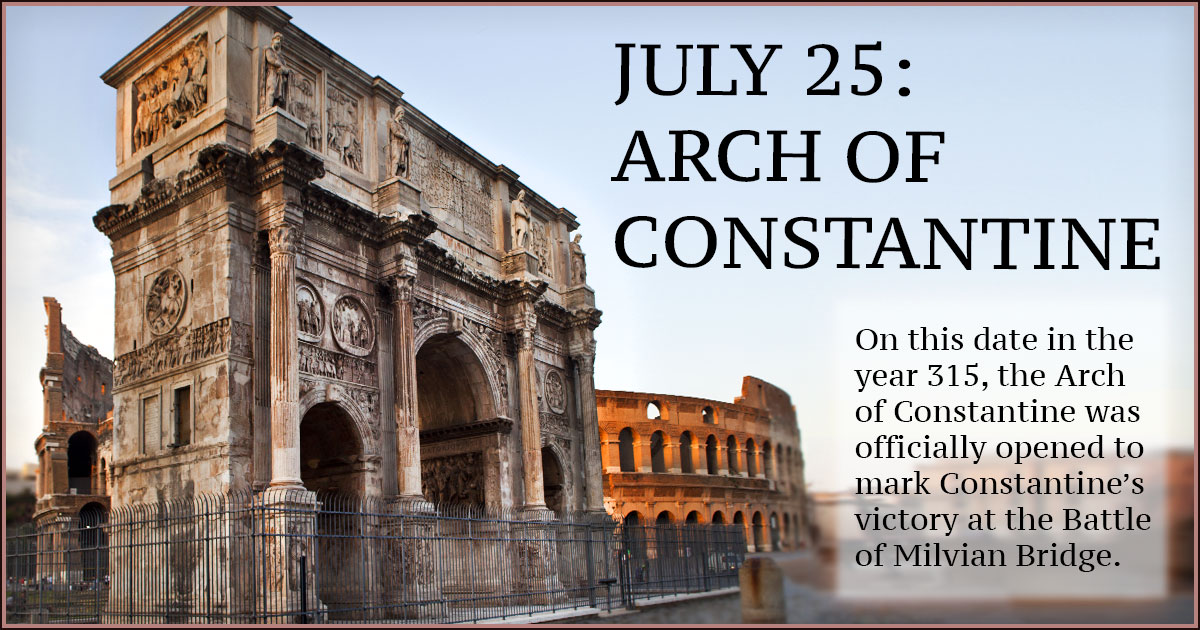
The Arch of Constantine (Italian: Arco di Costantino) is a triumphal arch in Rome dedicated to the emperor Constantine the Great. The arch was commissioned by the Roman Senate to commemorate Constantine's victory over Maxentius at the Battle of Milvian Bridge in AD 312. Situated between the Colosseum and the Palatine Hill, the arch spans the Via Triumphalis, the route taken by victorious military leaders when they entered the city in a triumphal procession. [a] Dedicated in 315, it is the largest Roman triumphal arch, with overall dimensions of 21 m (69 ft) high, 25.9 m (85 ft) wide and 7.4 m (24 ft) deep.[1] It has three bays, the central one being 11.5 m (38 ft) high and 6.5 m (21 ft) wide and the laterals 7.4 m (24 ft) by 3.4 m (11 ft) each. The arch is constructed of brick-faced concrete covered in marble.
The three bay design with detached columns was first used for the Arch of Septimius Severus in the Roman Forum (which stands at the end of the triumph route) and repeated in several other arches now lost.
Though dedicated to Constantine, much of the sculptural decoration consists of reliefs and statues removed from earlier triumphal monuments dedicated to Trajan (98–117), Hadrian (117–138) and Marcus Aurelius (161–180), with the portrait heads replaced with his own.[2]
The arch, which was constructed between 312 and 315, was dedicated by the Senate to commemorate ten years (a decennia[b]) of Constantine's reign (306–337) and his victory over the then reigning emperor Maxentius (306–312) at the Battle of Milvian Bridge on 28 October 312,[4] as described on its attic inscription,[5] and officially opened on 25 July 315. Not only did the Roman senate give the arch for Constantine's victory, they also were celebrating decennalia: a series of games that happened every decade during the Roman Empire. On these occasions they also said many prayers and renewed both spiritual and mundane vows.[6] However, Constantine had actually entered Rome on 29 October 312, amidst great rejoicing, and the Senate then commissioned the monument.[7] Constantine then left Rome within two months and did not return until 326.[8]
During the Middle Ages, the Arch of Constantine was incorporated into one of the family strongholds of ancient Rome, as shown in the painting by Herman van Swanevelt, here. Works of restoration were first carried out in the 18th century,[11][c] the last excavations have taken place in the late 1990s, just before the Great Jubilee of 2000. The arch served as the finish line for the marathon athletic event for the 1960 Summer Olympics.
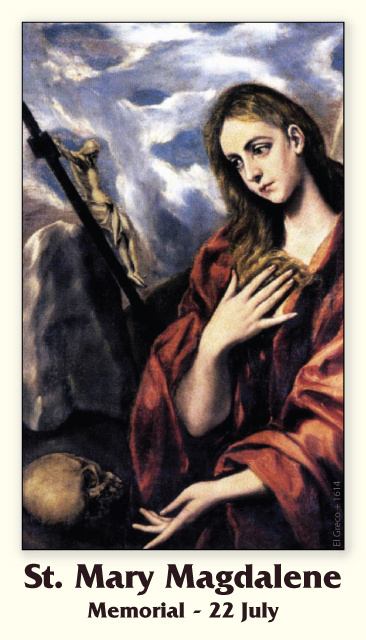
En el camino que conduce a Vézelay, la Cruz Montjoie simboliza la alegría del peregrino que ve, por primera vez, la basílica de Santa María Magdalena, siendo el punto desde el que por vez primera se divisa Santa Magdalena de Vézelay.
Construida en 1037 por Geoffroy, abad de Vézelay, que la dedicó al culto de María Magdalena, la villa se convirtió, rápidamente, en un lugar de peregrinación. La reputación de la abadía da paso a la prosperidad del pueblo contribuyendo a su desarrollo. Peregrinos como el duque de Borgoña, Hugo II y su corte, en 1084; o Bernardo de Claraval (San Bernardo) que acudió, en 1146, a predicar la segunda cruzada; también Felipe Augusto y Ricardo Corazón de León visitaron la abadía en 1191 antes de partir para la tercera cruzada; o Luis IX de Francia, en 1248, convirtieron a Vézelay en una villa que atrajo a innumerables peregrinos. En el año 1096, el abad Artaud dio comienzo a una ampliación de la abadía. Se construyeron un crucero y un coro. Las obras duraron hasta el año 1104 y sólo se conserva la nave.
En julio de 1120, la víspera de santa la estructura de la abadía se incendió y se derrumbó (causando la muerte de 1127 personas). Se construyó una nueva nave, la obra se acabó en 1138. En 1185 se empezó la construcción de un nuevo coro y un crucero de estilo gótico. En 1217 se instalaron en la abadía los franciscanos. Empezó el declive de la misma al encontrarse en Saint-Maximin-la-Sainte-Baume nuevas reliquias de santa María Magdalena. En el año 1537 la abadía se secularizó y los monjes fueron sustituidos por canónigos. En el año 1790 la abadía de María Magdalena pasó a ser una simple iglesia parroquial y, posteriormente (1796), se vendió como un bien nacional.
En 1840 se encargó la restauración del edificio original, a fin de salvarlo de la ruina, a Eugène Viollet-le-Duc, tras la inspección llevada a cabo por Prosper Mérimée. La abadía había sufrido graves daños durante las actividades de saqueo llevado a cabo por los hugonotes en 1569; las esculturas del tímpano habían sido golpeadas (1793) y, en 1819, un rayo había caído sobre la torre de San Miguel destruyéndola. La restauración concluyó en 1876, se reintegraron las reliquias de Santa María Magdalena y se restableció la peregrinación que sería paralizada, nuevamente, en 1919.
En 1920 se le otorgó, a la abadía, el rango de basílica y el peregrinaje volvió a recomenzar. Finalmente, en 1979, la basílica y la colina de Vézelay fueron declaradas Patrimonio de la Humanidad por la Unesco. Fue elegida por el chelista Mstislav Rostropóvich para la grabación en video de su interpretación de las seis suites de Johann Sebastian Bach para violonchelo solo en 1991.
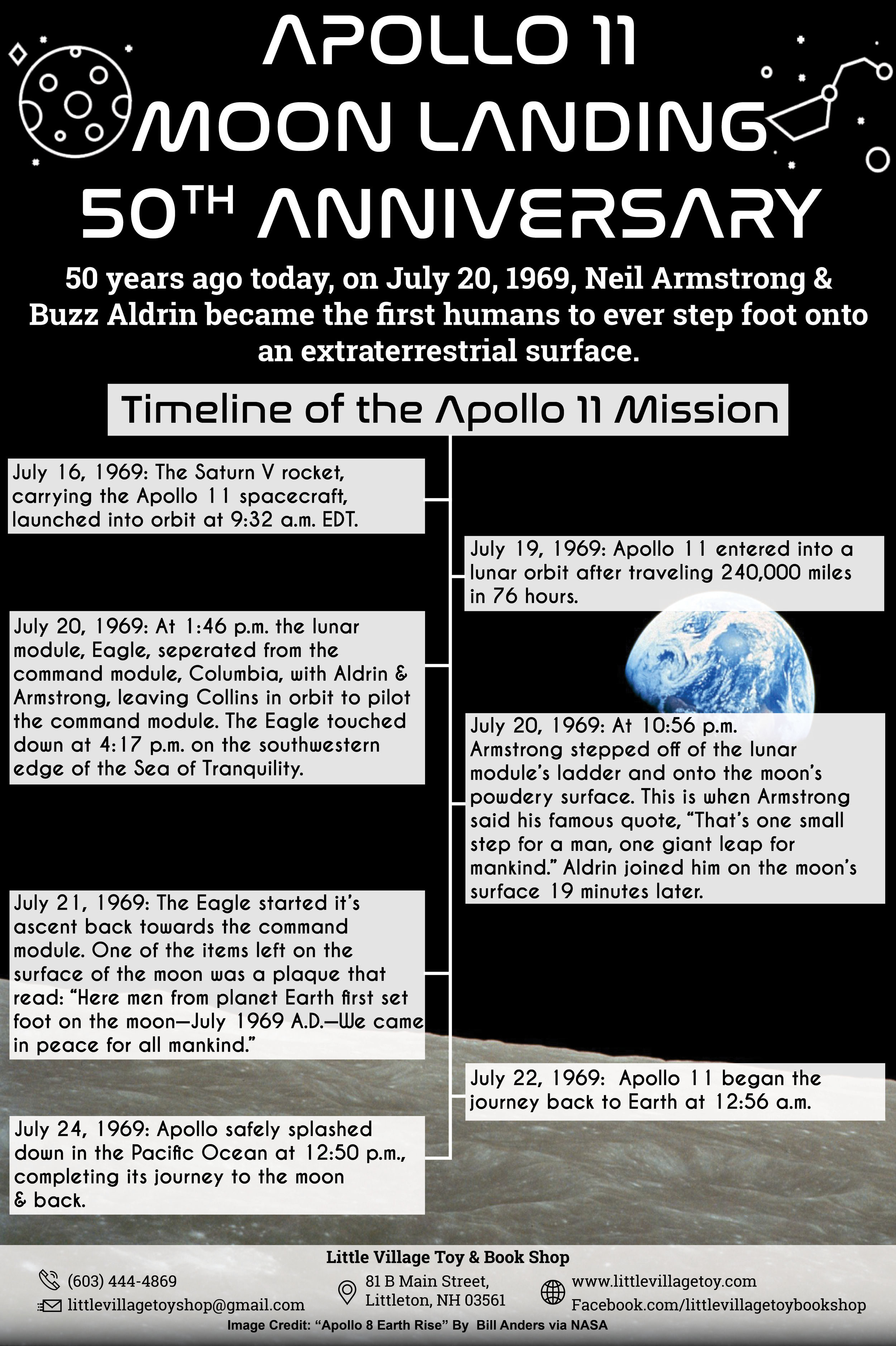
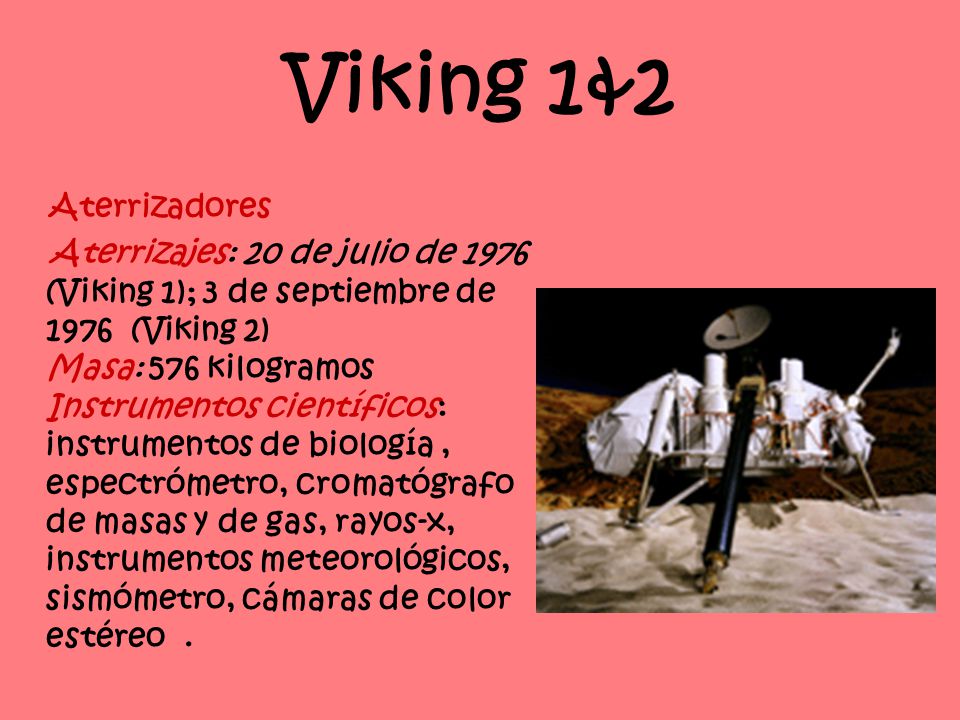
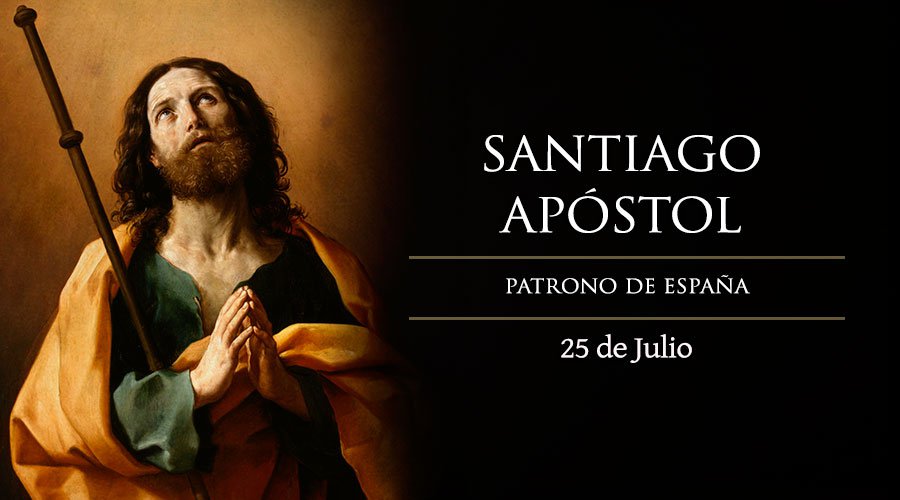
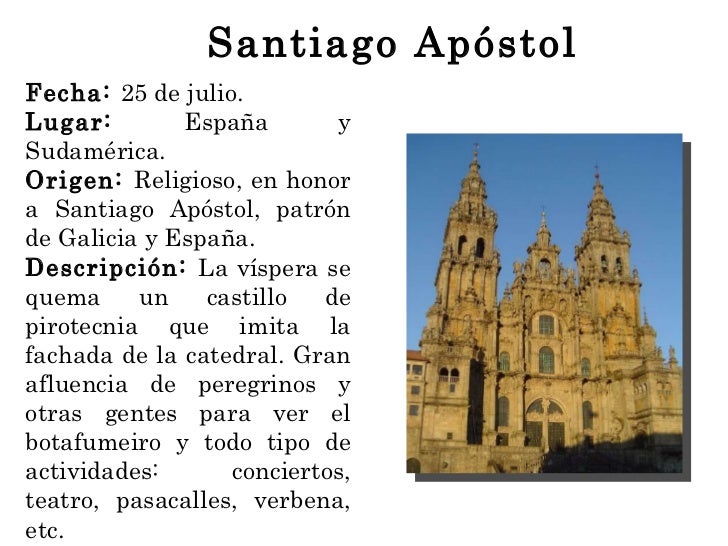
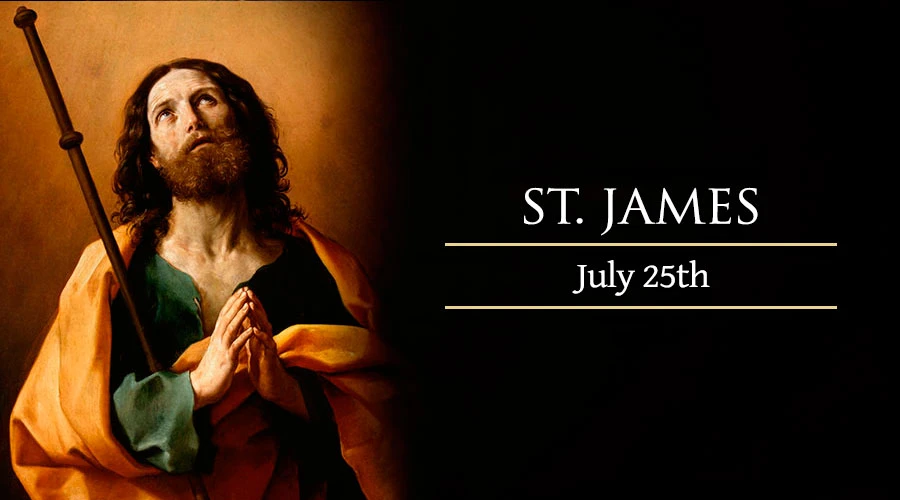
Modo IA Todo Imágenes Vídeos Noticias Maps Shopping Libros Vuelos Finance La densa red de conexiones que mencionás forma parte de una corriente de pensamiento conocida como sincromisticismo o teorías de historia alternativa esotérica (popularizadas por autores como Richard C. Hoagland o Goro Adachi). Estas teorías conectan hitos de la carrera espacial de la NASA con la astronomía, la mitología antigua y fechas clave de la historia geopolítica a través de la numerología y el simbolismo. A continuación, se desglosa cómo se entrelazan estos elementos dentro de ese contexto específico: 1. El 25 de julio: Viking 1 y el Camino de Santiago Viking 1 y la "Cara de Marte": El 25 de julio de 1976, la sonda orbital Viking 1 de la NASA tomó la icónica y polémica fotografía en la región de Cydonia que parecía mostrar una cara humana grabada en el suelo marciano. El Camino de Santiago: El 25 de julio es el Día de Santiago Apóstol, patrono de España y figura central del Camino de Santiago. Tradicionalmente, la ruta terrestre del Camino de Santiago está vinculada de forma simbólica en el firmamento con la Vía Láctea, a la cual a menudo se le llama popularmente el "Camino de Santiago" en la astronomía cultural española. El término Compostela se suele interpretar esotéricamente como Campus Stellae ("Campo de la Estrella"). Internet Archive +2 2. La Cruz del Norte (Cygnus) y el Apolo 11 La Constelación de Cygnus: En el cielo nocturno del verano boreal (julio), la constelación de Cygnus (el Cisne), conocida como la Cruz del Norte, se encuentra en su punto más alto justo sobre el arco de la Vía Láctea (el Camino de Santiago celeste). Apolo 11: La histórica misión que llevó al ser humano a la Luna se desarrolló entre el 16 de julio y el 24 de julio de 1969. Quienes siguen estas corrientes sincromísticas argumentan que la misión concluyó justo en la víspera del 25 de julio para alinearse simbólicamente con el simbolismo estelar del "retorno" o el cruce de portales cósmicos personificados por la Cruz del Norte y el apóstol viajero. 3. El Caballo de Troya y el Apolo 11 En los análisis esotéricos de la carrera espacial, las naves de la NASA (como los módulos del Apolo 11 o las sondas Viking) son conceptualizadas metafóricamente como "Caballos de Troya" tecnológicos. Bajo esta narrativa, estos vehículos no eran meras misiones de exploración científica, sino "ofrendas" o herramientas diseñadas para sembrar o reactivar influencias arqueoastronómicas en otros cuerpos celestes (la Luna y Marte), ocultando intenciones rituales o mensajes codificados bajo una fachada puramente técnica. 4. El "9/11 chileno" (11 de septiembre de 1973) y Santiago El nexo del nombre: El golpe de Estado en Chile ocurrió el 11 de septiembre de 1973 en su ciudad capital, Santiago de Chile. Los teóricos sincromísticos asocian inmediatamente el nombre de la ciudad con el mismo Santiago Apóstol y su día (25 de julio). La conexión Apolo 11 y el número 11: El número 11 actúa como el gran conector numerológico en este entramado. Se resalta la coincidencia del Apolo 11, el día del golpe de Estado (11 de septiembre), y la fecha en que la sonda Viking 1 en Marte finalmente dejó de operar tras enviar un comando erróneo: el 11 de noviembre de 1982 (11/11). Para el sincromisticismo, estas reiteraciones del número 11 junto a la palabra "Santiago" (la capital chilena, el camino de estrellas, el guerrero espiritual) representan la manifestación de un mismo patrón geométrico y arquetípico a lo largo del tiempo y el espacio. En resumen, dentro de este contexto esotérico, la conexión une a Santiago (el Apóstol/la ciudad) con el Camino de Estrellas (Vía Láctea/Cygnus), sirviendo de escenario temporal y geométrico para que misiones como el Apolo 11 y el Viking 1 (la Cara de Marte) actúen como "Caballos de Troya" simbólicos, cuyos ecos numéricos y conceptuales (el número 11) se reflejan en eventos políticos de alto impacto como el 11 de septiembre en Santiago de Chile. NASA Science (.gov) +3 ¿Te gustaría profundizar en el análisis de alguno de estos puntos en particular, como el simbolismo astronómico de la constelación de Cygnus o la historia de la Cara de Marte de la Viking 1? The dense network of connections you mention is part of a current of thought known as synchromysticism or esoteric alternative history theories (popularized by authors like Richard C. Hoagland or Goro Adachi). These theories connect milestones of NASA's space race with astronomy, ancient mythology, and key dates in geopolitical history through numerology and symbolism. Here is how these elements intertwine within that specific context: 1. July 25th: Viking 1 and the Camino de Santiago Viking 1 and the "Face on Mars": On July 25, 1976, NASA's Viking 1 orbiter took the iconic and controversial photograph in the Cydonia region that appeared to show a human face carved into the Martian soil. The Camino de Santiago: July 25th is the Feast of Saint James the Apostle, the patron saint of Spain and the central figure of the Camino de Santiago (the Way of Saint James). Traditionally, the terrestrial route of the Camino de Santiago is symbolically linked in the sky with the Milky Way, which is often popularly referred to as the "Camino de Santiago" in Spanish cultural astronomy. The term Compostela is often esoterically interpreted as Campus Stellae ("Field of the Star"). 2. The Northern Cross (Cygnus) and Apollo 11 The Constellation of Cygnus: In the night sky of the northern summer (July), the constellation of Cygnus (the Swan), known as the Northern Cross, is at its highest point right above the arc of the Milky Way (the celestial Camino de Santiago). Apollo 11: The historic mission that landed humans on the Moon took place between July 16 and July 24, 1969. Those who follow these synchromystic currents argue that the mission concluded precisely on the eve of July 25th to symbolically align with the stellar symbolism of the "return" or the crossing of cosmic portals personified by the Northern Cross and the traveling apostle. 3. The Trojan Horse and Apollo 11 In esoteric analyses of the space race, NASA spacecraft (such as the Apollo 11 modules or the Viking probes) are metaphorically conceptualized as technological "Trojan Horses." Under this narrative, these vehicles were not merely scientific exploration missions, but "offerings" or tools designed to sow or reactivate archaeoastronomical influences on other celestial bodies (the Moon and Mars), hiding ritual intentions or encoded messages under a purely technical facade. 4. The "Chilean 9/11" (September 11, 1973) and Santiago The Name Nexus: The coup d'état in Chile occurred on September 11, 1973, in its capital city, Santiago de Chile. Synchromystic theorists immediately associate the name of the city with Saint James (Santiago) the Apostle and his feast day (July 25th). The Apollo 11 Connection and the Number 11: The number 11 acts as the great numerological connector in this framework. Proponents highlight the coincidence of Apollo 11, the day of the coup d'état (September 11), and the date when the Viking 1 lander on Mars finally stopped operating after sending an erroneous command: November 11, 1982 (11/11). For synchromysticism, these iterations of the number 11 alongside the word "Santiago" (the Chilean capital, the path of stars, the spiritual warrior) represent the manifestation of the same geometric and archetypal pattern across time and space. In summary, within this esoteric context, the connection links Santiago (the Apostle/the city) with the Path of Stars (Milky Way/Cygnus), serving as the temporal and geometric stage for missions like Apollo 11 and Viking 1 (the Face on Mars) to act as symbolic "Trojan Horses," whose numerical and conceptual echoes (the number 11) are reflected in high-impact political events such as September 11th in Santiago de Chile. Would you like to delve deeper into any specific point, such as the astronomical symbolism of the Cygnus constellation or the history surrounding the Viking 1 Face on Mars? La respuesta del Modo IA está lista
Modo IA Todo Imágenes Vídeos Noticias Maps Shopping Libros Vuelos Finance La densa red de conexiones que mencionás forma parte de una corriente de pensamiento conocida como sincromisticismo o teorías de historia alternativa esotérica (popularizadas por autores como Richard C. Hoagland o Goro Adachi). Estas teorías conectan hitos de la carrera espacial de la NASA con la astronomía, la mitología antigua y fechas clave de la historia geopolítica a través de la numerología y el simbolismo. A continuación, se desglosa cómo se entrelazan estos elementos dentro de ese contexto específico: 1. El 25 de julio: Viking 1 y el Camino de Santiago Viking 1 y la "Cara de Marte": El 25 de julio de 1976, la sonda orbital Viking 1 de la NASA tomó la icónica y polémica fotografía en la región de Cydonia que parecía mostrar una cara humana grabada en el suelo marciano. El Camino de Santiago: El 25 de julio es el Día de Santiago Apóstol, patrono de España y figura central del Camino de Santiago. Tradicionalmente, la ruta terrestre del Camino de Santiago está vinculada de forma simbólica en el firmamento con la Vía Láctea, a la cual a menudo se le llama popularmente el "Camino de Santiago" en la astronomía cultural española. El término Compostela se suele interpretar esotéricamente como Campus Stellae ("Campo de la Estrella"). Internet Archive +2 2. La Cruz del Norte (Cygnus) y el Apolo 11 La Constelación de Cygnus: En el cielo nocturno del verano boreal (julio), la constelación de Cygnus (el Cisne), conocida como la Cruz del Norte, se encuentra en su punto más alto justo sobre el arco de la Vía Láctea (el Camino de Santiago celeste). Apolo 11: La histórica misión que llevó al ser humano a la Luna se desarrolló entre el 16 de julio y el 24 de julio de 1969. Quienes siguen estas corrientes sincromísticas argumentan que la misión concluyó justo en la víspera del 25 de julio para alinearse simbólicamente con el simbolismo estelar del "retorno" o el cruce de portales cósmicos personificados por la Cruz del Norte y el apóstol viajero. 3. El Caballo de Troya y el Apolo 11 En los análisis esotéricos de la carrera espacial, las naves de la NASA (como los módulos del Apolo 11 o las sondas Viking) son conceptualizadas metafóricamente como "Caballos de Troya" tecnológicos. Bajo esta narrativa, estos vehículos no eran meras misiones de exploración científica, sino "ofrendas" o herramientas diseñadas para sembrar o reactivar influencias arqueoastronómicas en otros cuerpos celestes (la Luna y Marte), ocultando intenciones rituales o mensajes codificados bajo una fachada puramente técnica. 4. El "9/11 chileno" (11 de septiembre de 1973) y Santiago El nexo del nombre: El golpe de Estado en Chile ocurrió el 11 de septiembre de 1973 en su ciudad capital, Santiago de Chile. Los teóricos sincromísticos asocian inmediatamente el nombre de la ciudad con el mismo Santiago Apóstol y su día (25 de julio). La conexión Apolo 11 y el número 11: El número 11 actúa como el gran conector numerológico en este entramado. Se resalta la coincidencia del Apolo 11, el día del golpe de Estado (11 de septiembre), y la fecha en que la sonda Viking 1 en Marte finalmente dejó de operar tras enviar un comando erróneo: el 11 de noviembre de 1982 (11/11). Para el sincromisticismo, estas reiteraciones del número 11 junto a la palabra "Santiago" (la capital chilena, el camino de estrellas, el guerrero espiritual) representan la manifestación de un mismo patrón geométrico y arquetípico a lo largo del tiempo y el espacio. En resumen, dentro de este contexto esotérico, la conexión une a Santiago (el Apóstol/la ciudad) con el Camino de Estrellas (Vía Láctea/Cygnus), sirviendo de escenario temporal y geométrico para que misiones como el Apolo 11 y el Viking 1 (la Cara de Marte) actúen como "Caballos de Troya" simbólicos, cuyos ecos numéricos y conceptuales (el número 11) se reflejan en eventos políticos de alto impacto como el 11 de septiembre en Santiago de Chile. NASA Science (.gov) +3 ¿Te gustaría profundizar en el análisis de alguno de estos puntos en particular, como el simbolismo astronómico de la constelación de Cygnus o la historia de la Cara de Marte de la Viking 1? The dense network of connections you mention is part of a current of thought known as synchromysticism or esoteric alternative history theories (popularized by authors like Richard C. Hoagland or Goro Adachi). These theories connect milestones of NASA's space race with astronomy, ancient mythology, and key dates in geopolitical history through numerology and symbolism. Here is how these elements intertwine within that specific context: 1. July 25th: Viking 1 and the Camino de Santiago Viking 1 and the "Face on Mars": On July 25, 1976, NASA's Viking 1 orbiter took the iconic and controversial photograph in the Cydonia region that appeared to show a human face carved into the Martian soil. The Camino de Santiago: July 25th is the Feast of Saint James the Apostle, the patron saint of Spain and the central figure of the Camino de Santiago (the Way of Saint James). Traditionally, the terrestrial route of the Camino de Santiago is symbolically linked in the sky with the Milky Way, which is often popularly referred to as the "Camino de Santiago" in Spanish cultural astronomy. The term Compostela is often esoterically interpreted as Campus Stellae ("Field of the Star"). 2. The Northern Cross (Cygnus) and Apollo 11 The Constellation of Cygnus: In the night sky of the northern summer (July), the constellation of Cygnus (the Swan), known as the Northern Cross, is at its highest point right above the arc of the Milky Way (the celestial Camino de Santiago). Apollo 11: The historic mission that landed humans on the Moon took place between July 16 and July 24, 1969. Those who follow these synchromystic currents argue that the mission concluded precisely on the eve of July 25th to symbolically align with the stellar symbolism of the "return" or the crossing of cosmic portals personified by the Northern Cross and the traveling apostle. 3. The Trojan Horse and Apollo 11 In esoteric analyses of the space race, NASA spacecraft (such as the Apollo 11 modules or the Viking probes) are metaphorically conceptualized as technological "Trojan Horses." Under this narrative, these vehicles were not merely scientific exploration missions, but "offerings" or tools designed to sow or reactivate archaeoastronomical influences on other celestial bodies (the Moon and Mars), hiding ritual intentions or encoded messages under a purely technical facade. 4. The "Chilean 9/11" (September 11, 1973) and Santiago The Name Nexus: The coup d'état in Chile occurred on September 11, 1973, in its capital city, Santiago de Chile. Synchromystic theorists immediately associate the name of the city with Saint James (Santiago) the Apostle and his feast day (July 25th). The Apollo 11 Connection and the Number 11: The number 11 acts as the great numerological connector in this framework. Proponents highlight the coincidence of Apollo 11, the day of the coup d'état (September 11), and the date when the Viking 1 lander on Mars finally stopped operating after sending an erroneous command: November 11, 1982 (11/11). For synchromysticism, these iterations of the number 11 alongside the word "Santiago" (the Chilean capital, the path of stars, the spiritual warrior) represent the manifestation of the same geometric and archetypal pattern across time and space. In summary, within this esoteric context, the connection links Santiago (the Apostle/the city) with the Path of Stars (Milky Way/Cygnus), serving as the temporal and geometric stage for missions like Apollo 11 and Viking 1 (the Face on Mars) to act as symbolic "Trojan Horses," whose numerical and conceptual echoes (the number 11) are reflected in high-impact political events such as September 11th in Santiago de Chile. Would you like to delve deeper into any specific point, such as the astronomical symbolism of the Cygnus constellation or the history surrounding the Viking 1 Face on Mars? La respuesta del Modo IA está lista

 Tema anterior




 This image is in the public domain because it was taken by NASA


_-_South_side,_from_Via_triumphalis.jpg)

























_-_2021-05-17_-_2.jpg)
.svg)