|
|
General: SACRED GEOMETRY, TETRACTYS (YHWH), DOLLAR BILL, SEED OF LIFE, FREEMASONRY, ETC
Elegir otro panel de mensajes |
|
|
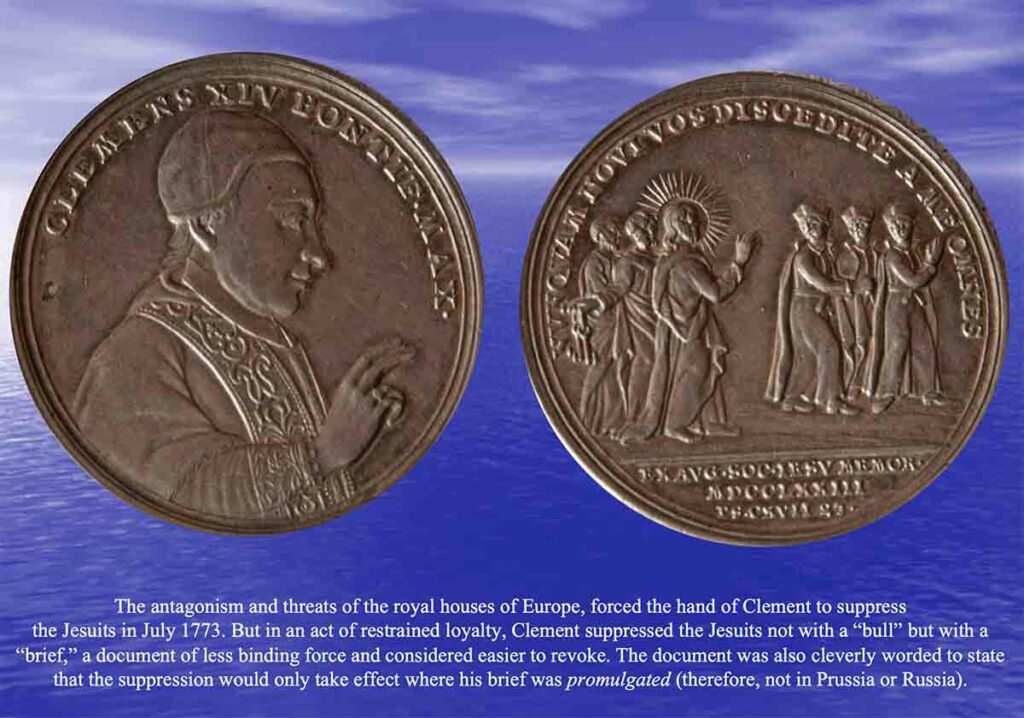
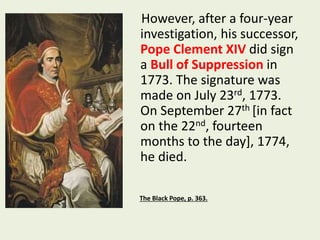
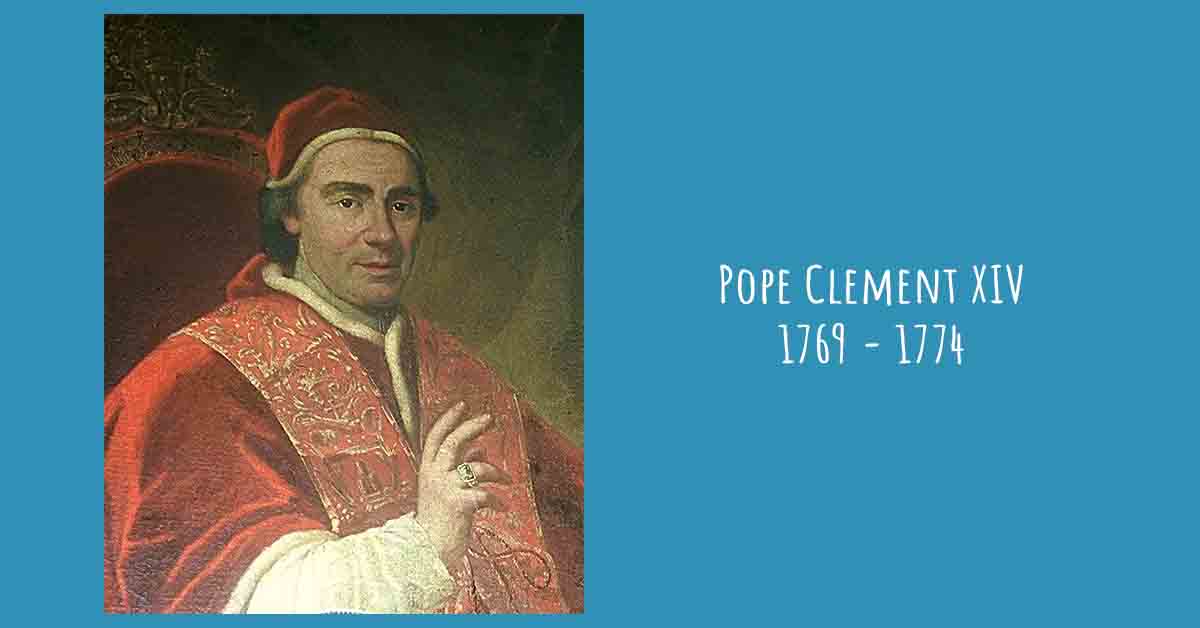
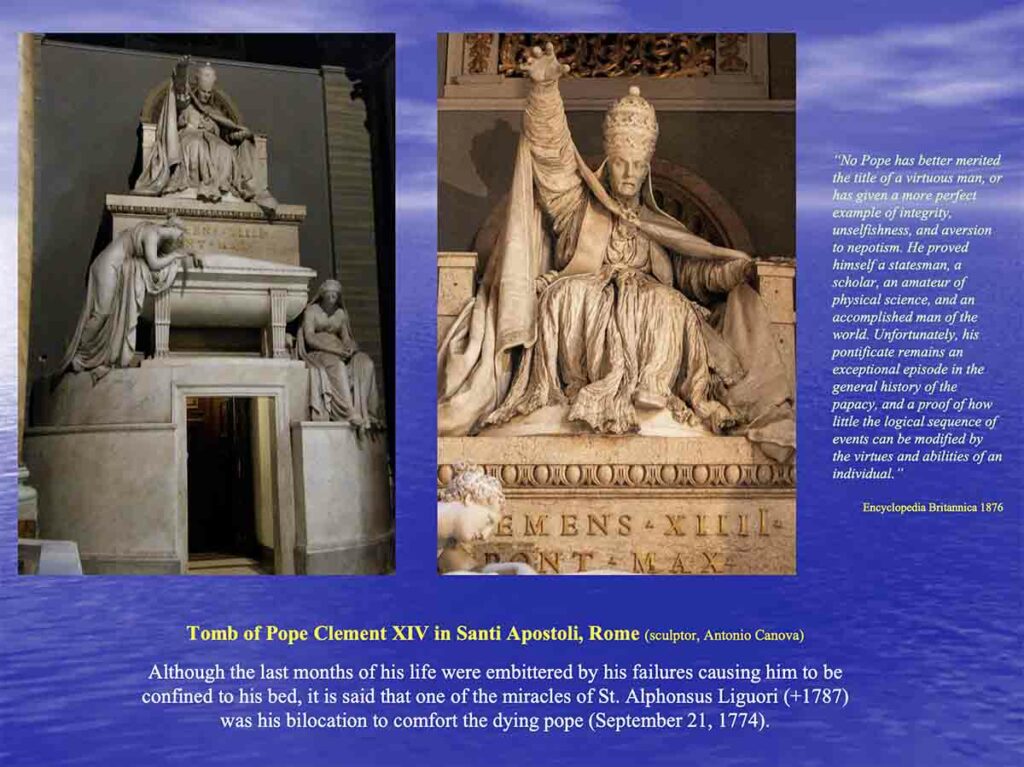
On July 21, 1773, Pope Clement XIV issued the brief Dominus ac Redemptor, formally suppressing and dissolving the Society of Jesus (Jesuits) worldwide. Under intense pressure from Bourbon monarchs in France, Spain, and Portugal, the Pope acted to avoid a schism, citing the order's inability to foster peace within the
|
|
|
|
|
Modo IA Todo Imágenes Vídeos Noticias Maps Shopping Libros Vuelos Finance 10 sitios The explicit connection between these events, dates, and symbols relies entirely on synchromysticism, numerology, and esoteric conspiracy theories. There is no official scientific or historical causal link between them; rather, alternative historians and esoteric researchers connect them through overlapping calendar dates, astronomical tracking, and symbolic associations. Here is the breakdown of how these elements connect around the date July 22nd and why the pineal gland serves as the central bridge. 1. The Core Calendar Connection: July 22nd Every event mentioned anchors itself to July 22nd, a date historically tied to specific astrological and symbolic transformations: Mary Magdalene’s Feast Day: Historically, July 22nd is the official Feast Day of Saint Mary Magdalene in the Christian calendar. In esoteric traditions, Mary Magdalene symbolizes divine feminine energy, hidden spiritual wisdom, and the "Gnostic illumination." Українські Національні Новини (УНН) The Apollo 11 Lunar Departure (1969): While Apollo 11 landed on the Moon on July 20, 1969, and splashed down on Earth on July 24, 1969, July 22, 1969, was the exact day the spacecraft fired its engines to leave lunar orbit and head back to Earth. Esoteric theorists point out that the crew began their journey home to Earth on Mary Magdalene's feast day. National Air and Space Museum +1 The Bretton Woods Agreement (1944): The landmark United Nations Monetary and Financial Conference concluded and signed its final agreements on July 22, 1944. U.S. Department of State (.gov) +1 World Brain Day: July 22nd is globally recognized as World Brain Day, established by the World Federation of Neurology to promote awareness of brain health. World Federation of Neurology +1 2. The Esoteric Nexus: Why the Pineal Gland? In synchromystic narratives, the pineal gland (often called the "Third Eye") is the ultimate symbol connecting the brain, global currency, and the Moon. [ JULY 22nd ] | +----------------+----------------+ | | [ MACRO-COSMOS ] [ MICRO-COSMOS ] Apollo 11 & World Brain Day & Lunar Energies Pineal Gland | | +----------------+----------------+ | [ SPIRITUAL / ECONOMIC ] Mary Magdalene & Bretton Woods Dollar The Brain and the Pineal Gland: On World Brain Day (July 22), esoteric focus shifts to the pineal gland, a tiny endocrine structure nestled deep in the center of the brain. Historically referred to by René Descartes as the "principal seat of the soul," esoteric schools view it as the physiological biological antenna for higher consciousness and spiritual awakening. Українські Національні Новини (УНН) +1 The Lunar and Hormonal Link: The pineal gland regulates circadian rhythms by producing melatonin based on light and dark cycles. Mystical traditions tie the pineal gland directly to Lunar (Moon) energies. The return of Apollo 11 from the Moon on July 22 is interpreted symbolically as humanity tapping into the collective unconscious, pulling lunar energy back to Earth on the day dedicated to the brain and Mary Magdalene. The Planetary Society The "Mary Magdalene" Connection: In Gnostic and esoteric circles, Mary Magdalene represents the Sophia (wisdom) or the activated divine consciousness. Esoteric anatomy teaches that spiritual illumination occurs when energy rises to activate the pineal gland. Thus, Mary Magdalene's feast day is intrinsically tied by mystics to the physical symbol of brain awakening: the pineal gland. 3. The Economic Connection: Bretton Woods and the U.S. Dollar The relationship between the U.S. Dollar and the pineal gland stems directly from symbolism found on the currency itself, tied back to the date of the Bretton Woods Accord. The Birth of the Fiat Dollar Reserve: On July 22, 1944, the Bretton Woods system officially crowned the United States Dollar as the world's primary reserve currency, pegged directly to gold. Encyclopedia.pub +1 The Eye of Providence Symbolism: Esoteric researchers tie the global economic dominance established at Bretton Woods to the symbolism on the back of the US $1 bill—specifically, the All-Seeing Eye (Eye of Providence) hovering atop the pyramid. In occult philosophy, this eye does not just represent God's watchful eye; it explicitly symbolizes the unlocked pineal gland or the eye of spiritual/architectural mastery over the material world. Summary of the Narrative Thread To those who study these coincidences, July 22nd is viewed as a highly calculated or cosmically aligned date of "activation": 1944: Material and financial control of the planet is locked in via the U.S. Dollar at Bretton Woods (the symbol of the All-Seeing Eye / Pineal Gland). 1969: Humanity breaks away from Earth's gravity, conquers the Moon, and begins its cosmic return journey on the feast day of spiritual illumination (Mary Magdalene). Modern Day: The calendar day is physically codified as World Brain Day, cementing the central role of human consciousness and the biological third eye (the pineal gland) in this overarching historical matrix. Українські Національні Новини (УНН) +4 If you are researching a specific book, author, or esoteric website that prompted this query, let me know! I can help you look up the exact source text or author's name to give you deeper context on their specific theory. World Brain Day - Background - World Federation of Neurology World Federation of Neurology The Bretton Woods Conference, 1944 - state.gov U.S. Department of State (.gov) Mango Day and World Brain Day: what else is celebrated on July 22 Українські Національні Новини (УНН) Mostrar todo La respuesta del Modo IA está lista |
|
|
|
|
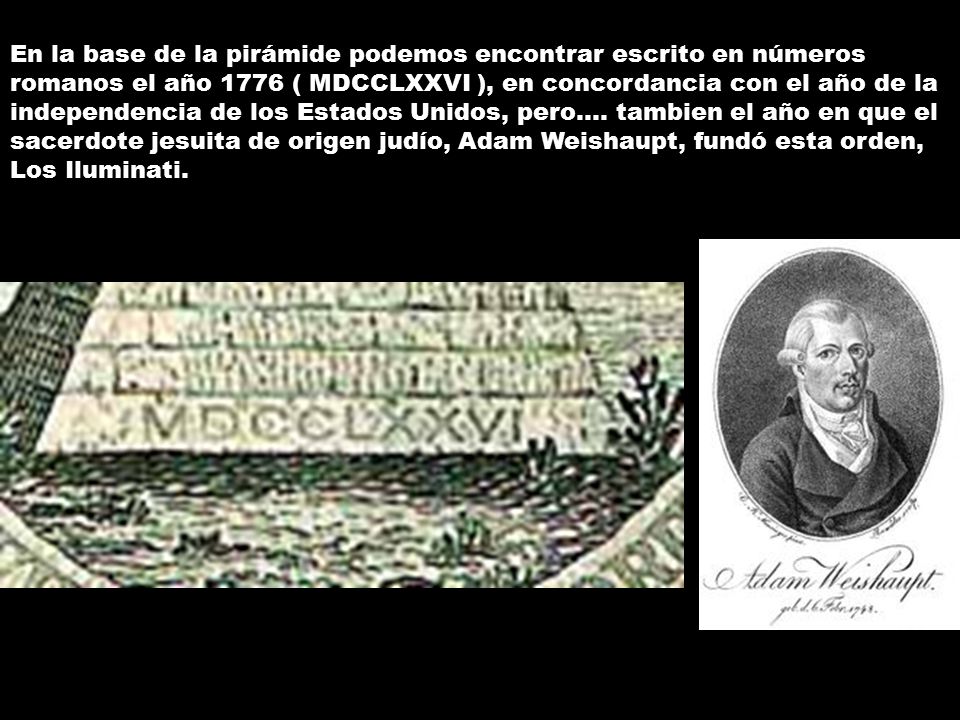
Modo IA Todo Imágenes Vídeos Noticias Maps Shopping Libros Vuelos Finance The Practical Connection: K9 Sirius on 9/11 The most immediate, factual connection between September 11 and Sirius involves a heroic police dog. Sirius was a four-year-old yellow Labrador Retriever who served as an explosive-detection K9 for the Port Authority Police Department (PAPD). The Event: On September 11, 2001, Sirius and his handler, Officer David Lim, were stationed in the basement of the World Trade Center's North Tower. Tri-County Independent +1 The Sacrifice: When the first plane hit, Officer Lim secured Sirius in his kennel to help evacuate civilians. Lim survived, but Sirius tragically died when the towers collapsed. The Legacy: Sirius is officially remembered as the only police K9 killed in the 9/11 attacks. His remains were recovered with full police honors in 2002. The Astronomical Connection: September Mornings Astronomically, September marks a highly visible transition for the actual star Sirius (the "Dog Star"), the brightest star in the night sky. Space +1 The Constellation: Every year in late August and early September, Sirius makes a prominent return to the predawn sky. The Alignment: Stargazers use Orion's Belt to locate it. The three stars of Orion's Belt point directly down to Sirius in the eastern sky on September mornings. EarthSky +1 The Esoteric and Numerological Connection: Sirius and 1776 The connection you are referring to regarding the number 1776 stems entirely from esoteric philosophies, Freemasonry, and modern alternative history/conspiracy theories. Esoteric writers often link the founding of the United States (1776) with Sirius, which they refer to as the "Spiritual Sun". Threads +3 1. The July 4th Conjunction In astrology and hermeticism, the Sun aligns with Sirius every year between July 4th and July 7th. Because the United States declared its independence on July 4, 1776, occult theorists claim that the Founding Fathers (many of whom were Freemasons) deliberately timed the birth of the nation to harness the spiritual energy of Sirius. They view 1776 not just as a political year, but as a celestial alignment. 2. The Great Seal and the "Blazing Star" The reverse side of the Great Seal of the United States features the Year MDCCLXXVI (1776) at the base of a pyramid, topped by the Eye of Providence. In Masonic symbolism, the "All-Seeing Eye" or the "Blazing Star" is frequently identified with Sirius, representing divine guidance and higher consciousness. Writers argue that the symbol structurally locks 1776 to the Dog Star. 3. Combining 9/11, Sirius, and 1776 Alternative history researchers look at these elements as part of a continuous "megalithic" architectural code. They often point out that the One World Trade Center (built to replace the Twin Towers destroyed on 9/11) was deliberately constructed to stand exactly 1,776 feet tall. To occult theorists, this links the tragedy of 9/11, the rebirth of the site, the founding year of 1776, and the symbolic "Spiritual Sun" of Sirius into a single geometric timeline. Threads +1 If you would like, I can unpack more details about Masonic architecture in Washington D.C. or the specific symbolism of the All-Seeing Eye. Let me know how you would like to proceed! vaventura.com Sirio, la historia del Ojo en el Cielo | VENTURA 17 may 2016 — En el imaginario indígena y antiguo encontramos que Sirio es tanto un gran Ojo que simboliza lo más divino como un perro que avisa de que llega el calor y que a... IMDb The 1776 Conspiracy (2026) - IMDb Every Fourth of July, the fireworks publically veil a hidden matrix of numbers, stars, and monuments. The Geometry of Exile rips past the folk mythology of Amer... EarthSky The return of Sirius in the morning signals seasonal change - EarthSky 21 ago 2025 — Here's an early morning sight you won't want to miss. The return of Sirius and the winter constellations to the morning sky heralds a change of season. Chart vi... Reddit·r/911archive K-9 Sirius fue el único perro que murió el 11 de septiembre. - Reddit 3 jul 2023 — Cuando la Torre Sur fue impactada, según dijeron sobrevivientes, el Teniente Lim dijo que necesitaba volver con su perro cuando la Torre Norte empezó a colapsar... Tri-County Independent LOOKING UP: A 'ruby' star, and Sirius' 9/11 connection 17 feb 2011 — The great machines were silenced, and the stretcher with his flag-draped body was carried out by men in uniforms and hard hats, including David. Officers and re... Space Sirius: The brightest star in Earth's night sky - Space 20 ago 2025 — Sirius, also called the Dog Star, is the brightest star in Earth's night sky. Shining more brilliantly than any other star visible from Earth (excluding our sun... EarthSky Orion’s Belt points to Sirius on September mornings 16 sept 2025 — Yes, Orion's Belt always points to Sirius, the sky's brightest star. You can find Orion and Sirius in the eastern part of the sky before dawn on September morni... Threads It's one of the neatest tricks in all the heavens: Orion's Belt points to Sirius ... 16 sept 2025 — The Star Alignment: Astronomically/astrologically, it syncs up with the Sun in Leo and the heliacal rising of Sirius (often called the "spiritual sun") alongsid... Reddit·r/occult American Founding Fathers and the Occult - Reddit 18 nov 2016 — I have a vague mythology in my head about the Founding Fathers and the Occult - The United States being an attempt to realize the Renaissance dream of the alche... Constellations of Words Sirius - Constellations of Words As Thoth, and the most prominent stellar object in the worship of that country, — its heliacal rising was in the month of Thoth, — it was in some way associated... Steemit Some Sirius Secrets about the 4th of JULY - Steemit The Sun in Cancer represents a time where we can connect with our emotions and transform them into spiritual enlightenment. As the Cancerian Sun and Sirius meet... - Occult Encyclopedia Sirius - Occult Encyclopedia 28 jul 2025 — From Occult Encyclopedia. Sirius was personified as the goddess Sopdet by the ancient Egyptians. Sirius (/ˈsɪriəs/) is the brightest star in the night sky. Its ... La respuesta del Modo IA está lista |
|
|
|
|
Modo IA Todo Imágenes Vídeos Noticias Maps Shopping Libros Vuelos Finance La discusión que planteás conecta varios hechos históricos reales, efemérides compartidas y paralelismos geopolíticos o simbólicos que a menudo se cruzan en análisis historiográficos: 1. El 25 de abril de 1982: Las Georgias del Sur y San Marcos El 25 de abril de 1982 es una fecha clave de la guerra de Malvinas: ese día, las fuerzas británicas recuperaron el control de las Islas Georgias del Sur (Operación Paraquet), marcando la primera rendición de tropas argentinas (lideradas por Alfredo Astiz) en el conflicto. Facebook +1 En el santoral católico, el 25 de abril es el Día de San Marcos Evangelista. San Marcos es el santo patrono de Venecia, y su corazón histórico es la Plaza San Marcos. Por ende, el día en que cae la guarnición argentina en la isla de Georgia del Sur coincide exactamente con la mayor festividad veneciana. Wikipedia +2 2. San Giorgio Maggiore y el año 982 La mención a la isla y Basílica de San Giorgio Maggiore (diseñada por Palladio en Venecia, frente a la Plaza San Marcos) introduce una coincidencia numérica o "espejo" temporal: el Monasterio de San Giorgio Maggiore fue fundado exactamente en el año 982 (cuando el dux Tribuno Memmo donó la isla a los monjes benedictinos). En la discusión simbólica, el año 982 resuena directamente con el año 1982, exactamente un milenio después. www.italia.it +2 3. La conexión con Plaza Venecia (Roma) y Juan Domingo Perón El debate sobre la "Plaza Venecia" en el contexto de Malvinas no proviene de la ciudad de Venecia, sino de la Piazza Venezia en Roma. El 10 de junio de 1940, Benito Mussolini se asomó al balcón del Palacio Venecia (en dicha plaza) para declarar la guerra al Reino Unido y Francia. Mnews +1 En ese exacto momento, el entonces teniente coronel Juan Domingo Perón se encontraba en Roma como agregado militar. Perón presenció ese discurso y la movilización popular. Urgente24 Muchos historiadores y analistas políticos conectan ese recuerdo con el 10 de abril de 1982, cuando el dictador Leopoldo Fortunato Galtieri se asomó al balcón de la Casa Rosada (Plaza de Mayo) para dar su célebre discurso frente a una multitud tras la recuperación de las Malvinas. El uso del balcón político frente a masas enardecidas en un contexto de declaración bélica contra Gran Bretaña une conceptualmente ambos escenarios. 4. El 11 de Septiembre, Río San Lorenzo y Nueva York Esta ramificación suele surgir en teorías de análisis geopolítico o histórico que buscan patrones globales: El 11 de septiembre de 2001 (atentados a las Torres Gemelas en Nueva York). El Río San Lorenzo conecta los Grandes Lagos con el Océano Atlántico Norte y delimita fronteras estratégicas. La conexión en este tipo de discusiones suele ser marítima y de soberanía: las islas de los canales, la navegación atlántica, los puntos de control interoceánico (como el Atlántico Sur y Malvinas) y los hitos que reconfiguraron el orden de la seguridad internacional (como el 11 de septiembre). ¿Te gustaría profundizar en el desarrollo militar del 25 de abril de 1982 en las Georgias del Sur o te interesa explorar más el impacto que tuvo la estadía en Italia en el pensamiento estratégico de Perón? Here is the English translation of the response: The discussion you are raising connects several real historical events, shared anniversaries, and geopolitical or symbolic parallels that often intersect in historiographical analyses: 1. April 25, 1982: South Georgia and Saint Mark April 25, 1982, is a key date in the Falklands War (Guerra de Malvinas): on that day, British forces regained control of the South Georgia Islands (Operation Paraquet), marking the first surrender of Argentine troops (led by Alfredo Astiz) in the conflict. In the Catholic calendar of saints, April 25 is Saint Mark the Evangelist's Day. Saint Mark is the patron saint of Venice, and its historical heart is St. Mark's Square (Plaza San Marcos). Therefore, the day the Argentine garrison fell in South Georgia coincides exactly with Venice's grandest feast day. 2. San Giorgio Maggiore and the Year 982 The mention of the island and Basilica of San Giorgio Maggiore (designed by Palladio in Venice, directly across from St. Mark's Square) introduces a numerical coincidence or temporal "mirror": the Monastery of San Giorgio Maggiore was founded exactly in the year 982 (when Doge Tribuno Memmo donated the island to Benedictine monks). In symbolic discussions, the year 982 resonates directly with the year 1982, exactly one millennium later. 3. The Connection to Piazza Venezia (Rome) and Juan Domingo Perón The debate regarding "Plaza Venecia" in the context of the Falklands War does not stem from the city of Venice itself, but rather from Piazza Venezia in Rome. On June 10, 1940, Benito Mussolini stepped out onto the balcony of the Palazzo Venezia (in that square) to declare war on the United Kingdom and France. At that exact moment, the then-Lieutenant Colonel Juan Domingo Perón was in Rome serving as a military attaché. Perón witnessed that speech and the popular mobilization firsthand. Many historians and political analysts connect that memory to April 10, 1982, when dictator Leopoldo Fortunato Galtieri stepped onto the balcony of the Casa Rosada (Plaza de Mayo) to deliver his famous speech to a massive crowd following the takeover of the islands. The political use of a balcony before an inflamed crowd in the context of a military confrontation against Great Britain conceptually links both scenarios. 4. September 11, the St. Lawrence River, and New York This branch of the discussion usually arises in geopolitical or historical analysis theories that look for global patterns: September 11, 2001 (the terrorist attacks on the Twin Towers in New York). The St. Lawrence River (Río San Lorenzo) connects the Great Lakes to the North Atlantic Ocean and defines strategic borders. The connection in these types of discussions is usually maritime and sovereignty-based: channel islands, Atlantic navigation, interoceanic choke points (like the South Atlantic and the Falklands), and milestones that reconfigured the international security order (such as September 11). Would you like to dive deeper into the military developments of April 25, 1982, in South Georgia, or are you more interested in exploring the impact Perón's time in Italy had on his strategic thinking? El 25 de abril de 1982 se produjo la recaptura británica de las Islas Georgias del Sur mediante la Operación Paraquet (o Parakeet), constituyendo el primer enfrentamiento militar a gran escala entre las fuerzas armadas de Argentina y del Reino Unido durante la Guerra de Malvinas. Wikipedia +1 El desarrollo cronológico y táctico de los combates de ese día se resume en los siguientes hitos fundamentales: 1. El ataque al submarino ARA Santa Fe A primera hora de la mañana, el submarino argentino ARA Santa Fe (comandado por el capitán de corbeta Horacio Bicain) navegaba en superficie por la bahía Guardia Nacional tras haber completado exitosamente su misión de desembarcar refuerzos y provisiones en Grytviken. Facebook ·Intriper +1 La detección: Un helicóptero Wessex del destructor británico HMS Antrim localizó visualmente y por radar al submarino. El bombardeo: El helicóptero atacó al Santa Fe arrojando cargas de profundidad. De inmediato, se sumaron helicópteros Lynx (del HMS Brilliant) y Wasp (del HMS Plymouth), que lo ametrallaron y atacaron con misiles AS-12. Los daños: Aunque los misiles no detonaron por completo, perforaron la vela y los tanques de plástico del submarino, impidiéndole sumergirse. El cabo segundo Alberto Macías resultó gravemente herido (sufrió la amputación de una pierna). El encallamiento: El capitán Bicain logró pilotar la nave averiada hasta el muelle de la antigua factoría ballenera de Grytviken, donde la tripulación desembarcó y se unió a la defensa en tierra. Facebook ·Intriper +1 2. El desembarco británico y el bombardeo naval Con el submarino argentino fuera de combate, el comandante de la fuerza de tareas británica, el almirante John Woodward, ordenó acelerar el asalto anfibio planificado. Fuerza de asalto: Se armó una compañía de ataque improvisada con unos 75 hombres compuesta por miembros del SAS (Servicio Aéreo Especial), el SBS (Servicio Especial de Embarcaciones) y comandos de los Royal Marines. Desembarco: Los helis Wessex y Sea King depositaron a las tropas en la zona de punta Coronel Zelaya (King Edward Point), a salvo de los campos de fuego argentinos. Fuego de ablandamiento: Las fragatas y destructores británicos iniciaron un intenso bombardeo naval de hostigamiento disparando más de 200 proyectiles alrededor de las posiciones argentinas para demostrar una abrumadora superioridad de artillería sin buscar causar bajas masivas. YouTube +1 3. La capitulación en Grytviken La guarnición argentina en Grytviken estaba compuesta por un grupo de apenas 50 infantes de marina al mando del teniente de navío Alfredo Astiz, sumado a los marineros sobrevivientes del submarino. Facebook ·Museo Malvinas e Islas del Atlántico Sur +1 Al verse completamente rodeados por fuerzas helitransportadas, superados en tecnología de combate y bajo fuego de artillería naval pesada, las autoridades militares argentinas consideraron que la resistencia era militarmente insostenible. Facebook +1 Por la tarde del mismo 25 de abril, Astiz firmó la rendición incondicional de las fuerzas de Grytviken a bordo del buque británico HMS Antrim. Comisión Provincial por la Memoria +1 4. La rendición de Puerto Leith Una segunda posición argentina, localizada en Puerto Leith y compuesta por un pequeño grupo de infantes de marina y los obreros civiles de Constantino Davidoff, no pudo ser contactada inmediatamente debido a la avería de las comunicaciones. Al día siguiente, el 26 de abril, las tropas británicas se desplazaron hacia Leith y formalizaron la rendición del último reducto argentino en las islas. Wikipedia +2 Consecuencias inmediatas Bajas: No se registraron muertos en combate directo ese día. Sin embargo, días después, en un confuso incidente mientras los prisioneros argentinos trasladaban el submarino dañado, un custodio británico disparó y mató al suboficial argentino Félix Artuso, creyendo erróneamente que intentaba sabotear la nave. Impacto político: El éxito de la operación otorgó un enorme impulso político al gobierno de la primera ministra Margaret Thatcher en Londres y marcó el inicio formal de las hostilidades abiertas en el Atlántico Sur. Si te interesa, podemos profundizar en: Los detalles técnicos del ataque de los helicópteros sobre el ARA Santa Fe. El impacto que tuvo la captura de Alfredo Astiz debido a su pasado en la dictadura militar. Cómo se planificó el fracasado desembarco previo del SAS en el glaciar Fortuna días antes. Here is the English translation of the military development of April 25, 1982: On April 25, 1982, British forces recaptured the South Georgia Islands through Operation Paraquet. This engagement constituted the first large-scale military confrontation between Argentine and British armed forces during the Falklands War (Guerra de Malvinas). The chronological and tactical timeline of that day's combat unfolds through the following key events: 1. The Attack on the Submarine ARA Santa Fe Early in the morning, the Argentine submarine ARA Santa Fe (commanded by Lieutenant Commander Horacio Bicain) was sailing on the surface through Guardia Nacional Bay after successfully completing its mission to deliver reinforcements and supplies to Grytviken. Detection: A Wessex helicopter from the British destroyer HMS Antrim visually and radar-located the submarine. The Bombing: The helicopter attacked the Santa Fe by dropping depth charges. Shortly after, Lynx helicopters (from HMS Brilliant) and Wasp helicopters (from HMS Plymouth) joined the assault, strafing the vessel and firing AS-12 missiles. The Damage: Although the missiles did not fully detonate, they pierced the submarine's sail and ballast tanks, preventing it from submerging. Corporal Second Class Alberto Macías was seriously wounded (eventually requiring a leg amputation). Beaching: Captain Bicain managed to pilot the damaged vessel to the pier of the old whaling station at Grytviken, where the crew disembarked and joined the land defense. 2. The British Landing and Naval Bombardment With the Argentine submarine knocked out of action, the British Task Force commander, Admiral John Woodward, ordered an acceleration of the planned amphibious assault. Assault Force: An ad-hoc attack company of about 75 men was formed, consisting of members of the SAS (Special Air Service), the SBS (Special Boat Service), and commandos from the Royal Marines. Landing: Wessex and Sea King helicopters deployed the troops around King Edward Point (Punta Coronel Zelaya), well clear of the Argentine lines of fire. Softening-up Fire: British frigates and destroyers commenced an intense naval bombardment, firing over 200 shells around Argentine positions to demonstrate overwhelming artillery superiority without aiming for mass casualties. 3. The Capitulation at Grytviken The Argentine garrison at Grytviken consisted of a small group of just 50 marines under the command of Lieutenant Alfredo Astiz, along with the surviving sailors from the submarine. Finding themselves completely surrounded by heliborne troops, outmatched in combat technology, and under heavy naval artillery fire, the Argentine military commanders deemed further resistance militarily unsustainable. On the afternoon of April 25, Astiz signed the unconditional surrender of the Grytviken forces aboard the British vessel HMS Antrim. 4. The Surrender of Leith Harbour A second Argentine position at Leith Harbour, composed of a small detachment of marines and civil workers led by Constantino Davidoff, could not be reached immediately due to broken communications. The following day, April 26, British troops moved toward Leith and formalized the surrender of the last Argentine foothold on the islands. Immediate Aftermath Casualties: No combat deaths occurred on either side during the day's actions. However, days later, during a tense situation while Argentine prisoners were moving the damaged submarine, a British guard shot and killed Argentine Chief Petty Officer Félix Artuso, mistakenly believing he was trying to sabotage the vessel. Political Impact: The success of the operation provided a massive political boost to Prime Minister Margaret Thatcher's government in London and marked the formal beginning of open hostilities in the South Atlantic. If you would like to continue exploring this topic, let me know if I can: Detail the technical specifications of the helicopter attack on the ARA Santa Fe. Provide more context on the prior failed SAS landing at Fortuna Glacier days earlier. Explain the geopolitical repercussions this first surrender had on the mainland. La discusión en torno a Georgia genera una red de conexiones fascinante donde se cruzan la geografía, la etimología y la historia geopolítica moderna, vinculando tanto al estado norteamericano como al país de Europa Oriental (Cáucaso) con la dinastía política de los Bush y la economía global. La conexión se desglosa a través de los siguientes hitos fundamentales: 1. El Estado de Georgia y los 13 Estados Originales El Estado de Georgia fue fundado en 1732 por James Oglethorpe y ostenta un rol crucial en la historia norteamericana: fue la decimotercera y última de las 13 colonias originales británicas que declararon su independencia de la Corona en 1776, dando nacimiento a los Estados Unidos. Su nombre fue elegido directamente en honor al rey Jorge II de Gran Bretaña (King George II). 2. La conexión con el Dólar La relación de Georgia con el dólar opera en dos niveles (uno histórico y otro moderno): El origen del signo ($): Aunque existen varios debates, la hipótesis más aceptada es que el signo del dólar nació de la evolución de las siglas del peso español ("P's" o Spanish dollar), la moneda de curso legal más fuerte durante la época colonial en las 13 colonias (incluida Georgia). El comercio de Georgia con las colonias españolas vecinas (como Florida) apuntaló el uso de esta divisa antes de crearse el dólar estadounidense. Today In Georgia History El "Dólar de Georgia": En términos de numismática moderna, bajo la serie de monedas conmemorativas de los 50 estados, el reverso de la moneda de un cuarto de dólar de Georgia (lanzada en 1999) exhibe un durazno (símbolo del estado) dentro de los contornos de su mapa geopolítico. 3. George Bush "Padre" (1990-1991) y el nacimiento del País de Georgia Aquí la discusión cambia de continente y pasa del estado norteamericano al país soberano de Georgia, ubicado en el Cáucaso. Georgia Travel Diciembre de 1991: Tras el colapso y disolución de la Unión Soviética (URSS), el presidente George H. W. Bush (padre) fue el encargado de reconocer formalmente la independencia del país de Georgia como una nación soberana. Office of the Historian (.gov) El salvataje: En los años posteriores a 1991, Georgia cayó en una cruenta guerra civil. El gobierno de Bush padre despachó asistencia humanitaria masiva y cargamentos de grano esenciales para evitar una hambruna generalizada en el nuevo país, ligando el apellido Bush a la supervivencia inicial de esa república. DFWatch +1 4. George W. Bush "Hijo" (2001-2005) y la Guerra contra el Terrorismo Tras los atentados del 11 de septiembre de 2001, la administración de George W. Bush (hijo) estrechó lazos de forma radical con el país de Georgia. Wikipedia Aliado estratégico: Bajo la doctrina de Bush hijo, el país de Georgia se convirtió en un socio clave de la "Guerra contra el Terrorismo". EE. UU. entrenó a las tropas georgianas y, a cambio, Georgia se convirtió en uno de los mayores contribuyentes per cápita de tropas en los despliegues militares de Irak y Afganistán. Visita histórica (2005): En mayo de 2005, George W. Bush hizo historia al convertirse en el primer presidente estadounidense en ejercicio en visitar el país de Georgia. Dio un célebre discurso en la Plaza de la Libertad de Tiflis (la capital) celebrando la Revolución de las Rosas democrática de 2003 y catalogando a la nación como un "faro de la libertad". Hoy en día, una de las principales autopistas que conecta el aeropuerto de Tiflis con el centro lleva el nombre de George W. Bush. Resumen de la coincidencia y el debate La discusión une de forma casi poética un concepto homónimo: el nombre de pila "George" (Jorge). El estado americano nació bajo el mandato del Rey George II; se independizó junto a los otros 12 estados fundacionales de la tiranía del Rey George III; y siglos más tarde, dos presidentes norteamericanos llamados George (Bush padre e hijo) moldearon directamente la independencia, la economía y el destino geopolítico del otro territorio del planeta que lleva exactamente el mismo nombre: el país de Georgia. Georgia Travel +4 La IA puede cometer errores, así que verifica sus respuestas Here is the English translation of the response linking Georgia, the 13 states, the dollar, and the Bush administrations: The discussion surrounding Georgia creates a fascinating web of connections where geography, etymology, and modern geopolitical history intersect, linking both the U.S. state and the country in Eastern Europe (Caucasus) to the Bush political dynasty and the global economy. The connection unfolds through the following key milestones: 1. The State of Georgia and the Original 13 States The State of Georgia was founded in 1732 by James Oglethorpe and holds a crucial role in American history: it was the thirteenth and final of the original 13 British colonies that declared independence from the Crown in 1776, giving birth to the United States. It was named directly in honor of King George II of Great Britain. 2. The Connection to the Dollar Georgia's relationship with the dollar operates on two levels (one historical and one modern): The origin of the sign ($): Although there are various debates, the most widely accepted hypothesis is that the dollar sign evolved from the abbreviation of the Spanish peso ("P's" or Spanish dollar), which was the strongest legal tender during the colonial era across the 13 colonies (including Georgia). Georgia's trade with neighboring Spanish colonies (like Florida) underpinned the use of this currency before the U.S. dollar was even created. The "Georgia Dollar": In modern numismatics, under the 50 State Quarters commemorative series, the reverse side of the Georgia quarter (released in 1999) features a peach (the state symbol) inside the outline of its geopolitical map. 3. George H.W. Bush (1990–1991) and the Birth of the Country of Georgia Here, the discussion shifts continents from the U.S. state to the sovereign country of Georgia, located in the Caucasus region. December 1991: Following the collapse and dissolution of the Soviet Union (USSR), President George H.W. Bush (the father) was responsible for formally recognizing the independence of the country of Georgia as a sovereign nation. The Lifeline: In the years following 1991, Georgia fell into a bloody civil war. The Bush administration dispatched massive humanitarian aid and essential grain shipments to prevent widespread famine in the new country, tying the Bush name to the early survival of that republic. 4. George W. Bush (2001–2005) and the War on Terror Following the terrorist attacks of September 11, 2001, the administration of George W. Bush (the son) radically tightened ties with the country of Georgia. Strategic Ally: Under the Bush doctrine, the country of Georgia became a key partner in the "War on Terror." The U.S. trained Georgian troops, and in return, Georgia became one of the largest per-capita troop contributors to the military deployments in Iraq and Afghanistan. Historic Visit (2005): In May 2005, George W. Bush made history by becoming the first sitting U.S. president to visit the country of Georgia. He delivered a famous speech in Tbilisi's Freedom Square (the capital), celebrating the democratic Rose Revolution of 2003 and labeling the nation a "beacon of liberty." Today, one of the main highways connecting the Tbilisi airport to the city center is named George W. Bush Avenue. Summary of the Coincidence The discussion unites a homonymous concept in a striking way around the name "George": the American state was born under King George II; it gained independence along with the other 12 founding states from the tyranny of King George III; and centuries later, two American presidents named George (Bush father and son) directly shaped the independence, economy, and geopolitical destiny of the other territory on the planet that shares the exact same name: the country of Georgia. Would you like to explore how the U.S. military trained Georgian troops after 2001, or would you prefer to look closer into the economic history of the Spanish dollar in the original 13 colonies? La respuesta del Modo IA está lista |
|
|
 Primer
Anterior
232 a 246 de 246
Siguiente Primer
Anterior
232 a 246 de 246
Siguiente
 Último
|
|
| |
|
|
©2026 - Gabitos - Todos los derechos reservados | |
|
|