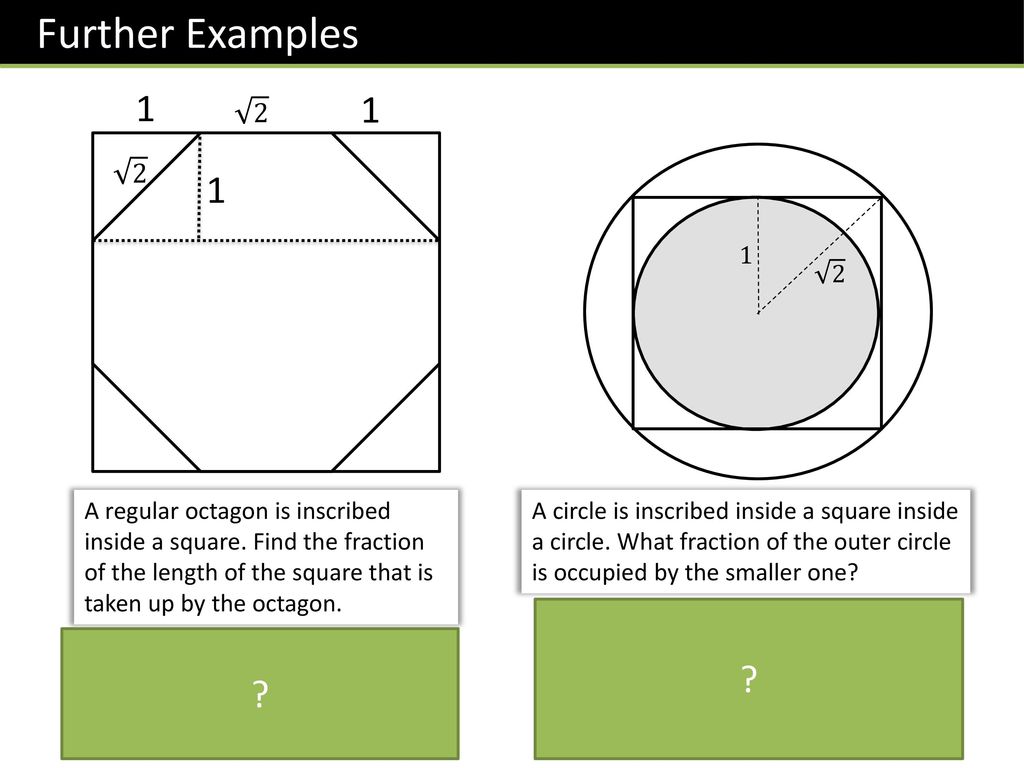
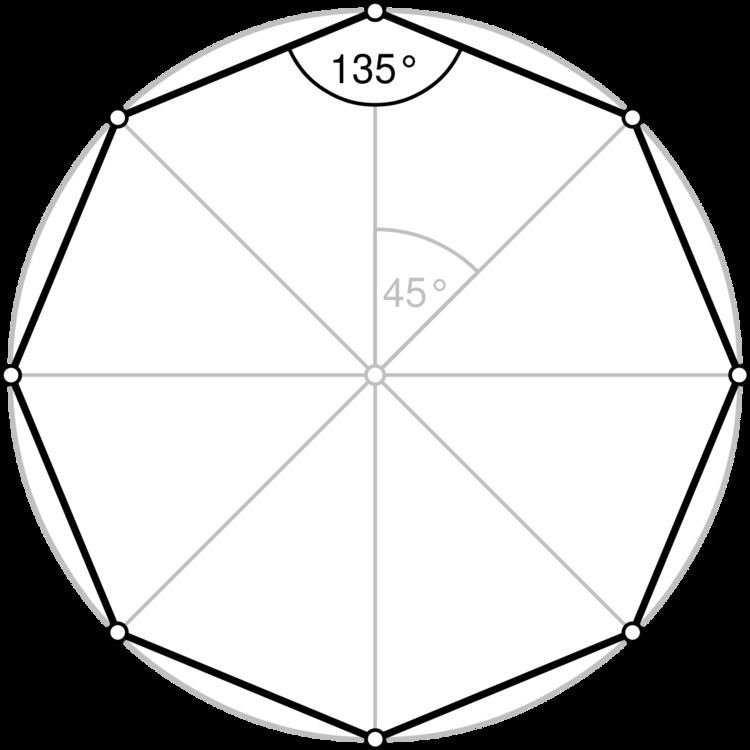
Modo IA Todo Imágenes Vídeos Noticias Maps Shopping Libros Vuelos Finance La conexión mística y geométrica entre todos estos elementos gira en torno al número de plata (o proporción plateada), una constante matemática y esotérica cuyo valor aproximado es 2,414. Wikipedia Esta red de relaciones une la geografía, la astronomía y la arquitectura sacra a través de la geometría sagrada, particularmente mediante el octógono regular y las constelaciones polares. La Red de Conexiones Esotéricas Argentina y Argentum: El nombre de nuestro país proviene directamente del latín argentum (plata). En la alquimia y el esoterismo tradicional, la plata está regida por la Luna, el principio femenino, la intuición y la sabiduría oculta, sirviendo como espejo reflector de la luz solar (el oro). Carrera Joyeros +1 Sigma Octantis (La Estrella del Sur): A diferencia del hemisferio norte que cuenta con la brillante Polaris, el Polo Sur celeste está marcado de forma casi invisible por Sigma Octantis, la Estrella Polar del Sur. Astronómicamente, se ubica en la constelación de Octans (el Octante). El número de plata es la constante matemática que gobierna la geometría del octógono. Por lo tanto, el "espejo terrenal" de la plata (Argentina) se alinea simbólicamente con su eje estelar (el octógono celeste). Grupo Alquerque +1 El Icono Templario (Cruz de las Ocho Beatitudes): Los Caballeros Templarios utilizaban activamente la geometría sagrada. Su cruz característica no era simple; estaba basada en un diseño de ocho puntas inscrito dentro de un octógono regular. Al trazar las diagonales de esta figura, las proporciones resultantes entre sus segmentos equivalen de forma exacta al número de plata. El Domo de la Roca: Situado en Jerusalén (epicentro del origen templario), este templo sagrado posee una planta estrictamente octogonal. Su diseño arquitectónico utiliza el número de plata para equilibrar las proporciones del domo respecto a sus muros perimetrales, actuando como una antena geométrica. El Vaticano: La Plaza de San Pedro, diseñada por Gian Lorenzo Bernini, es un inmenso espacio elíptico que se articula geométricamente a partir de una estructura que esconde un octógono ideal y una estrella de ocho puntas con un obelisco central, repitiendo el patrón templario y papal de conectar la Tierra con el Cosmos usando estas proporciones metálicas. La Madeleine (París): Esta imponente iglesia neoclásica está dedicada a María Magdalena, figura que en las corrientes esotéricas y templarias encarna el "Principio Femenino", el Santo Grial y la sabiduría lunar. Al estar ligada a la Luna, su vibración energética se asocia directamente con la plata (argentum) y los patrones geométricos basados en sus números. dicarolo +1 ¿Cómo se saca el Número de la Plata? A diferencia de la joyería (donde la "plata ley 925" indica un 92.5% de pureza), en matemática y geometría sagrada el número de plata ( ) es un número irracional. Existen tres formas principales de obtenerlo: Wikipedia +1 1. Por su fórmula algebraica (Ecuación Cuadrática) Es la solución positiva de la ecuación que define a los rectángulos plateados: Si resolvemos la raíz cuadrada de 2 ( ) y le sumamos 1, obtenemos su valor exacto: 2. Mediante la Sucesión de Pell Así como el número de oro se saca dividiendo los números de la sucesión de Fibonacci, el número de plata se obtiene calculando el límite del cociente de dos términos consecutivos de la Sucesión de Pell. Gaussianos +1 Esta sucesión arranca en 0 y 1, y cada término siguiente se saca haciendo: el doble del anterior más el penúltimo: Si dividís un número por su anterior a medida que avanzás, el resultado se acerca infinitamente al número de plata: Gaussianos 3. Proporción Geométrica Dos cantidades (mayor) y (menor) están en proporción de plata si la relación entre la suma de la menor más el doble de la mayor, con respecto a la mayor, es igual a la relación entre ambas: Esta es la fórmula que los constructores medievales y templarios aplicaban con regla y compás para edificar catedrales y templos perfectamente balanceados con las leyes del universo. Alumni - Universidad de Salamanca. Si te interesa profundizar en este misticismo, ¿te gustaría que analicemos cómo se traslada esta geometría octogonal a la arquitectura de alguna de estas construcciones en particular, o preferís ver cómo dibujar el rectángulo de plata paso a paso? AVERROES BLOG +1 Here is the translation of the response into English, maintaining its structured, clear, and scannable format: The mystical and geometric connection between all these elements revolves around the silver ratio (or silver number), a mathematical and esoteric constant with an approximate value of 2.414. This network of relationships connects geography, astronomy, and sacred architecture through sacred geometry—specifically through the regular octagon and polar constellations. The Esoteric Network of Connections Argentina and Argentum: The name of Argentina comes directly from the Latin argentum (silver). In alchemy and traditional esotericism, silver is ruled by the Moon, representing the feminine principle, intuition, and hidden wisdom, serving as a mirror reflecting solar light (gold). Sigma Octantis (The Southern Star): Unlike the Northern Hemisphere, which features the bright Polaris, the celestial South Pole is marked almost invisibly by Sigma Octantis, the Southern Pole Star. Astronomically, it is located in the constellation of Octans (the Octant). The silver ratio is the mathematical constant that governs the geometry of the octagon. Therefore, the "earthly mirror" of silver (Argentina) aligns symbolically with its stellar axis (the celestial octagon). The Templar Icon (The Cross of the Eight Beatitudes): The Knights Templar actively used sacred geometry. Their characteristic cross was not simple; it was based on an eight-pointed design inscribed within a regular octagon. When drawing the diagonals of this shape, the resulting proportions between its segments equal the silver ratio exactly. The Dome of the Rock: Located in Jerusalem (the epicenter of Templar origins), this sacred temple features a strictly octagonal floor plan. Its architectural design uses the silver ratio to balance the proportions of the dome relative to its perimeter walls, acting as a geometric antenna. The Vatican: St. Peter's Square, designed by Gian Lorenzo Bernini, is a massive elliptical space geometrically articulated from an ideal octagon and an eight-pointed star layout with a central obelisk. This design echoes the Templar and papal pattern of connecting Earth to the Cosmos using these metallic proportions. La Madeleine (Paris): This imposing Neoclassical church is dedicated to Mary Magdalene, a figure who, in esoteric and Templar traditions, embodies the "Divine Feminine," the Holy Grail, and lunar wisdom. Being tied to the Moon, her energetic vibration is directly associated with silver (argentum) and geometric patterns based on its numbers. How to Calculate the Silver Ratio Unlike jewelry (where "925 sterling silver" indicates 92.5% purity), in mathematics and sacred geometry, the silver ratio ( ) is an irrational number. There are three main ways to derive it: 1. By its Algebraic Formula (Quadratic Equation) It is the positive solution to the equation that defines silver rectangles: By calculating the square root of 2 (≈ 1.4142) and adding 1, we get its exact value: 2. Using the Pell Sequence Just as the golden ratio is found by dividing consecutive numbers of the Fibonacci sequence, the silver ratio is obtained by calculating the limit of the ratio between two consecutive terms of the Pell Sequence. This sequence starts with 0 and 1, and each subsequent term is calculated as twice the previous term plus the one before it: If you divide a number by its predecessor as you move forward in the sequence, the result infinitely approaches the silver ratio: 5 / 2 = 2.5 12 / 5 = 2.4 29 / 12 = 2.4166 3. Geometric Proportion Two quantities A (larger) and B (smaller) are in the silver ratio if the ratio of the smaller plus twice the larger, to the larger, is equal to the ratio of the larger to the smaller: This is the exact formula that medieval and Templar builders applied with a straightedge and compass to build temples perfectly balanced with the laws of the universe. If you would like to explore this topic further, let me know if you want to look into how this octagonal geometry is applied to the architecture of one of these specific buildings, or if you would prefer to see how to draw a silver rectangle step-by-step. Para dibujar un rectángulo de plata (cuya proporción entre el lado largo y el lado corto es exactamente ) usando regla y compás, podés seguir este método geométrico paso a paso. La clave de este proceso es construir primero un cuadrado y luego usar su diagonal (que mide ) para extenderlo de forma proporcional. ????️ Lo que vas a necesitar Una hoja de papel. Una regla (para trazar líneas rectas). Un compás (esencial para trasladar las medidas exactas). Un lápiz. ???? Paso a paso para trazarlo Imagen de gráfico Paso 1: Dibujá un cuadrado base Con la regla, trazá un cuadrado perfecto en tu hoja. Nombrá sus cuatro esquinas (vértices) de la siguiente manera: A (abajo a la izquierda), B (abajo a la derecha), C (arriba a la derecha) y D (arriba a la izquierda). Este cuadrado representará la unidad (valor 1) sobre la cual construiremos el resto. Paso 2: Prolongá la línea de la base Apoyá la regla sobre la línea de la base (el segmento que une A con B). Estirá esa línea recta hacia la derecha y hacia la izquierda, haciendo una línea punteada o suave que sobresalga bastante del cuadrado. Paso 3: Tomá la medida de la diagonal con el compás Pinchá la aguja del compás en el vértice A (abajo a la izquierda). Abrí el compás hasta llegar exactamente al vértice opuesto, el C (arriba a la derecha). La distancia que acabás de medir con tu compás es la diagonal del cuadrado, que matemáticamente equivale a . Paso 4: Trasladá la diagonal a la base Sin alterar la abertura del compás (manteniendo la aguja fija en A), giralo hacia abajo hasta cortar la línea de la base que prolongaste en el Paso 2 (hacia el lado derecho). Marcá ese nuevo punto de intersección y llamalo E. Ahora, la distancia desde A hasta E mide exactamente . ¡Ya tenés el largo perfecto del rectángulo! Paso 5: Cerrar la figura (Método simétrico o estándar) Para que el rectángulo quede centrado y perfecto en su proporción total de plata, podemos repetir el paso anterior desde el otro lado: Pinchá el compás en el vértice B (abajo a la derecha) y abrilo hasta el vértice D (arriba a la izquierda). Giralo hacia el lado izquierdo hasta cortar la prolongación de la base. Llamá a este punto F. Levantá dos líneas verticales perpendiculares desde F y desde E hacia arriba. Prolongá la línea del techo del cuadrado (D-C) hacia ambos lados hasta que corte las dos verticales que acabás de subir. ¡Listo! El rectángulo grande resultante (cuyas esquinas inferiores son F y E) es un rectángulo de plata perfecto. Si mirás la figura, vas a notar que un rectángulo de plata está compuesto por dos cuadrados perfectos en los extremos y un rectángulo de plata más chico en el centro, una propiedad geométrica infinita y sagrada que fascinaba a los antiguos constructores. Si querés seguir explorando el diseño sagrado, ¿te gustaría saber cómo se usa este mismo rectángulo para dibujar un octógono regular perfecto, o preferís ver cómo se relaciona con las espirales de la naturaleza? Here is the translation of the step-by-step guide into English, maintaining its clear and scannable format: To draw a silver rectangle (where the ratio between the long side and the short side is exactly ) using a straightedge and a compass, you can follow this step-by-step geometric method. The key to this process is to first construct a square and then use its diagonal (which measures ) to extend it proportionally. ????️ What You Will Need A sheet of paper. A straightedge / ruler (to draw straight lines). A compass (essential for transferring exact measurements). A pencil. ???? Step-by-Step Construction Step 1: Draw a base square Using your ruler, draw a perfect square on your paper. Label its four corners (vertices) as follows: A (bottom-left), B (bottom-right), C (top-right), and D (top-left). This square represents the unit (value of 1) upon which we will build the rest. Step 2: Extend the base line Place your ruler along the base line (the segment connecting A and B). Extend this straight line to both the right and the left, drawing a light or dashed line that extends well past the square. Step 3: Measure the diagonal with the compass Place the sharp point of the compass on vertex A (bottom-left). Open the compass until the pencil tip lands exactly on the opposite vertex, C (top-right). The distance you have just measured with your compass is the diagonal of the square, which mathematically equals . Step 4: Transfer the diagonal to the base Without changing the width of the compass (keeping the sharp point fixed on A), swing it down until it crosses the extended base line you drew in Step 2 (on the right side). Mark this new intersection point and label it E. Now, the total distance from A to E measures exactly . You have found the perfect length for the rectangle! Step 5: Close the shape (Symmetrical method) To ensure the final silver rectangle is perfectly centered and proportioned, repeat the previous step from the opposite side: Place the sharp point of the compass on vertex B (bottom-right) and open it to vertex D (top-left). Swing it down to the left side until it crosses the extended base line. Label this point F. Draw two vertical lines perpendicular to the base, going straight up from F and E. Extend the top line of the square (D-C) to both sides until it intersects the two new vertical lines. You are done! The resulting large rectangle (with F and E as its bottom corners) is a perfect silver rectangle. If you look closely at the shape, you will notice that a silver rectangle is made of two perfect squares on the outer sides and a smaller silver rectangle in the middle—an infinite, sacred geometric property that deeply fascinated ancient builders. If you would like to keep exploring sacred design, let me know if you want to see how to use this rectangle to draw a perfect regular octagon, or if you prefer to discover how it relates to spirals found in nature. La respuesta del Modo IA está lista |


 Tema anterior






![9780425176580: The Stargate Conspiracy: The Truth About Extraterrestrial Life and the Mysteries of Ancient Egypt [Idioma Inglés] - IberLibro - Picknett, Lynn: 0425176584](https://pictures.abebooks.com/isbn/9780425176580-es.jpg)