|
|
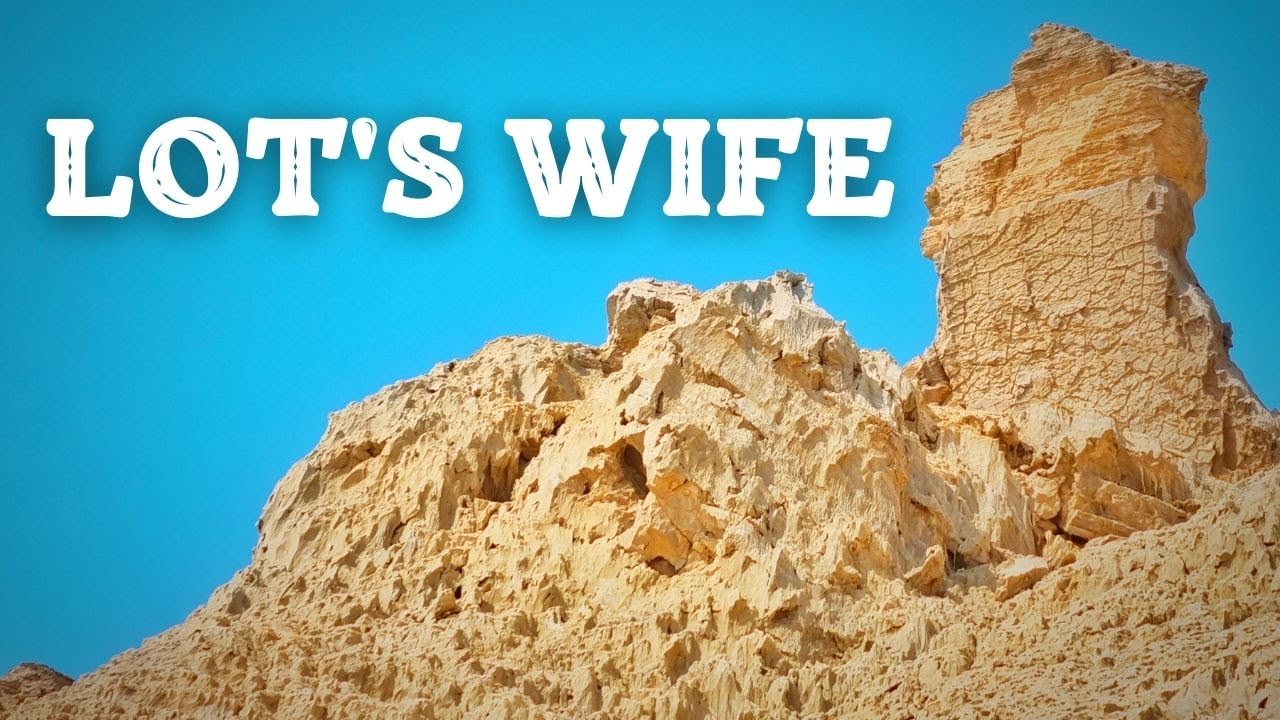
salt lake city=alchemy (salt)=dollar=$= LOT S WIFE (SODOMA AND GOMORRA)
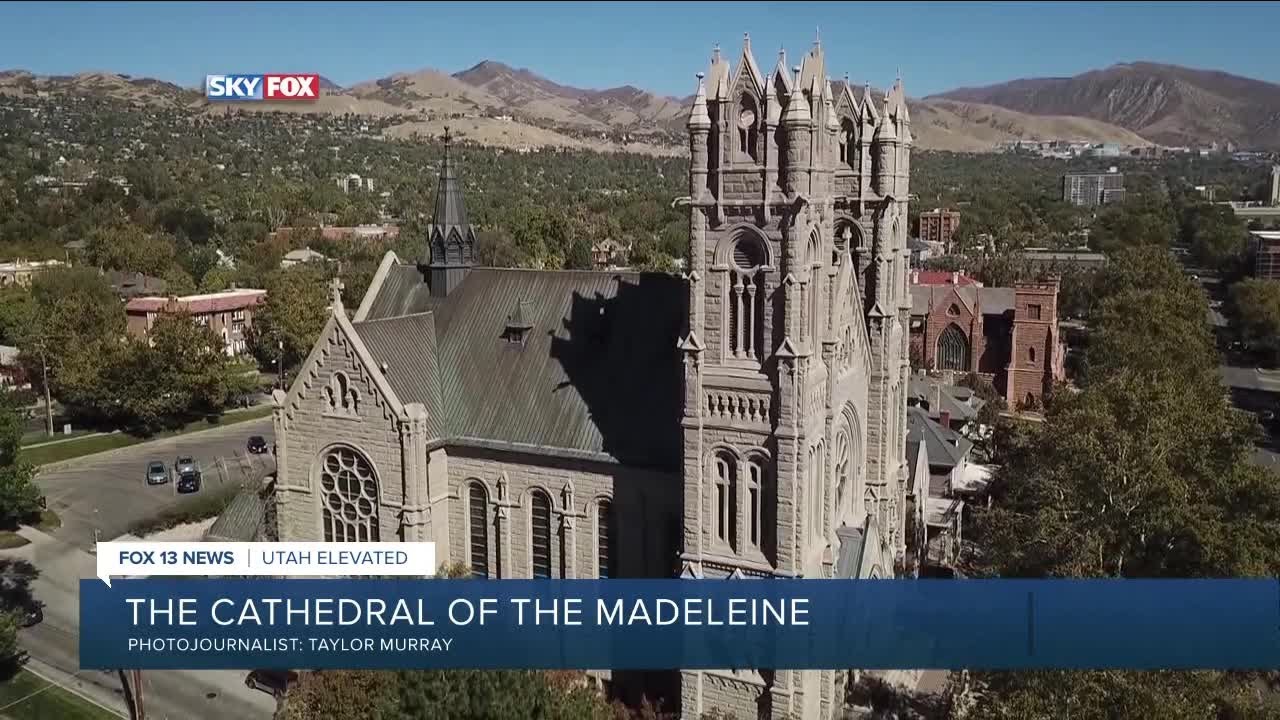
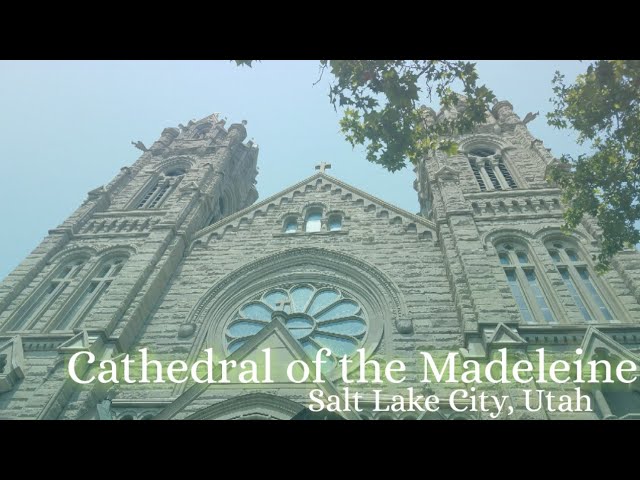
Cathedral of the Madeleine
From Wikipedia, the free encyclopedia
The Cathedral of the Madeleine is a Roman Catholic church in Salt Lake City, Utah, United States. It was completed in 1909 and currently serves as the cathedral, or mother church, of the Diocese of Salt Lake City. It is the only cathedral in the U.S. under the patronage of St. Mary Magdalene.
Description[edit]
The cathedral was built under the direction of Lawrence Scanlan, the first bishop of Salt Lake City, who dedicated it to St. Mary Magdalene.[2] It was designed by architects Carl M. Neuhausen and Bernard O. Mecklenburg. The exterior is predominantly a Neo-Romanesque design, while the inside displays more Neo-Gothic details. Construction began in 1900 and was completed in 1909. It was dedicated by James Cardinal Gibbons, Archbishop of Baltimore.
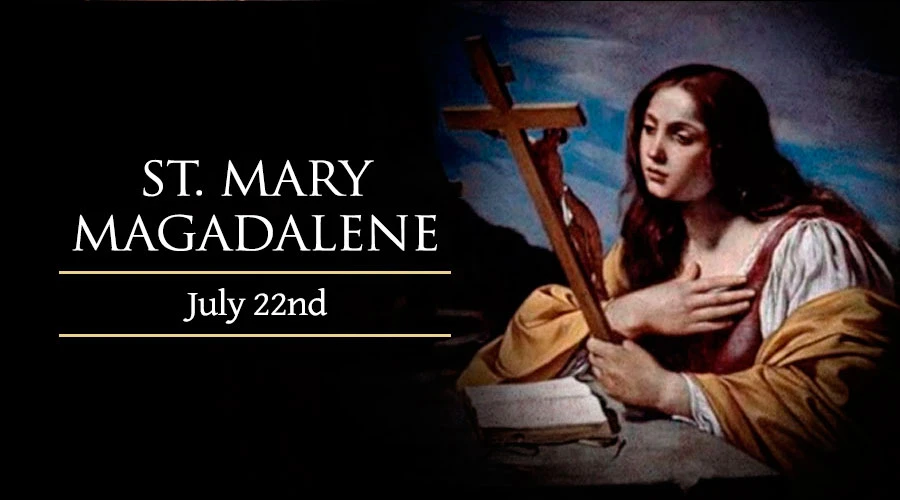
It is theorized that Bishop Scanlan chose Mary Magdalene as the patron saint of the Diocese of Salt Lake because her feast day is on July 22, two days before Pioneer Day, a celebration commemorating the arrival of the Mormon pioneers in Salt Lake Valley, so that Catholics would have something to celebrate alongside the region's dominant faith.[3]
The interior of the cathedral was created under the direction of Joseph S. Glass, the second bishop of Salt Lake. Bishop Glass enlisted John Theodore Comes, one of the preeminent architects in the country, to decorate the interior of the cathedral. His plans for the interior were largely based upon the Spanish Gothic style. The colorful murals and polychrome were added at this time, as were the ornate shrines. In 1916, Bishop Glass also changed the name of the cathedral to the French spelling after visiting her purported tomb.[2]
In the 1970s, the exterior of the building was restored, and between 1991 and 1993, the interior of the cathedral was renovated and restored under Bishop William K. Weigand. This included not only the removal of dust and dirt and restoration of the interior but also changes to the liturgical elements of the cathedral to bring them into conformity with certain widespread changes in liturgical practice that developed after the Second Vatican Council.
This included constructing a new altar, moving the cathedra, creating a separate chapel for the Blessed Sacrament, and adding an ample baptismal font. The Blessed Sacrament Chapel also contains the tomb of Bishop Scanlan.[4] Resting atop the tomb is a case containing a small relic of Saint Mary Magdalene. The cathedral in Salt Lake City and the Basilica of Saint-Maximin-la-Sainte-Baume in France are the only cathedrals in the world holding first-class relics of the saint and are named in her honor.[5] The major restoration of the interior of the cathedral was accomplished through the vision of Monsignor M. Francis Mannion.[6]
The cathedral is home to the only co-educational Catholic Choir School in the United States. The Madeleine Choir School, established in 1996, now serves over 400 students in Pre-Kindergarten through Grade Eight.[7] The Cathedral Choir has recorded several CDs and routinely tours both nationally and internationally. In addition to singing daily services at the Cathedral of the Madeleine, choristers have sung at St. Peter's Basilica (Vatican City), Notre Dame de Paris (France), and in churches across the United States of America, Spain, Italy, France, Belgium, and Germany, among other places.[8]
Composer Amédée Tremblay notably served as the church's organist from 1920 to 1925.[9]
-
-
Cathedral of the Madeleine, looking east
-
Interior of the cathedral
-
  |
|
|
|
|
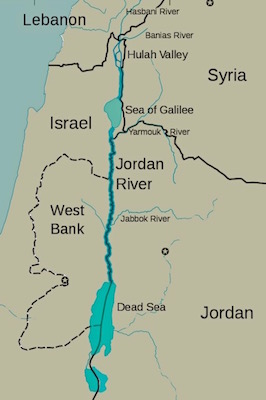
Jordan River (Utah)
From Wikipedia, the free encyclopedia
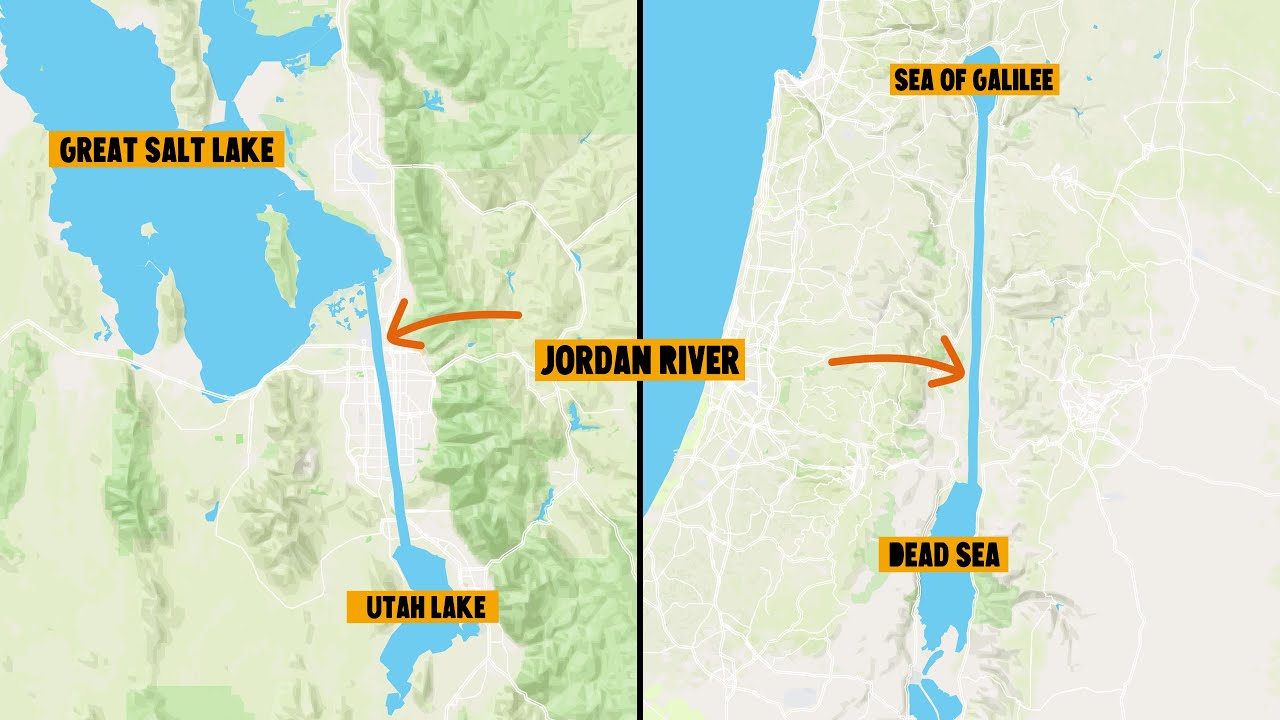
The Jordan River, in the state of Utah, United States, is a river about 51 miles (82 km) long. Regulated by pumps at its headwaters at Utah Lake, it flows northward through the Salt Lake Valley and empties into the Great Salt Lake. Four of Utah's six largest cities border the river: Salt Lake City, West Valley City, West Jordan, and Sandy. More than a million people live in the Jordan Subbasin, part of the Jordan River watershed that lies within Salt Lake and Utah counties. During the Pleistocene, the area was part of Lake Bonneville.
Members of the Desert Archaic Culture were the earliest known inhabitants of the region; an archaeological site found along the river dates back 3,000 years. Mormon pioneers led by Brigham Young were the first European American settlers, arriving in July 1847 and establishing farms and settlements along the river and its tributaries. The growing population, needing water for drinking, irrigation, and industrial use in an arid climate, dug ditches and canals, built dams, and installed pumps to create a highly regulated river.
Although the Jordan was originally a cold-water fishery with 13 native species, including Bonneville cutthroat trout, it has become a warm-water fishery where the common carp is most abundant. It was heavily polluted for many years by raw sewage, agricultural runoff, and mining wastes. In the 1960s, sewage treatment removed many pollutants. In the 21st century, pollution is further limited by the Clean Water Act, and, in some cases, the Superfund program. Once the home of bighorn sheep and beaver, the contemporary river is frequented by raccoons, red foxes, and domestic pets. It is an important avian resource, as are the Great Salt Lake and Utah Lake, visited by more than 200 bird species.
Big Cottonwood, Little Cottonwood, Red Butte, Mill, Parley's, and City creeks, as well as smaller streams like Willow Creek at Draper, Utah, flow through the sub-basin. The Jordan River Parkway along the river includes natural areas, botanical gardens, golf courses, and a 40-mile (64 km) bicycle and pedestrian trail, completed in 2017.[6]
The Jordan River is Utah Lake's only outflow. It originates at the northern end of the lake between the cities of Lehi and Saratoga Springs. It then meanders north through the north end of Utah Valley for approximately 8 miles (13 km) until it passes through a gorge in the Traverse Mountains, known as the Jordan Narrows. The Utah National Guard base at Camp Williams lies on the western side of the river through much of the Jordan Narrows.[7][8] The Turner Dam, located 41.8 miles (67.3 km) from the river's mouth (or at river mile 41.8) and within the boundaries of the Jordan Narrows, is the first of two dams of the Jordan River. Turner Dam diverts the water to the right or easterly into the East Jordan Canal and to the left or westerly toward the Utah and Salt Lake Canal. Two pumping stations situated next to Turner Dam divert water to the west into the Provo Reservoir Canal, Utah Lake Distribution Canal, and Jacob-Welby Canal. The Provo Reservoir Canal runs north through Salt Lake County, Jacob-Welby runs south through Utah County. The Utah Lake Distribution Canal runs both north and south, eventually leading back into Utah Lake.[9] Outside the narrows, the river reaches the second dam, known as Joint Dam, which is 39.9 miles (64.2 km) from the river's mouth. Joint Dam diverts water to the east for the Jordan and Salt Lake City Canal and to the west for the South Jordan Canal.[10][11][12]
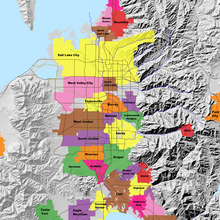
Map of the Salt Lake Valley
The river then flows through the middle of the Salt Lake Valley, initially moving through the city of Bluffdale and then forming the border between the cities of Riverton and Draper.[7] The river then enters the city of South Jordan where it merges with Midas Creek from the west. Upon leaving South Jordan, the river forms the border between the cities of West Jordan on the west and Sandy and Midvale on the east. From the west, Bingham Creek enters West Jordan. Dry Creek, an eastern tributary, combines with the main river in Sandy. The river then forms the border between the cities of Taylorsville and West Valley City on the west and Murray and South Salt Lake on the east. The river flows underneath Interstate 215 in Murray. Little and Big Cottonwood Creeks enter from the east in Murray, 21.7 miles (34.9 km) and 20.6 miles (33.2 km) from the mouth respectively. Mill Creek enters on the east in South Salt Lake, 17.3 miles (27.8 km) from the mouth. The river runs through the middle of Salt Lake City, where the river travels underneath Interstate 80 a mile west of downtown Salt Lake City and again underneath Interstate 215 in the northern portion of Salt Lake City. Interstate 15 parallels the river's eastern flank throughout Salt Lake County. At 16 miles (26 km) from the mouth, the river enters the Surplus Canal channel. The Jordan River physically diverts from the Surplus Canal through four gates and heads north with the Surplus Canal heading northwest. Parley's, Emigration, and Red Butte Creeks converge from the east through an underground pipe, 14.2 miles (22.9 km) from the mouth.[7] City Creek also enters via an underground pipe, 11.5 miles (18.5 km) from the river's mouth. The length of the river and the elevation of its mouth varies year to year depending on the fluctuations of the Great Salt Lake caused by weather conditions. The lake has an average elevation of 4,200 feet (1,300 m) which can deviate by 10 feet (3.0 m).[3] The Jordan River then continues for 9 to 12 miles (14 to 19 km) with Salt Lake County on the west and North Salt Lake and Davis County on the east until it empties into the Great Salt Lake.[7][8][11]
Discharge[edit]
The United States Geological Survey maintains a stream gauge in Salt Lake City that shows annual runoff from the period 1980–2003 is just over 150,000 acre-feet (190,000,000 m3) per year or 100 percent of the total 800,000 acre-feet (990,000,000 m3) of water entering the Jordan River from all sources. The Surplus Canal carries almost 60 percent of the water into the Great Salt Lake, with various irrigation canals responsible for the rest. The amount of water entering the Jordan River from Utah Lake is just over 400,000 acre-feet (490,000,000 m3) per year. Inflow from the 11 largest streams feeding the Jordan River, sewage treatment plants, and groundwater each account for approximately 15 percent of water entering the river.[13]
Watershed[edit]
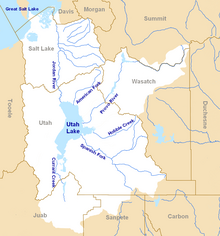
Map of the entire Jordan River Basin
|
|
|
|
|
Astronomical alignment[edit]
Looking east through nave on 23 June 1976, two days after the summer solstice Mary Magdalene's relics in the crypt
In 1976, Hugues Delautre, one of the Franciscan fathers charged with stewardship of the Vézelay sanctuary, discovered that beyond the customary east-west orientation of the structure, the architecture of La Madeleine incorporates the relative positions of the Earth and the Sun into its design. Every June, just before the feast day of Saint John the Baptist, the astronomical dimensions of the church are revealed as the sun reaches its highest point of the year, at local noon on the summer solstice, when the sunlight coming through the southern clerestory windows casts a series of illuminated spots precisely along the longitudinal center of the nave floor.[13][14][15][16][17]
|
|
|
|
|
Modo IA Todo Imágenes Vídeos Noticias Maps Shopping Libros Vuelos Finance La fascinante red de fechas y símbolos que mencionás conecta la película Volver al futuro, la historia de París y el Antiguo Egipto a través de coincidencias cronológicas reales, simbolismo masónico y teorías de conspiración de internet. Aunque la película es una obra de ficción, ciertos entusiastas de la numerología y el esoterismo encuentran patrones profundos en estos elementos. La explicación detallada de estas asombrosas conexiones se desglosa a continuación: 1. El 25 de octubre y la sincronización de los relojes En la película: La trama principal de Volver al futuro arranca formalmente la noche del 25 de octubre de 1985. Cuando Marty McFly llega al laboratorio del Dr. Emmett Brown, descubre que todos los relojes automáticos están sincronizados exactamente con 25 minutos de retraso. Reddit ·r/AskScienceFiction +1 El Obelisco de Luxor en París: El 25 de octubre de 1836, el rey Luis Felipe I de Francia erigió el monumental Obelisco de Luxor en el centro de la Plaza de la Concordia en París. Para la numerología esotérica, el hecho de que Doc Brown tenga sus relojes atrasados "25" minutos en la fecha "25" es visto como un reflejo o "espejo" del día en que el obelisco (un gigantesco marcador de tiempo o gnomon de reloj solar) fue alzado en Francia. 2. Los dos Obeliscos de Luxor y el viaje en el tiempo La separación de los gemelos: Originalmente, en el Templo de Luxor en Egipto, había dos obeliscos gemelos custodiando la entrada. En la década de 1830, uno de ellos fue trasladado a París, mientras que el otro se quedó en Egipto. El simbolismo portuario/temporal: En las corrientes de conspiración cinematográfica (conocidas como sinchromysticism), los obeliscos representan los pilares del templo de Salomón (Jakim y Boaz), portales o "puertas estelares" (stargates). Al separar los dos obeliscos geográficamente pero mantenerlos ligados históricamente, se crea conceptualmente una ruptura en el espacio-tiempo: un extremo del portal en Occidente (París) y el otro en Oriente (Luxor). Los obeliscos actúan como agujas de un reloj cósmico que mide las eras. 3. La conexión con el "1.19" y el primer viaje en el tiempo La hora del experimento: El primer viaje en el tiempo de la historia (realizado por el perro Einstein a bordo del DeLorean) ocurre exactamente a la 1:19 AM de la madrugada del 26 de octubre de 1985. El código 119 / 911: Si se invierten los números de la hora 1:19, se obtiene 9:11 (asociado a la fecha de los atentados a las Torres Gemelas y, en contextos esotéricos, al número de emergencia de servicios de seguridad). Quienes analizan Hollywood bajo la lupa del esoterismo argumentan que el número 119 o 911 es un código recurrente de "alerta o reinicio del tiempo". En la película, este primer viaje dura exactamente un minuto, devolviendo al perro a la 1:20 AM. Summary of Major Connections Element Date / Number Esoteric / Movie Meaning Doc's Clock Experiment October 25 (25 min late) Aligns with the day the Luxor obelisk became Paris' grandest sundial. Luxor Obelisk (Paris) October 25, 1836 The western half of a broken geographic and spiritual time portal. First Time Travel 1:19 AM Numeric mirror of 911, symbolizing a gateway or disruption in time. Si te interesa profundizar en estas teorías, podemos analizar otros mensajes ocultos en el diseño del set del laboratorio de Doc Brown o explorar cómo la arquitectura de la Plaza de la Concordia funciona como un gigantesco reloj solar. ¿Hacia dónde te gustaría guiar la investigación? Ego Sum Qui Sum ¡Santa ciencia! La teoría del viaje en el tiempo en "Volver al Futuro" 20 oct 2015 — En 2015 la saga de 'Volver al futuro' cumplía 30 años, y el día 21 de octubre se celebraba la llegada de Marty McFly a su futuro. Esto fue lo que escribí entonc... YouTube·Looper Español La Línea De Tiempo De Doc Brown En Volver Al Futuro, Explicada 19 oct 2020 — 1955 decide colgar un reloj sobre su inodoro luego de caerse y golpearse la cabeza dos brawn queda inconsciente al volver en sí tiene una. visión. luego de 30 a... 11m Reddit·r/AskScienceFiction [Volver al Futuro] ¿De qué se trataba el experimento de los relojes del Doc ... 27 ene 2015 — ¡Mi experimento funcionó! ¡Todos están exactamente 25 minutos atrasados! Esto nos dice un par de cosas. 1) Doc estaba intentando medir deliberadamente algún efe... Instagram·Rock N’ Pop ???????? ¡Feliz Día de Volver al Futuro! ???????? Hoy, 21 de octubre, celebramos una fecha ... 21 oct 2025 — ???????? ¡Feliz Día de Volver al Futuro! ???????? Hoy, 21 de octubre, celebramos una fecha que no es solo ficticia… es un símbolo de imaginación, aventura y futuro. En... ???????? ¡Feliz Día de Volver al Futuro! ???????? Hoy, 21 de octubre, celebramos una fecha ... de Rock N’ Pop en Instagram 1:08 Instagram ‘Volver al Futuro’ uno de los grandes clásicos de viajes en el tiempo se reestrena en cines desde este 30 de Octubre ⏳⚡️ #Cine #Reestreno #VolverAlFuturo #40Aniversario #Cinesecuencia 28 oct 2025 — Jamás pensaron que con un presupuesto de diecinueve millones de dólares, la película iba a recaudar más de trescientos ochenta millones de dólares a nivel mundi... Bajo las arenas de Kemet EL TRASLADO DEL OBELISCO DE LUXOR A PARÍS 25 oct 2015 — Un día como hoy 25 de octubre, de 1836, finaliza el viaje del obelisco de Ramsés II. Éste, ubicado en el templo de Luxor desde el reinado del monarca [1290-1224... Instagram “40 años del primer viaje en el tiempo – Volver al Futuro está de regreso” En 1985, Marty McFly subió a un DeLorean, alcanzó las 88 millas por hora… y el cine cambió para siempre. Hoy, en 2025, celebramos cuatro décadas de una de las películas más queridas de la historia, y lo hacemos como debe ser: ¡en la pantalla grande! #VolverAlFuturo #BackToTheFuture40 #CulturaGeek #VideoViral #FandomRetro #CineClásico #DeLoreanTimeMachine #MartyMcFly #DocBrown 26 oct 2025 — Hoy hace cuarenta años, Marty McFly se subió al Delorean y cambió la historia del cine, pero antes de que el viajara al pasado, hubo otro viajero. Uno peludo, l... La respuesta del Modo IA está lista |
|
|
 Primer
Anterior
11 a 25 de 25
Siguiente Primer
Anterior
11 a 25 de 25
Siguiente
 Último
|























![That's one small step..." —Neil Armstrong [1024 x 1333] : r/QuotesPorn](https://i.imgur.com/lfLGX.jpg)