LA BIBLIA SE ESTUDIA TEXTO Y CONTEXTO O EL MARCO DEL TEXTO. POR ESO LA MAYORIA DE LAS DENOMINACIONES CAEN EN LA MENTIRA DE LA CREENCIA DE QUE CRISTO ES UN DIOS TODOPODEROSO, PORQUE DESGRACIADAMENTE SE BASAN EN UNOS POCOS VERSICULOS NEGANDO EL MARCO DE LA BIBLIA. SI SE ESTUDIARA EL MARCO, OBVIAMENTE EL MUNDO ENTENDERIA DE QUE CRISTO FUE UN HOMBRE 100%, QUE NO TUVO PREEXISTENCIA, CASADO CON UNA MUJER Y OBVIAMENTE CON UN HIJO. EL DRAMA DE BABILONIA ES QUE NO ESTUDIA EL MARCO.
1 Pedro 5:13: La iglesia que está en Babilonia, elegida juntamente con vosotros, y Marcos mi HIJO, os saludan.
806. Juan 16:21 La mujer cuando da a luz, tiene dolor, porque ha llegado su HORA; pero después que ha dado a luz un niño, ya no se acuerda de la angustia, por el gozo de que haya nacido un hombre en el mundo.
Alchemy refers to a range of philosophies and ancient practices which seek to prepare or develop the "elixir of Life" or "immortality" or "longevity" using the philosophers' stone, accomplish the transmutation of base substances into gold, and attain ultimate wisdom. Many alchemical sources treat the various substances, equipment and processes used in alchemical workshops in an allegorical sense, as metaphors for a spiritualdiscipline. Alchemy, in its physical procedures and investigations can be viewed as a protoscience, the precursor to modern chemistry, having provided many procedures, equipment and names of substances which are still in use.
I had discovered, early in my researches, that their doctrine was no mere chemical fantasy, but a philosophy they applied to the world, to the elements, and to man himself. ~ William Butler Yeats
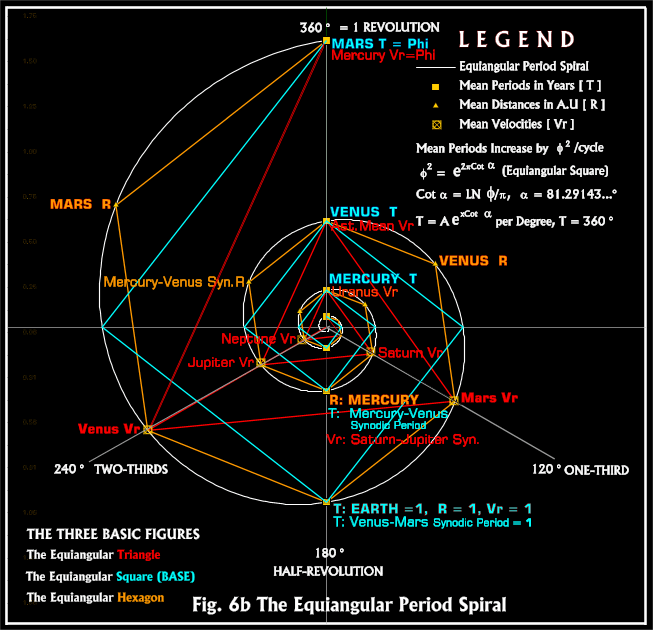
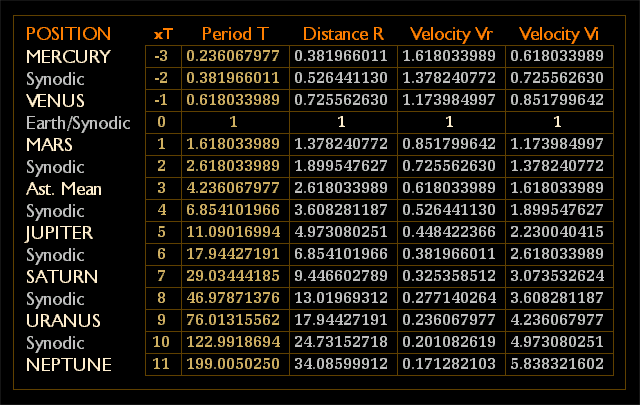
In light of the above there seems little doubt that in general and in the present astronomical context in particular, Spira Solaris qualifies to be described numerically as "the One and the Many," the "One and the All," "the Alpha and the Omega," and also (from The Chaldean Oracles): "Fountain of Fountains, and of All Fountains, The Matrix of all Things." ..... Pythagoras said the sacred Tetractys is: ` the spring having the roots of ever-flowing nature.' .... The four parts of the Decad, this perfect number, are called number, monad, power and cube. And the interweavings and minglings of these in the origin of growth are what naturally completes nascent number; for when a power of a power; and a cube is multiplied on a cube, it is the power of a cube; and when a cube is multiplied on a cube, the cube of a cube; thus all numbers, from which arise the genesis of what arises, are seven: number, monad, power, cube, power of a power, power of a cube, and cube of a cube. ..... We have seen that the whole nature of things, all the essential properties of physis, were believed by the Pythagoreans to be contained in the tetractys of the decad; and it now appears that, just as we should expect, this ' fountain of ever-flowing nature' contains the periodic movement of life, evolving out of unity and reverting to unity again, in the recurrent revolution of a wheel of birth. It embodies the fundamental Dionysiac representation of palingenesia. But there is something more in it than this. Pythagoras inherited the music of Orpheus, as well as the reincarnation doctrine of Dionysus. From the Orphics he inherited also the doctrine of the fall of the soul from its first perfect state of union with the divine, its degradation into the darkness of this life and of the underworld, and its final restoration to peace and unity. Now, on the model of this doctrine of the fall of the soul, the Pythagorean philosophy must hold that all existence proceeds out of the One and returns to it again; and that the One alone is perfect, while the manifold world of visible body is a turbid medium of appearance, in which the one truth is half-revealed and half-concealed, as the divine soul is manifest in the flesh and yet obscured by it and degraded. There is thus, inherent in the representation handed down from Orphism to Pythagoras, not only the primitive wheel of birth, but another aspect of the movement of life, which is best described as a processional movement out of unity into plurality, out of light into darkness. This movement, also, must be revealed in the nature of numbers, and contained in the tetractys. Pythagoras found it in the procession of numerical series, the study of which he originated, thereby rounding the science of number. It is practically certain, also, that in music he discovered the ratios of the octave, the fifth, and the fourth, contained in the harmonic proportion 12: 8: 6. Now a progression like those contained in the tetractys of Plato's worldsoul --the series, 1: 2: 4: 8, 1: 3: 9: 27– is what the Pythagoreans called an harmonia; it is a continuous entity knit together by a principle of unity running through it, namely the logos or ratio (1/2 or 1/3) which links every term to its predecessor by the same bond. Both series, moreover, radiate from the One, which in Pythagorean arithmetic was not itself a number, but the source in which the whole nature of all numbers was gathered up and implicit. When we note, further, that every number is not only a many, but also one number, we can see how Pythagoras would find the whole movement of cosmic evolution contained in the procession of series, in which the One passes out of itself into a manifold, yet without losing all its unity, and a return from the many to the One is secured by that bond of proportion which runs, backwards and forwards, through the whole series and links it into a ' harmony.' It is thus that we must understand the doctrine that ' the whole Heaven is harmony and number.' The processional movement of physis is modelled upon that of soul, which falls from its first state of union with the divine, but yet remains linked to the One life by mysterious bonds, and can return to it again, purified by music. ...... As for the "geometric figure", that we may already have (whether applicable here or not) and although the concept of "organic motion" may strike some modern readers as strange, it is nevertheless an underlying feature in many ancient major works--the Timaeus of Plato especially. Here it may also be observed that by expressing the exponents of this short section of the Phi-series planetary framework in thirds, the sets [3, 6, 9 , [4, 8, 12] and [6, 12, 18] are also apparent--sets that may or may not be considered further with respect to other passages in Plato, etc. ...... It is in the same fashion that the Timaeus also tries to give a physical account of how the soul moves its body; the soul, it is there said, is in movement, and so owing to their mutual implication moves the body also. After compounding the soul-substance out of the elements and dividing it in accordance with the harmonic numbers, in order that it may possess a connate sensibility for 'harmony' and that the whole may move in movements well attuned, the Demiurge bent the straight line into a circle; this single circle he divided into two circles united at two common points; one of these he subdivided into seven circles. All this implies that the movements of the soul are identified with the local movements of the heavens. (Aristotle, On the Soul) ...... Mind is the monad, science or knowledge the dyad (because it goes undeviatingly from one point to another), opinion the number of the plane, sensation the number of the solid; the numbers are by him expressly identified with the Forms themselves or principles, and are formed out of the elements; now things are apprehended either by mind or science or opinion or sensation, and these same numbers are the Forms of things. Some thinkers, accepting both premises, viz. that the soul is both originative of movement and cognitive, have compounded it of both and declared the soul to be a self-moving number. (Aristotle, On the Soul) ...... Thus that in the soul which is called mind (by mind I mean that whereby the soul thinks and judges) is, before it thinks, not actually any real thing. For this reason it cannot reasonably be regarded as blended with the body: if so, it would acquire some quality, e.g. warmth or cold, or even have an organ like the sensitive faculty: as it is, it has none. It was a good idea to call the soul 'the place of forms', though (1) this description holds only of the intellective soul, and (2) even this is the forms only potentially, not actually. (Aristotle, On the Soul) ..... there will be a need for several sciences. The first and most important of them is likewise that which treats of pure numbers--not numbers concreted in bodies, but the whole generation of the series of odd and even, and the effects which it contributes to the nature of things. When all this has been mastered, next in order comes what is called by the very ludicrous name mensuration, but is really a manifest assimilation to one another of numbers which are naturally dissimilar, effected by reference to areas. Now to a man who can comprehend this, it will be plain that this is no mere feat of human skill, but a miracle of God's contrivance. Next, numbers raised to the third power and thus presenting an analogy with three-dimensional things. Here again he assimilates the dissimilar by a second science, which those who hit on the discovery have named stereometry [the gauging of solids], a device of God's contriving which breeds amazement in those who fix their gaze on it and consider how universal nature molds form and type by the constant revolution of potency and its converse about the double in the various progressions. The first example of this ratio of the double in the advancing number series is that of 1 to 2; double of this is the ratio of their second powers [ 4 ], and double of this again the advance to the solid and tangible, as we proceed from 1 to 8 [ 1, 2, 2^2, 2^3]; the advance to a mean of the double, that mean which is equidistant from lesser and greater term [the arithmetical], or the other mean [the harmonic] which exceeds the one term and is itself exceeded by the other by the same fraction of the respective terms--these ratios of 3 : 2 and 4 : 3 will be found as means between 6 and 2: why, in the potency of the mean between these terms [ 6 x 2 ], with its double sense, we have a gift from the blessed choir of the Muses to which mankind owes the boon of the play of consonance and measure, with all they contribute to rhythm and melody. So much, then, for our program as a whole. But to crown it all, we must go on to the generation of things divine, the fairest and most heavenly spectacle God has vouchsafed to the eye of man. And: believe me, no man will ever behold that spectacle without the studies we have described, and so be able to boast that he has won it by an easy route. Moreover, in all our sessions for study we are to relate the single fact to its species; there are questions to be asked and erroneous theses to be refuted. We may truly say that this is ever the prime test, and the best a man can have; as for tests that profess to be such but are not, there is no labor so fruitlessly thrown away as that spent on them. We must also grasp the accuracy of the periodic times and the precision with which they complete the various celestial motions, and this is where a believer in our doctrine that soul is both older and more divine than body will appreciate the beauty and justice of the saying that ' all things are full of gods ' and that we have never been left unheeded by the forgetfulness or carelessness of the higher powers. There is one observation to be made about all such matters. If a man grasps the several questions aright, the benefit accruing to him who thus learns his lesson in the proper way is great indeed; if he cannot, 'twill ever be the better course to call on God. Now the proper way is this--so much explanation is unavoidable. To the man who pursues his studies in the proper way, all geometric constructions, all systems of numbers, all duly constituted melodic progressions, the single ordered scheme of all celestial revolutions, should disclose themselves, and disclose themselves they will, if, as I say, a man pursues his studies aright with his mind's eye fixed on their single end. As such a man reflects, he will receive the revelation of a single bond of natural interconnection between all these problems. If such matters are handled in any other spirit, a man, as I am saying, will need to invoke his luck. We may rest assured that without these qualifications the happy will not make their appearance in any society; this is the method, this the pabulum, these the studies demanded; hard or easy, this is the road we must tread. (The Collected Dialogues of Plato) http://www.spirasolaris.ca/sbb4d.html
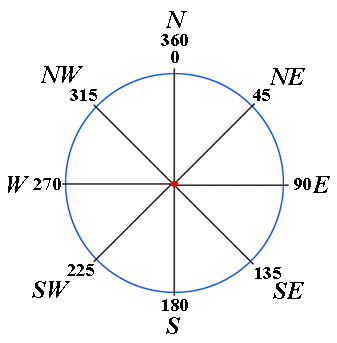
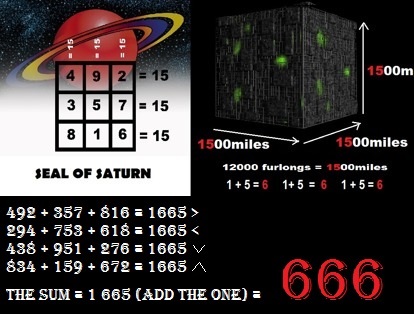
Now it becomes somewhat clearer as to why there are 360 degrees in a circle. They are all expressing decimal parity of 9 which is to say; centre focused. Even if you halve 45 and so on you will get 22.5 = 9, 11.25 = 9, 5.625, 2.8125 = 9 and so on... The 9 is a self similar axis, the Z axis. The X and Y define the surface topology of the logarithmic spiral, while Z is the central third. 6 and 3 oscillating around nine. And it’s probably 360 because 3 and 6 are the “nines”. So that’s 3 dimensional, spatial orientation, what about the 4th dimension; time?
There are 24 hours in a day; 2+4 = 6 There are 60 minutes in an hour; 6+0 = 6 There are 60 second in a minute; 6+0 = 6 So the full revolution is a 6, half is 12 which is a 3. Around the 12 hour clock you constant 3,6,9 oscillation. 3oclock, 6oclock, 9oclock, 12oclock= 3 then 15 = 6, 18 = 9.... 3,6,9,3,6,9,3,6 (8 45 degree movements)
__________________ Squeegee your third-fucking-eye-(Bill Hicks)
The Fibonacci sequence has a pattern that repeats every 24 numbers.
Numeric reduction is a technique used in analysis of numbers in which all the digits of a number are added together until only one digit remains. As an example, the numeric reduction of 256 is 4 because 2+5+6=13 and 1+3=4.
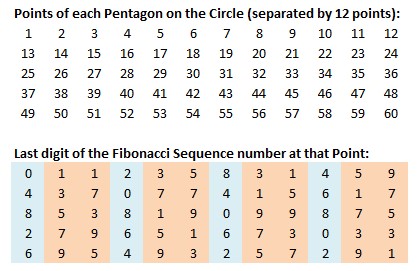
Applying numeric reduction to the Fibonacci series produces an infinite series of 24 repeating digits:
If you take the first 12 digits and add them to the second twelve digits and apply numeric reduction to the result, you find that they all have a value of 9.
1st 12 numbers
1
1
2
3
5
8
4
3
7
1
8
9
2nd 12 numbers
8
8
7
6
4
1
5
6
2
8
1
9
Numeric reduction – Add rows 1 and 2
9
9
9
9
9
9
9
9
9
9
9
18
Final numeric reduction – Add digits of result
9
9
9
9
9
9
9
9
9
9
9
9
This pattern was contributed both by Joseph Turbeville and then again by a mathematician by the name of Jain.
We would expect a pattern to exist in the Fibonacci series since each number in the series encodes the sum of the previous two. What’s not quite so obvious is why this pattern should repeat every 24 numbers or why the first and last half of the series should all add to 9.
For those of you from the “Show Me” state, this pattern of 24 digits is demonstrated in the numeric reduction of the first 73 numbers of the Fibonacci series, as shown below:
Fibonacci Number
Numeric reduction by adding digits
1st Level
2nd Level
Final Level
Example: 2,584
2+5+8+4=19
1+9=10
1+0=1
0
0
0
0
1
1
1
1
1
1
1
1
2
2
2
2
3
3
3
3
5
5
5
5
8
8
8
8
13
4
4
4
21
3
3
3
34
7
7
7
55
10
1
1
89
17
8
8
144
9
9
9
233
8
8
8
377
17
8
8
610
7
7
7
987
24
6
6
1,597
22
4
4
2,584
19
10
1
4,181
14
5
5
6,765
24
6
6
10,946
20
2
2
17,711
17
8
8
28,657
28
10
1
46,368
27
9
9
75,025
19
10
1
121,393
19
10
1
196,418
29
11
2
317,811
21
3
3
514,229
23
5
5
832,040
17
8
8
1,346,269
31
4
4
2,178,309
30
3
3
3,524,578
34
7
7
5,702,887
37
10
1
9,227,465
35
8
8
14,930,352
27
9
9
24,157,817
35
8
8
39,088,169
44
8
8
63,245,986
43
7
7
102,334,155
24
6
6
165,580,141
31
4
4
267,914,296
46
10
1
433,494,437
41
5
5
701,408,733
33
6
6
1,134,903,170
29
11
2
1,836,311,903
35
8
8
2,971,215,073
37
10
1
4,807,526,976
54
9
9
7,778,742,049
55
10
1
12,586,269,025
46
10
1
20,365,011,074
29
11
2
32,951,280,099
48
12
3
53,316,291,173
41
5
5
86,267,571,272
53
8
8
139,583,862,445
58
13
4
225,851,433,717
48
12
3
365,435,296,162
52
7
7
591,286,729,879
73
10
1
956,722,026,041
44
8
8
1,548,008,755,920
54
9
9
2,504,730,781,961
53
8
8
4,052,739,537,881
62
8
8
6,557,470,319,842
61
7
7
10,610,209,857,723
51
6
6
17,167,680,177,565
67
13
4
27,777,890,035,288
73
10
1
44,945,570,212,853
59
14
5
72,723,460,248,141
51
6
6
117,669,030,460,994
65
11
2
190,392,490,709,135
62
8
8
308,061,521,170,129
46
10
1
498,454,011,879,264
72
9
9
Thanks to Joseph Turbeville for sending “A Glimmer of Light from the Eye of a Giant” and to Helga Hertsig for bringing Jain’s discovery of this pattern to my attention.
This pattern can be seen in the following list of the first 72 Fibonacci numbers:
0
0
1
1
2
1
3
2
4
3
5
5
6
8
7
13
8
21
9
34
10
55
11
89
12
144
13
233
14
377
15
610
16
987
17
1,597
18
2,584
19
4,181
20
6,765
21
10,946
22
17,711
23
28,657
24
46,368
25
75,025
26
121,393
27
196,418
28
317,811
29
514,229
30
832,040
31
1,346,269
32
2,178,309
33
3,524,578
34
5,702,887
35
9,227,465
36
14,930,352
37
24,157,817
38
39,088,169
39
63,245,986
40
102,334,155
41
165,580,141
42
267,914,296
43
433,494,437
44
701,408,733
45
1,134,903,170
46
1,836,311,903
47
2,971,215,073
48
4,807,526,976
49
7,778,742,049
50
12,586,269,025
51
20,365,011,074
52
32,951,280,099
53
53,316,291,173
54
86,267,571,272
55
139,583,862,445
56
225,851,433,717
57
365,435,296,162
58
591,286,729,879
59
956,722,026,041
60
1,548,008,755,920
61
2,504,730,781,961
62
4,052,739,537,881
63
6,557,470,319,842
64
10,610,209,857,723
65
17,167,680,177,565
66
27,777,890,035,288
67
44,945,570,212,853
68
72,723,460,248,141
69
117,669,030,460,994
70
190,392,490,709,135
71
308,061,521,170,129
72
498,454,011,879,264
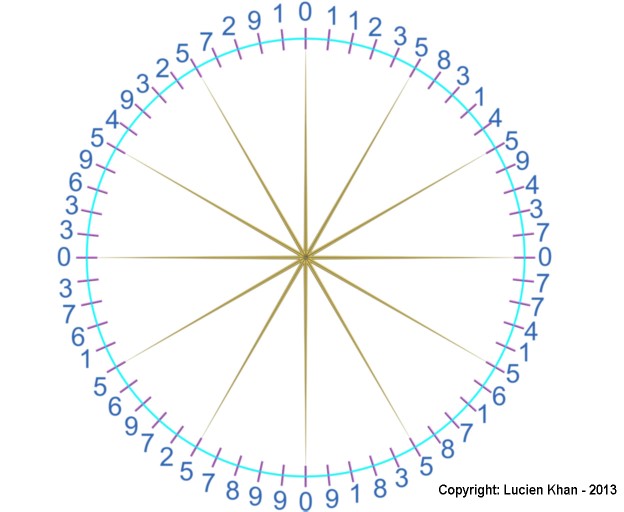
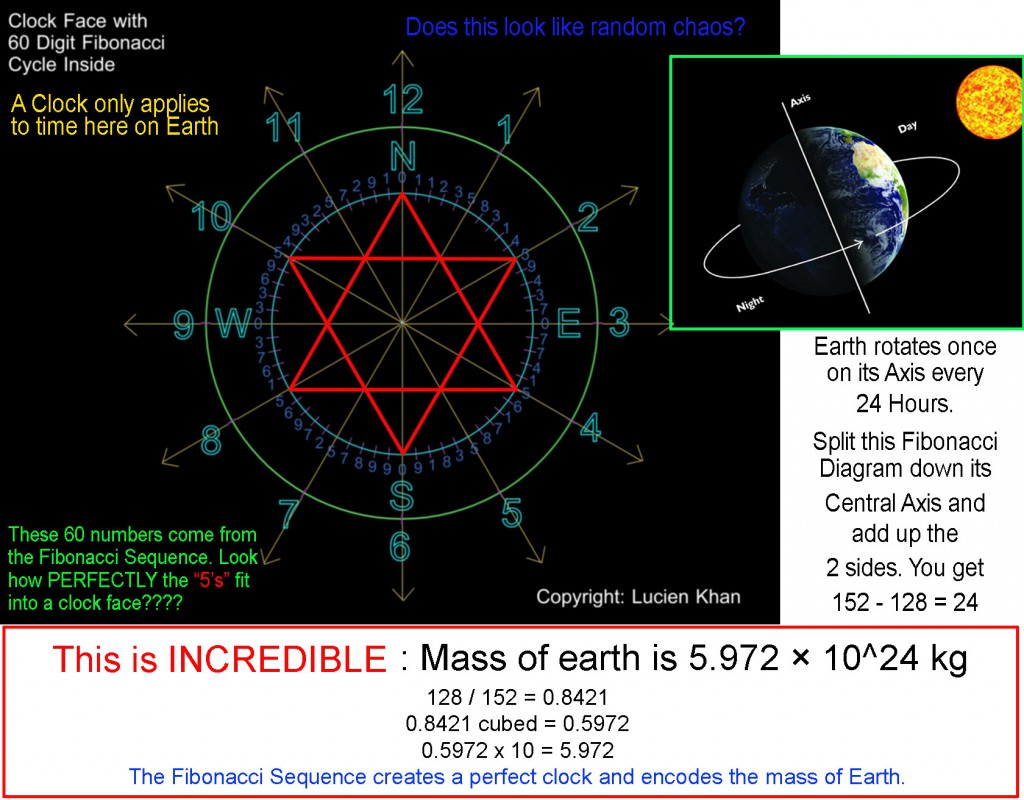
Lucien Khan arranged these 60 digits of the pattern in a circle, as shown in illustration below:
Here he found other interesting results:
The zeros align with the 4 cardinal points on a compass.
The fives align with the 8 other points of the 12 points on a clock.
Except for the zeros, the number directly opposite each number adds to 10.
Lucien postulates that ancient knowledge of these relationships contributed to the development of our modern use of 60 minutes in an hour, and presentation of numbers on the face of the clock.
I found too that any group of four numbers that are 90 degrees from each other (15 away from each other in the circle) sum to 20, except again for the zeros. As an example, use 1, 7, 9 and 3, which appear one to the right of each of the compass points.
Additionally, every group of five numbers that define the points of the 12 pentagons on the circle also create a pattern. Four of the pentagons have even-numbered last digits of 0, 2, 4, 6, and 8. The remaining eight pentagons have odd-numbered last digits of 1, 3, 5, 7 and 9.
Another interesting pattern yet was observed by Lucien Khan: The 216th number is this sequence is 619220451666590135228675387863297874269396512. The sum of all the digits in that number add up to 216, as well. He notes that it is believed that the secret or hidden name of God contains 216 characters. There are many other fascinating relationships and sacred geometries, which are presented by Lucien Khan in more detail at the links below.
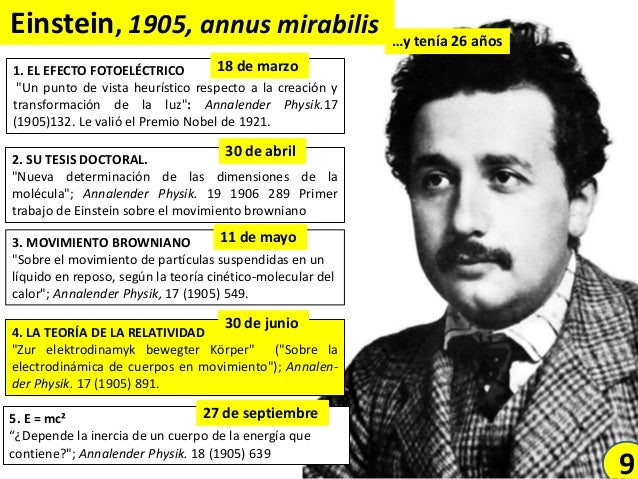
Albert Einstein (en alemán [ˈalbɛɐ̯t ˈaɪnʃtaɪn]; Ulm, Imperio alemán, 14 de marzo de ... En 1915 presentó la teoría de larelatividadgeneral, en la que reformuló por completo el concepto de gravedad. ...... Einstein, Albert (1905e) [manuscrito recibido27 de septiembre 1905], «Ist die Trägheit eines Körpers von seinem ...
27 sep. 2015 -... primera vez su Teoría de laRelatividadEspecial, también llamada restringida; y en 1960, muere el ...27 de septiembre del 2015- 12:01 AM ...
Albert Einstein publica la teoría general de larelatividad... De la teoría especial de larelatividadse deduce su famosa ecuación E=mc2, ...27-09-1905 D.C..
7 ene. 2014 -En 1905 Einstein publicó su teoría de larelatividadespecial, que ...... Einstein presentó a los editores de Annalen el27 de septiembredel ...
MATT 16:18 is an in your face glyph for the golden mean ratio 1.618
(“MATT” is pun of “MATTER”)
Golden Mean ratio of 1.618
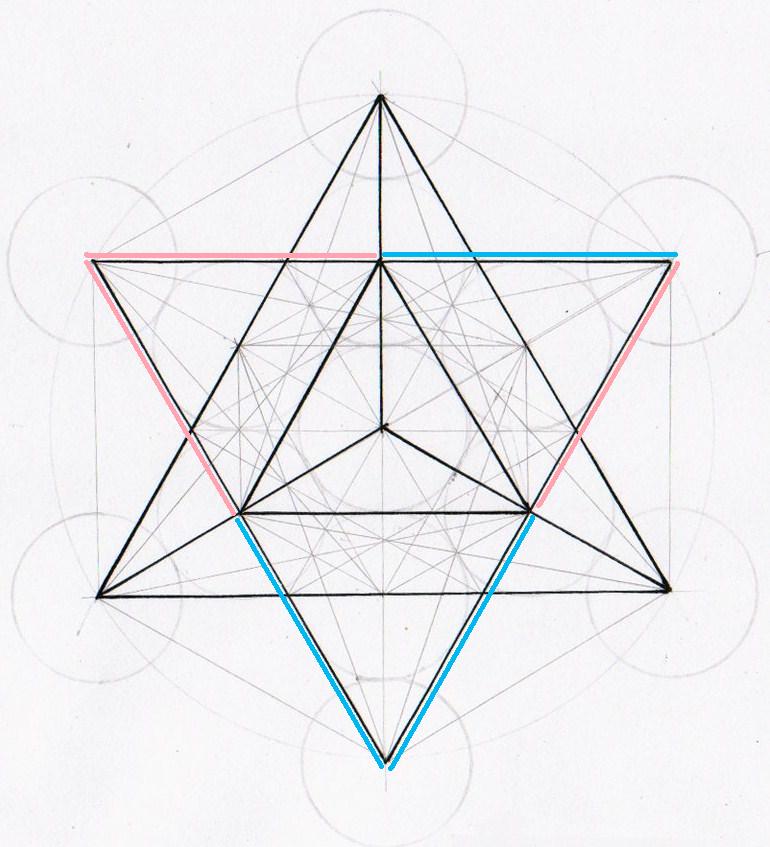
The Golden Mean and the Equilateral Triangle in a Circle; THE CRUCIAL FACT IS THE MIDPOINT OF THE TRIANGLE SIDE
Star Tetrahedron, formed by the MIDPOINTS OF THE CENTRAL EQUILATERAL TRIANGLE (the blue and rose colored lines indicate these midpoint halves)
Meet the physicist who wants to build a time machine to communicate with his dead father
Theoretical physicist Ronald Mallett pours dry ice into a ring laser in this arranged photograph taken in a University of Connecticut laboratory March 23. (Scott Eisen/Bloomberg)
There’s an unmistakable paradox surrounding the sudden death of Ron Mallett’s father when Mallett was an impressionable kid growing up in the Bronx: Had Boyd Mallett survived, his son never would have devoted himself with such obsessive zeal to unraveling the mystery of time travel in hopes of saving his father’s life.
Should Ron Mallett someday succeed — traveling backwards in a time machine to warn his father about this two-pack-a-day smoking habit — he would, in theory, be extinguishing the flame that has burned inside him for decades.
(Have you seen the movie “Interstellar”? Yeah, it’s kinda like that.)
“My love for him is still as strong as it was 60 years ago,” Ron Mallett told The Washington Post of his father, who died in 1955 at age 33. “When I’m on my death bed, I will be thinking of him. His death is the reason I am what I am.”
What he is is a 69-year-old theoretical physicist at the University of Connecticut who, at the tail end of a celebrated career, finds himself closer than ever to building the time machine that has mesmerized him since childhood.
Mallett’s work is rooted in the work of Albert Einstein’s general theory of relativity. His greatest achievement is a 15-year-old theoretical equation that, he believes, holds the key to finding his father and revolutionizing the way we think about time. To test the equation, Mallett needs to raise $250,000 for a feasibility study.
“People don’t realize how expensive research is,” he told The Post. “The Wright Brothers didn’t just build a plane. First, they actually built a wind tunnel to determine the best configurations for aircraft wings. When it comes to a time machine, we need to build the wind tunnel before we can think about building the plane.”
Einstein understood that if space could be twisted, then time could also be “twisted and bent back on itself to form loops,” according to Bloomberg. Based on that insight, the crux of Mallett’s theory is that a circulating beam of light is an even more effective way of twisting space and time.
Mallett likes to demonstrate his theory using a coffee cup:
Mallett proudly promotes his coffee cup demonstration now; but when he received his doctorate in 1973, he kept his time travel obsession quiet. At the time, he was one of only 79 African Americans among about 20,000 PhD physicists in the country, according to Bloomberg.
Boyd Mallet is seen fixing a television before his death at age 33. (Courtesy of Ronald Mallett)
Discrimination in the field was much more prevalent at that time, Mallett said, and he worried that his interest in time travel would derail his chance of receiving tenure.
“Because of the fact that there were so few of us, I knew that I had to step carefully,” he said. “But I’ve always felt like the best way of getting back was achieving success.”
It’s an attitude he picked up early from his father, a World War II veteran who served as a medic in Europe before returning home and using the GI bill to enroll in technical college. There, he reinvented himself as a television repairman.
At home, however, Mallett’s father was intensely focused on grooming his family for even bigger things. He forced his kids to listen to classical music radio broadcasts and read poetry. He reveled in taking apart the family television set and showing his mechanically minded son how the entrails worked in concert. He believed strongly in the importance of education, Mallett recalls, and would only dole out his son’s allowance if his son could pass a multiplication test.
“If I ever have a chance to talk to him, I’d want to ask him what motivated him to go into electronics and become the renaissance man that he was becoming,” Mallett said, noting that his father grew up the poor son of a Pennsylvania brick-maker. “It’s like he was trying to build himself into a cultured, educated person and he was doing it all on his own.”
His father’s death from a heart attack at 33 plunged the family into poverty and sent 10-year-old Mallett into a crushing period of depression.
“He looked like this strong, robust man,” Mallett once told the Boston Phoenix. “When he died of this massive heart attack, it was as though the impossible had happened He was like Superman. I was just in a daze.”
The family relocated to Altoona, Penn., where what little money Mallett received from his mother was spent on five-cent books from the Salvation Army. Fueled by fantasies of time travel, those books quickly became a means of escape.
After graduating from high school, Mallett enlisted in the Air Force and spent four years as a computer technician for Strategic Air Command at Lockbourne Air Force Base outside Columbus.
Eventually, he earned his doctorate and was hired by United Technologies, where he spent two years working with lasers. Although he longed for academia, his understanding of lasers would prove invaluable decades later as he developed his theory about using light to bend time.
Ronald Mallett draws a diagram of his ring laser on a whiteboard in a University of Connecticut laboratory. (Scott Eisen/Bloomberg)
As he nears the end of his career, Mallett, who is married and has two stepchildren, is pushing on.
And what better time to do so? This year, Bloomberg notes, is “the 100th anniversary of Einstein’s general theory of relativity that made time travel a serious topic among today’s theoreticians and the 60th anniversary of his father’s death.”
Spike Lee bought the rights to Mallett’s 2006 autobiography, “Time Traveler,” and is shopping a script, the scientist said.
He’s raised only $11,000 of the $250,000 he needs to carry out his crucial experiments. He is at once helped and hampered by the very notion of time travel, a concept that galvanizes as much dismissal as curiosity.
“What people have to realize is that this is real science,” Mallett said. “The Wright Brothers had been able to get the financing they needed for their wind tunnels, it would have advanced things faster.”
With the aviation pioneers in mind, he finds comfort in a quote by Simon Newcomb, the onetime director of the U.S. Naval Observatory: “Flight by machines heavier than air is impractical and insignificant, if not utterly impossible.”
“Newcomb made his statement in 1902,” Mallett notes. “In 1903, the Wright Brothers flew for the first time.”


 Tema anterior