El fenómeno Dan Brown ha quedado oficialmente reactivado. Su última novela, 'Inferno', que sale a la venta en librerías el próximo martes, ya ha empezado a dar frutos con las peticiones en internet, número uno indiscutible en Amazon y un título que ya lleva cuatro meses entre los 100 primeros títulos.
Mucho ha podido ayudar el hecho de que la crítica americana haya comparado la novela con 'El Código Da Vinci', la obra sobre María Magdalena, la religión y el pintor renacentista que alcanzó los 80 millones de ejemplares vendidos en todo el mundo. De acuerdo a Malcolm Jones, experto literario de The Daily Beast, "si les gustó 'El Código Da Vinci', querrán leer 'Inferno'", un augurio de lo que está por llegar en términos de ventas.
También es un punto a favor para Brown el hecho de que la estructura de la novela sea similar a la de anteriores éxitos, con su protagonista, Robert Langdon, de nuevo inmerso en los misterios de la cultura europea con múltiples códigos y jeroglíficos que resolver, en esta ocasión con Dante Alighieri y su 'Inferno' —extractado de 'La divina comedia'— como eje central de la trama.
En la mente del escritor de New Hampshire no hay duda de que la novela terminará siendo adaptada al cine, después del éxito de las dos anteriores, 'El código Da Vinci' y 'Ángeles y demonios', ambas protagonizadas por Tom Hanks. Brown no tiene tan claro si el célebre actor se prestará a seguir capitaneando las adaptaciones al cine de sus novelas.
"Me gusta mucho verle pensar", dijo Brown en una entrevista reciente. "No es un héroe de acción. Es un héroe pensante". Aún queda, sin embargo, otra novela por adaptar que todavía no ha llegado a buen puerto, también con el profesor Robert Langdon como protagonista. Se trata de 'The Lost Symbol', cuyo guión ya ha pasado por varias manos, incluyendo las del propio autor. Es una potencial mina de oro que aún puede dar muchas más ventas.
El lanzamiento mundial de INFERNO se realizará el 14 de mayo 2013.
La edición en español estará disponible el 14 de mayo 2013.
Dan Brown, autor de El Código da Vinci y Ángeles y Demonios, es el autor más vendido en la historia reciente.
Grupo Planeta, a través de su filial mexicana, y bajo el sello Planeta Internacional, lanzará al mercado la nueva novela del escritor estadounidense Dan Brown, titulada INFERNO, el próximo 14 de mayo de 2013.
El lanzamiento de INFERNO en México se llevará a cabo de manera simultánea al resto del mundo a partir de las 12:01am del 14 de mayo de 2013, en un esquema sin precedentes en la industria editorial.
Dan Brown es el único autor en el mundo que ha vendido más de 200 millones de ejemplares. En México su bestseller, El Símbolo Perdido, vendió alrededor de 500 mil ejemplares.
A través de las redes sociales, el autor ha dado indicios de la temática que aborda el libro. En México se ha lanzado el hashtag #InfernoMX para dar seguimiento en Twitter sobre las últimas noticias al respecto.
In Dan Brown's latest novel, Inferno, Robert Langdon leads readers on another thrilling chase through the streets of Florence and Venice. I've assembled my own photos of some of the locations in the book. (Update: There are more photos from a second trip to Venice in the post Dan Brown's Inferno: More Venice in Photos.)
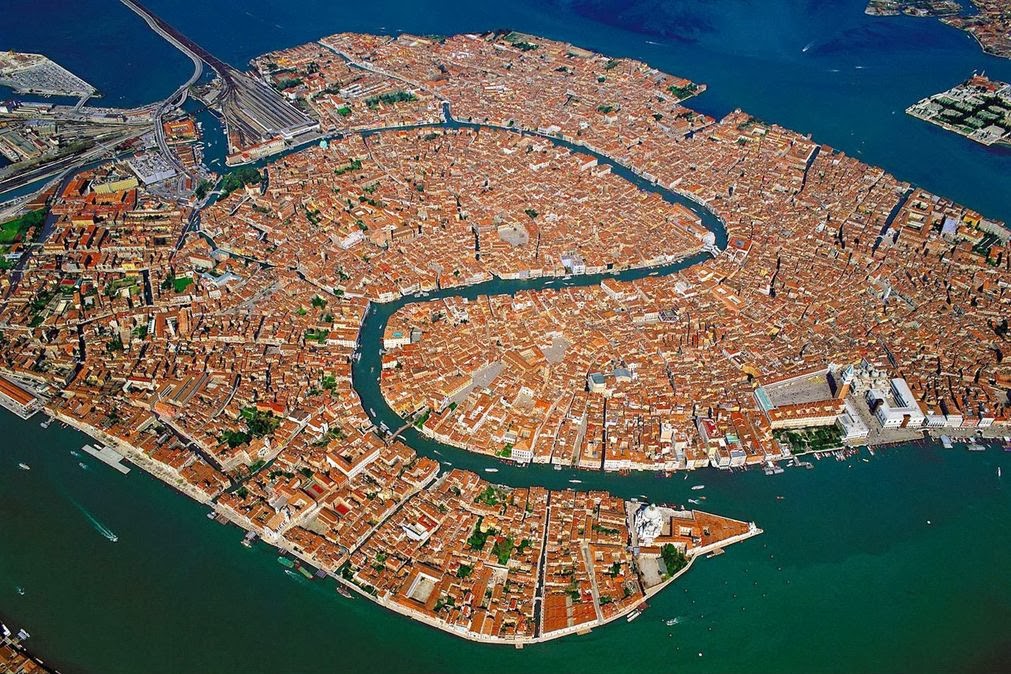
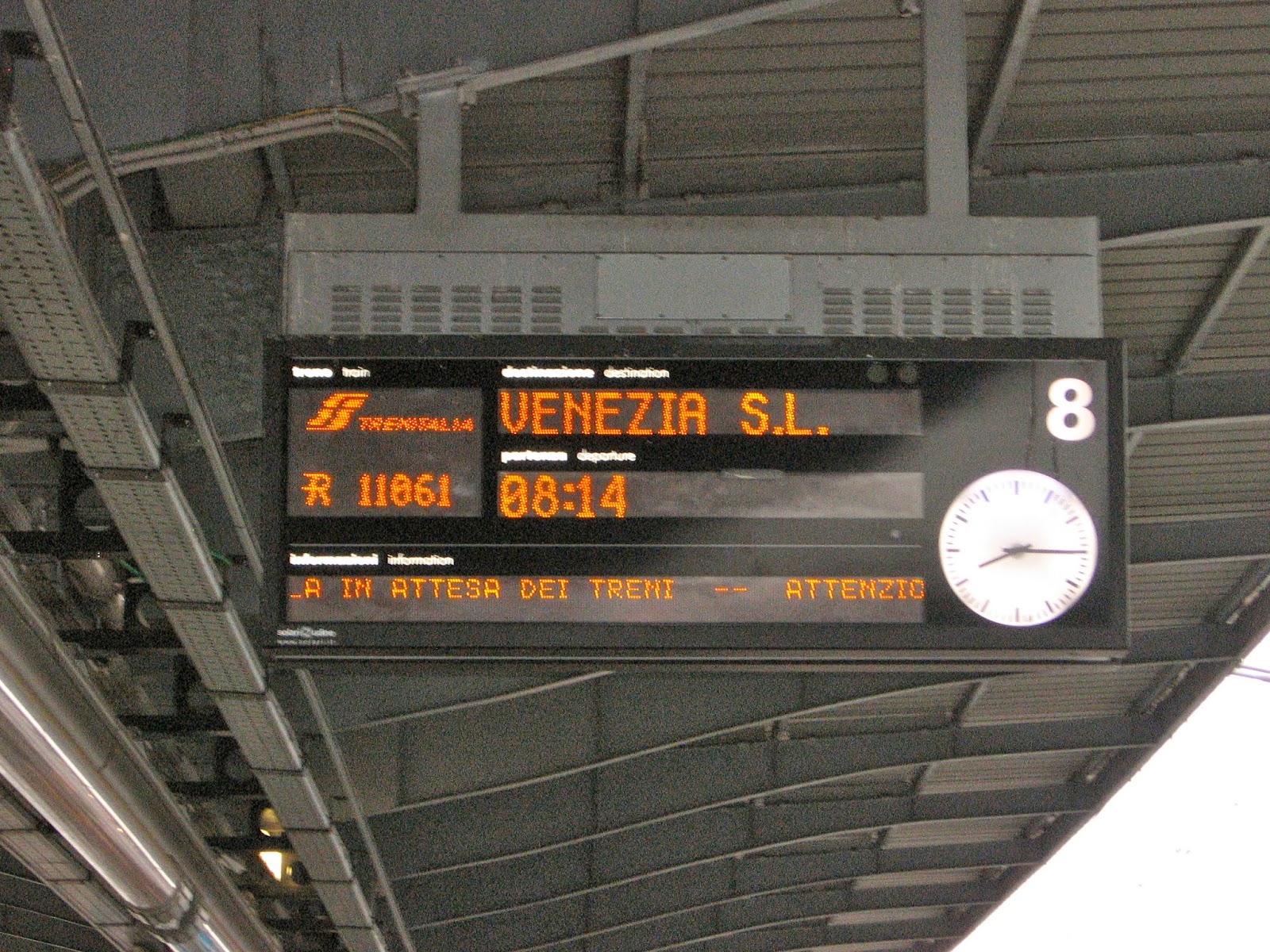
After completing his quest in the historic centre of Florence, Langdon boards a train bound for Venice, La Serenissima, and arrives at Santa Lucia Station.
A causeway connects Venice with the mainland and the Grand Canal lies directly outside the train station.To the left of the station is the Ponte degli Scalzi, one of four bridges spanning the Grand Canal.
Ponte degli Scalzi on the Grand Canal
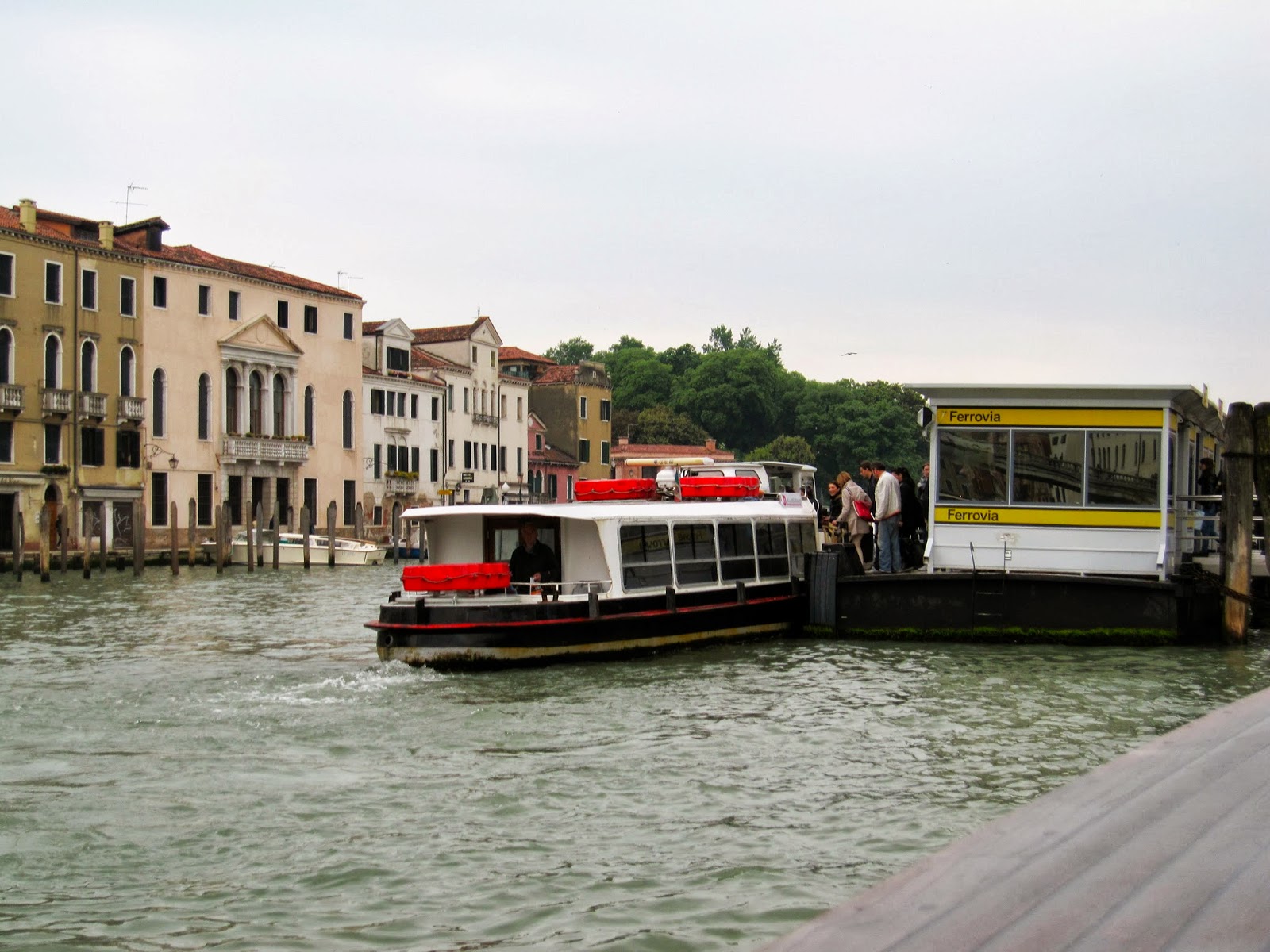
There are no automobiles in Venice. Visitors must take a water taxi or water bus (vaporetto) from the Ferrovia station to their destination. I've also seen people who chose to walk, but it can be an arduous trek up and down many bridges with luggage.
Ferrovia Vaporetto Station on the Grand Canal
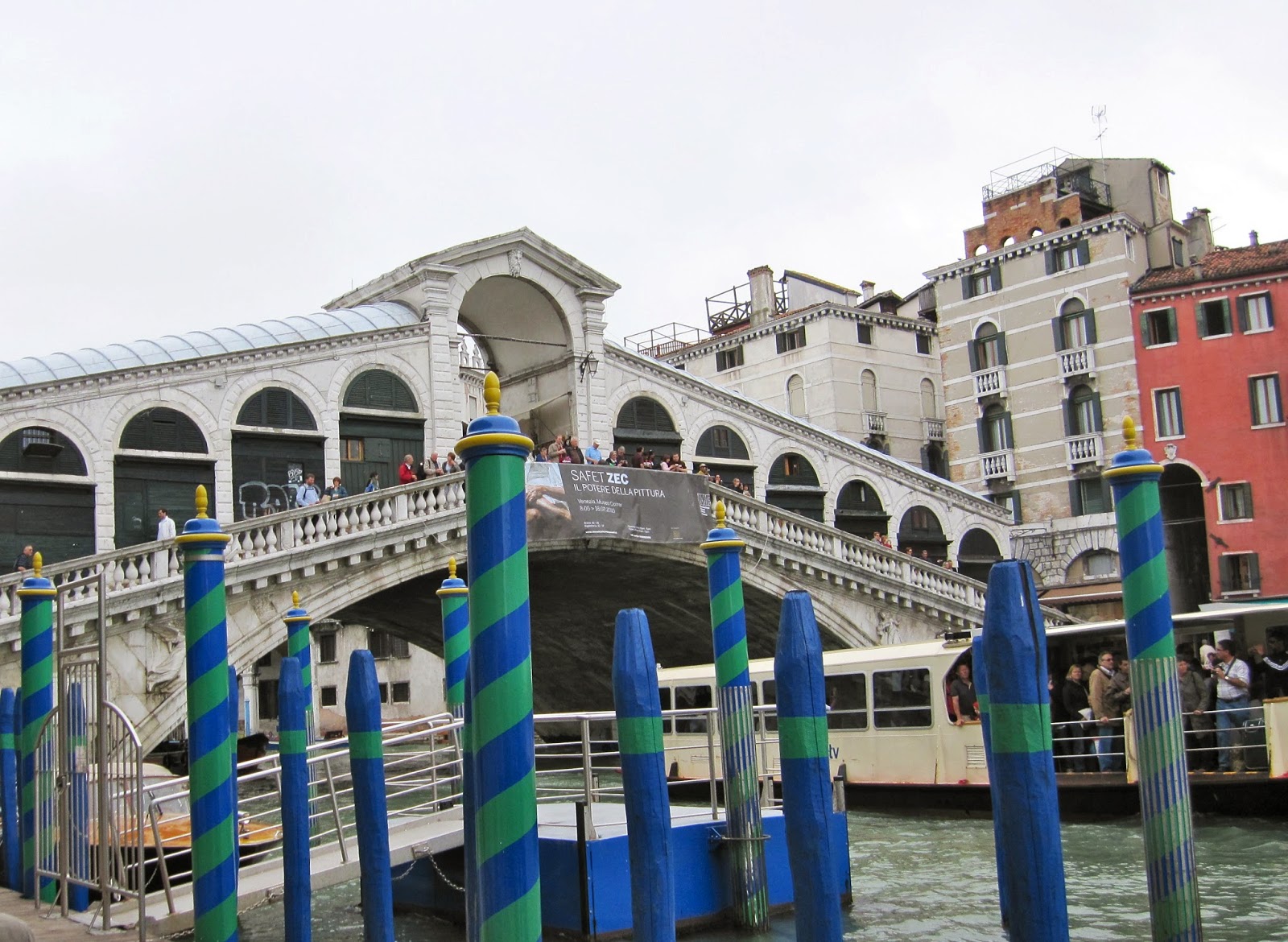
Now a symbol of Venice, the Rialto Bridge was the first bridge to span the Grand Canal. Construction was completed in 1591.
The Rialto Bridge
The view of the Grand Canal from the Rialto Bridge today resembles a Caneletto landscape painting.
View of the Grand Canal from the Rialto Bridge
Langdon sees someone wearing a long beaked plague mask on top of the Rialto Bridge and is reminded of his true purpose for being in Venice.
Venetian Plague Masks
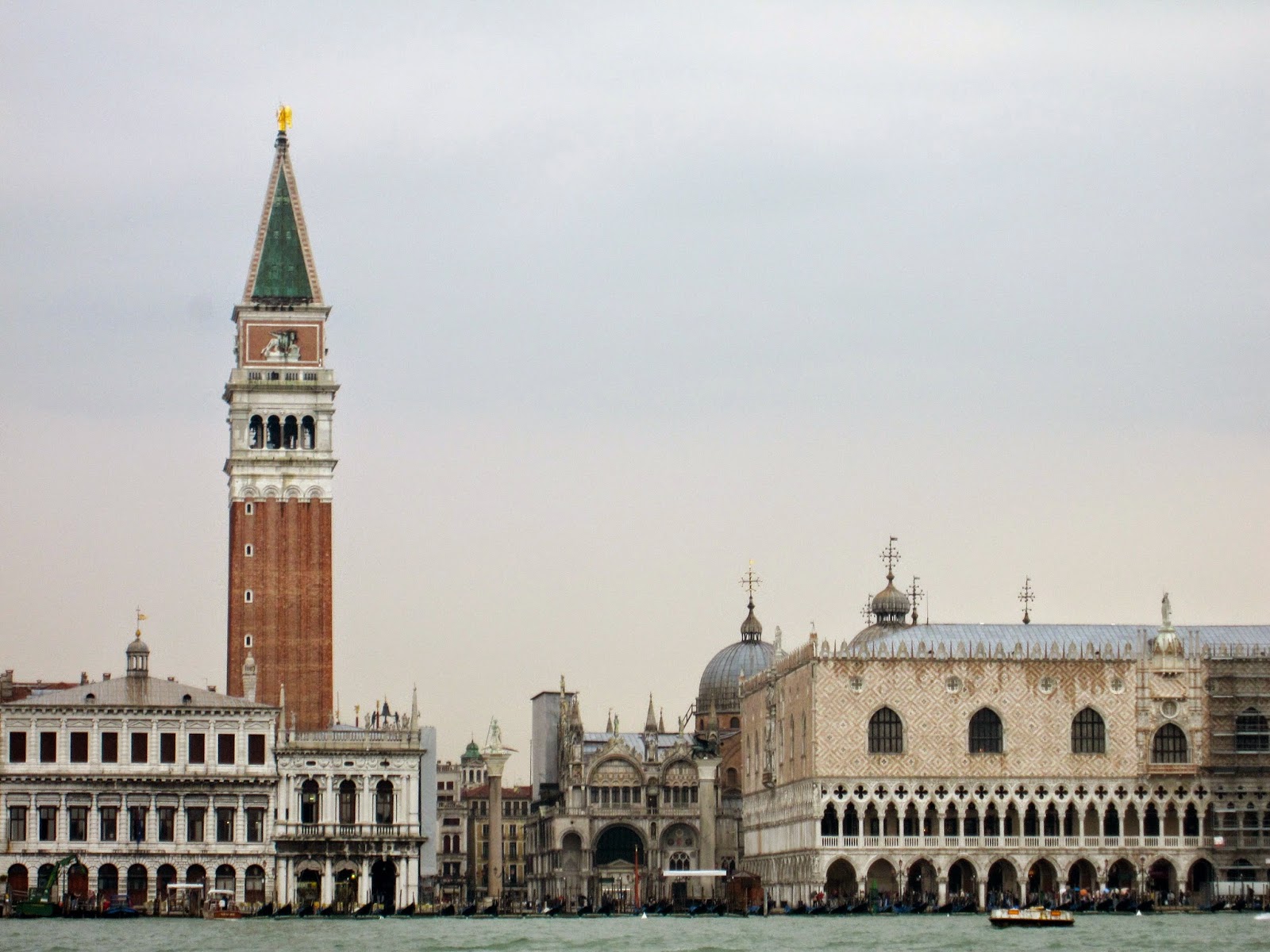
He soon arrives at the southern tip of the Grand Canal and Piazza San Marco. When approaching by water, the trees of the Royal Gardens, the Giardetti Reali, are visible along the water's edge.
Giardetti Reali
Approach to Piazza San Marco
The waters of the Venetian lagoon are frequented by both large cruise ships and much smaller gondolas.
Cruise Ship in Venice
Gondolas on the Lagoon
The curved shape of a gondola's prow - the ferro di prua - represents the Grand Canal, and the six teeth represent the six sestieres, or districts, of Venice: San Marco, Dorsoduro, Santa Croce, San Polo, Cannaregio and Castello.
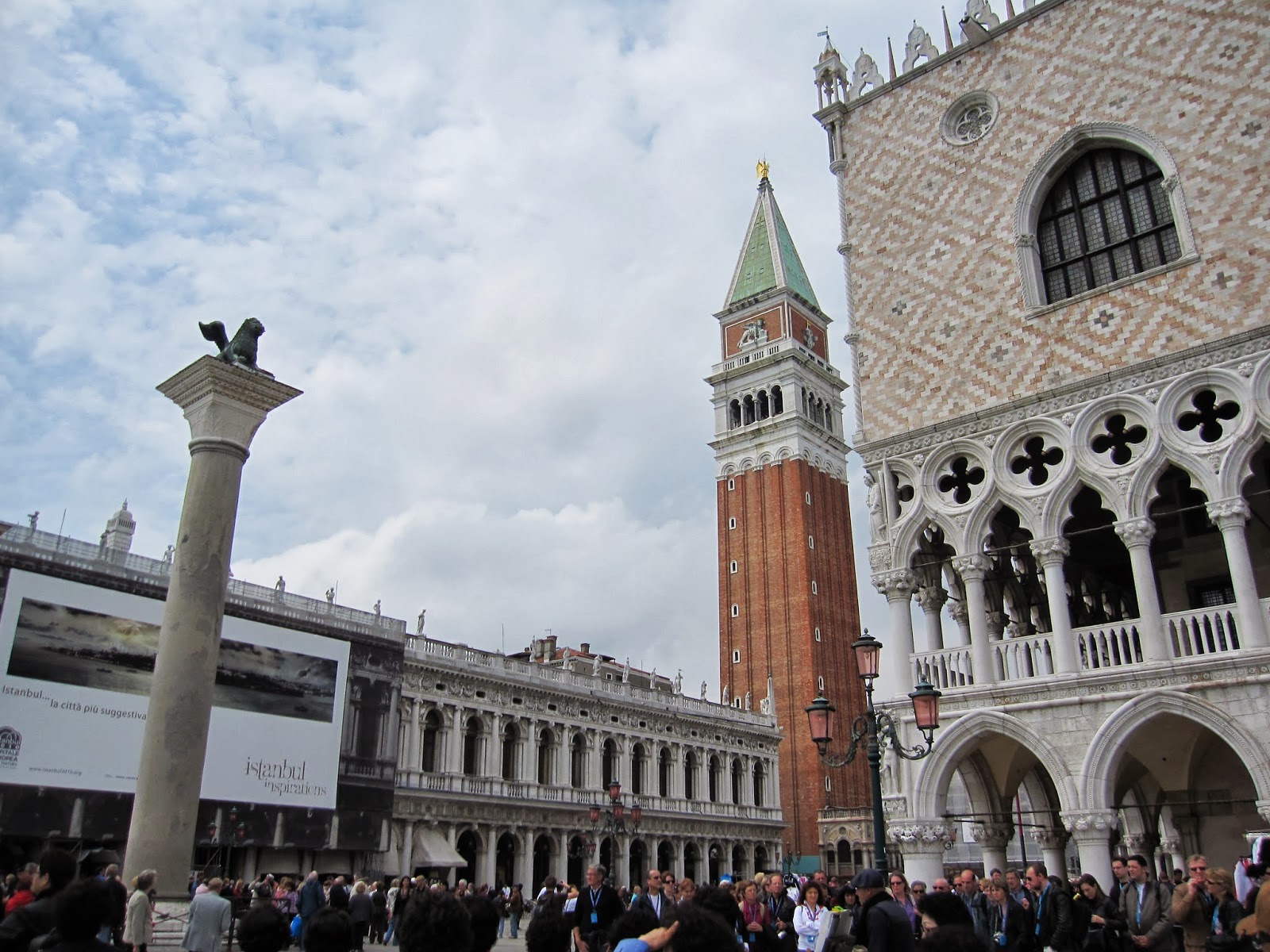
From high atop a column the symbol of Venice, thewinged lion of St. Mark, greets visitors to Piazza San Marco.
The Lion, Campanile and Doge's Palace
The square's original bell tower, or campanile, collapsed in 1902 but was rebuilt.
The Campanile
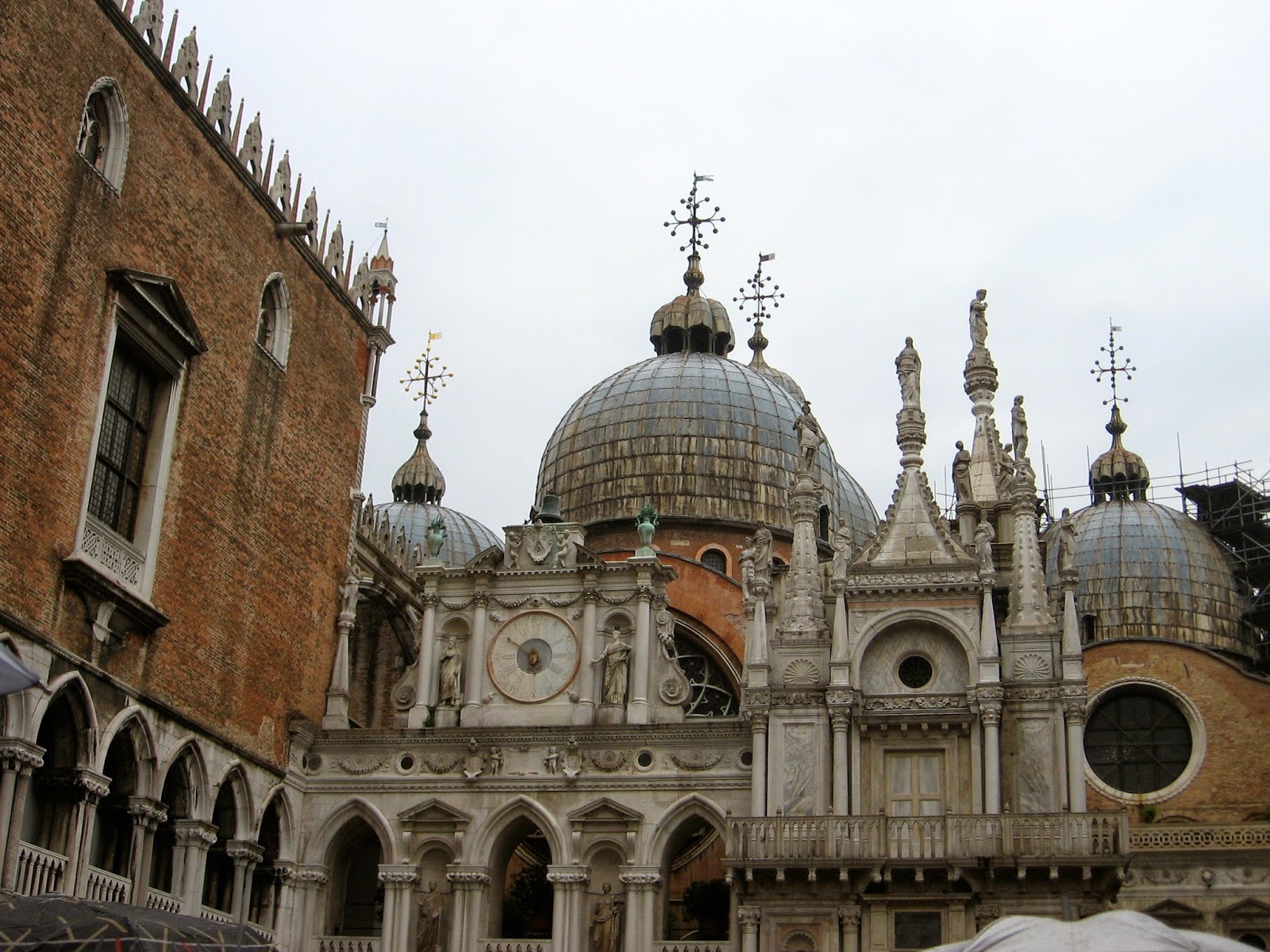
Across from the campanile is the Palazzo Ducale, or the Palace of the Doges, built of pink and white limestone in the Venetian Gothic style .
Doge's Palace, Venice
A wide promenade, the Riva degli Schiavoni, runs along the water's edge from the Doge's Palace to the Arsenal, the shipbuilding yards of Venice.
Gondolas on the Riva degli Schiavoni
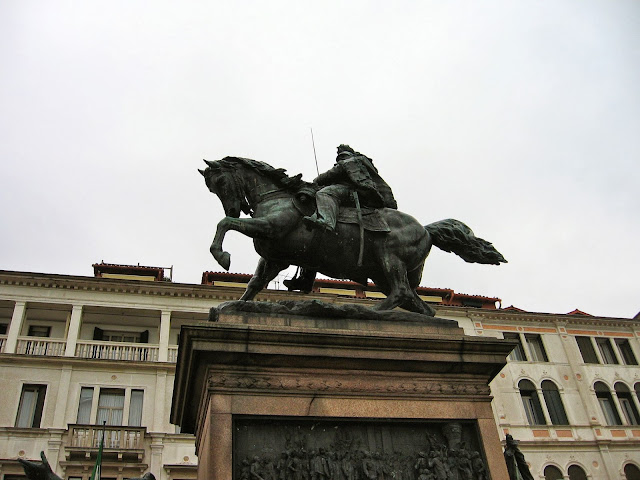
A stroll along the promenade takes you past the Vitorrio Emmanuel II monument.
Vittorio Emanuel II Monument
The Tourist, a 2010 movie starring Johnny Depp and Angelina Jolie, was filmed at the nearby Hotel Danieli.
Floral Display at the Hotel Danieli
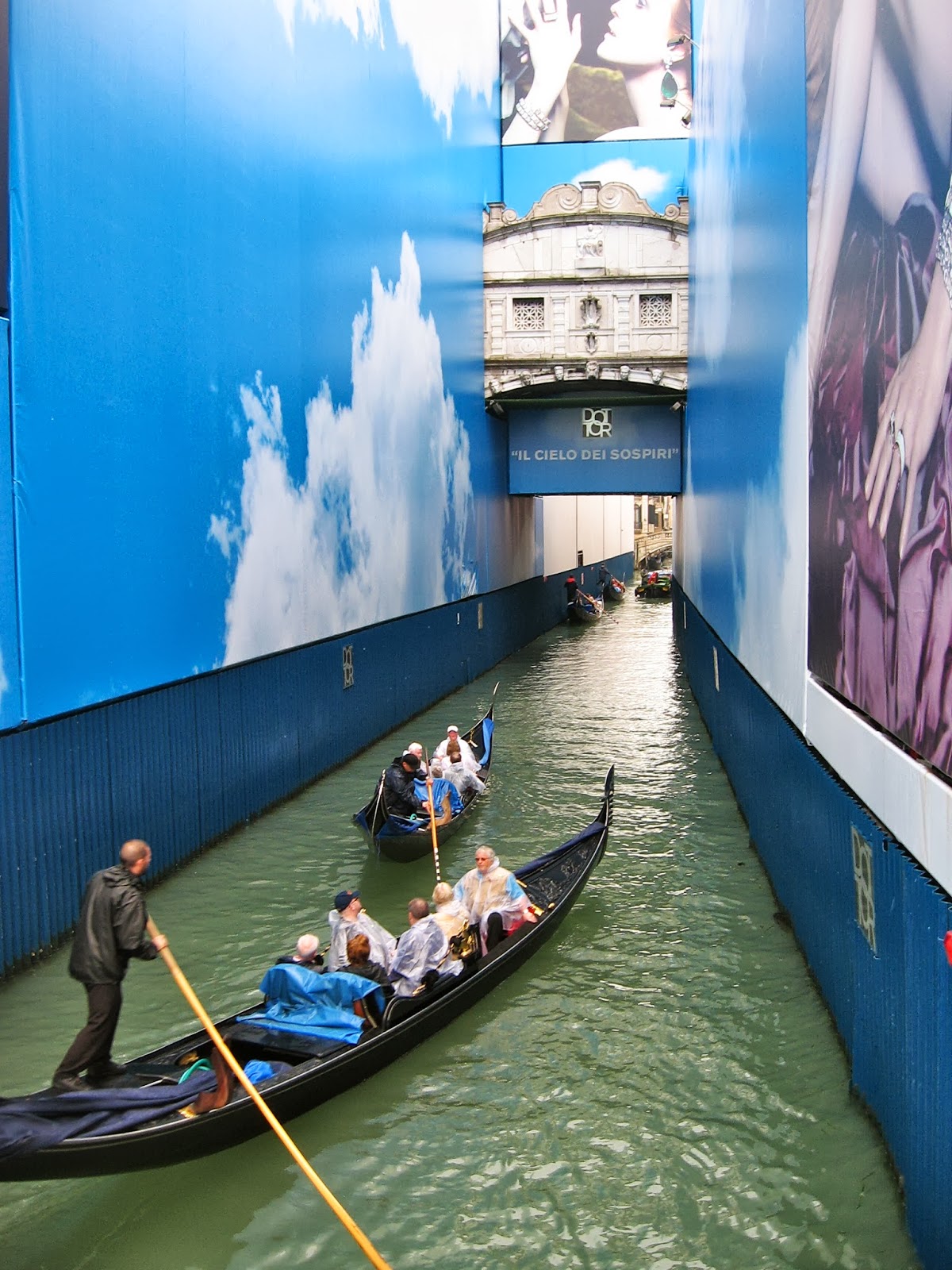
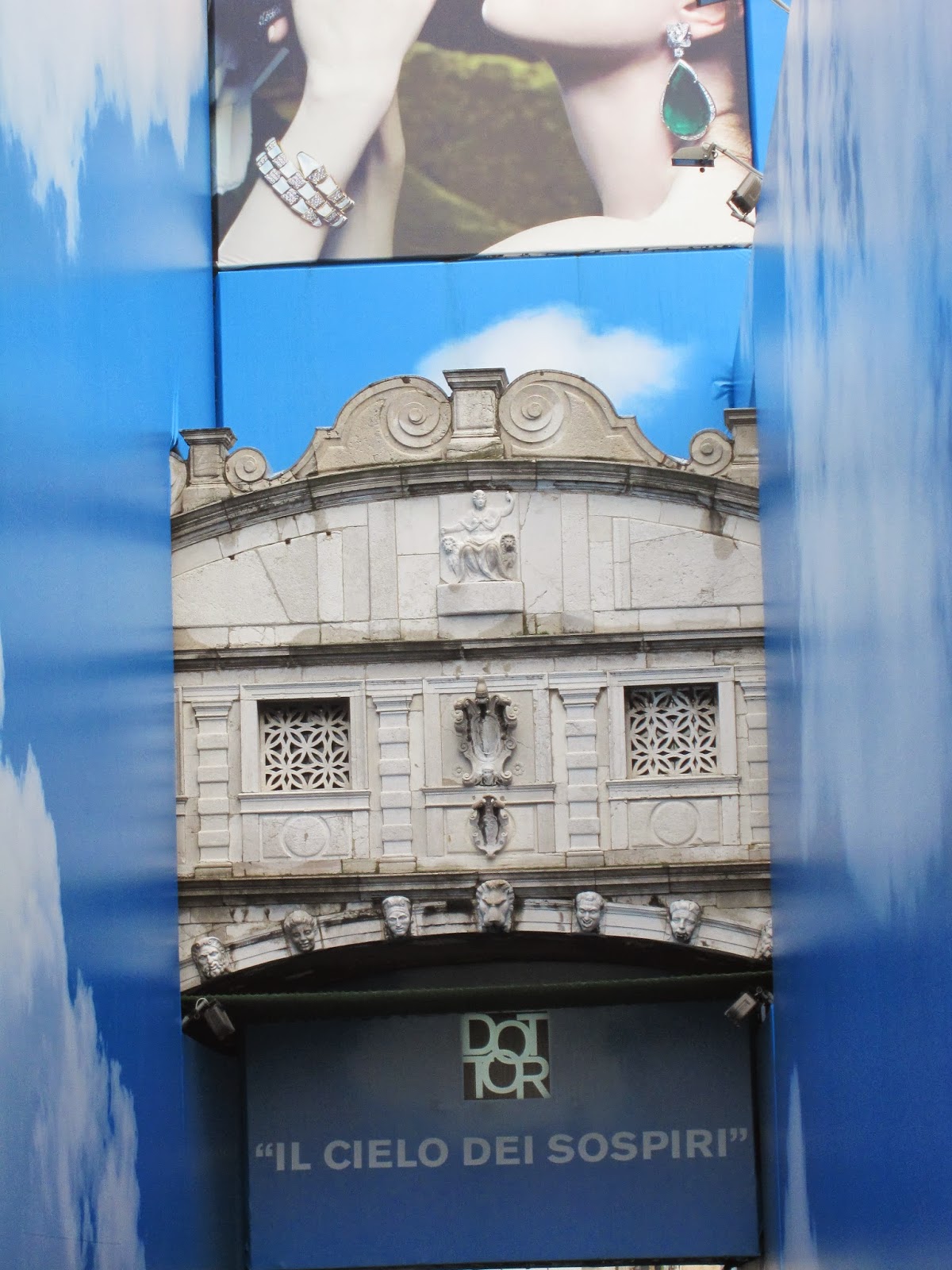
If you encounter a crowd atop a small bridge, they have stopped to admire Il Ponte dei Sospiri, or the Bridge of Sighs.
Bridge of Sighs
The bridge was named by Lord Byron for the sighs of prisoners as they took their last look at freedom, and the beauty of Venice, before being led to the Doge's prison. Giacomo Casanova was the prison's most famous captive - and he managed to escape.
The Doge's Prison
Beyond Venice in the lagoon, the island of Murano is famous for its glass blowing factories. The factories were located outside of Venice to protect the population from the dangers of fire, and also to protect the glass makers' secrets.
The Island of Murano
The Lighthouse of Murano
The Art of Glass Blowing
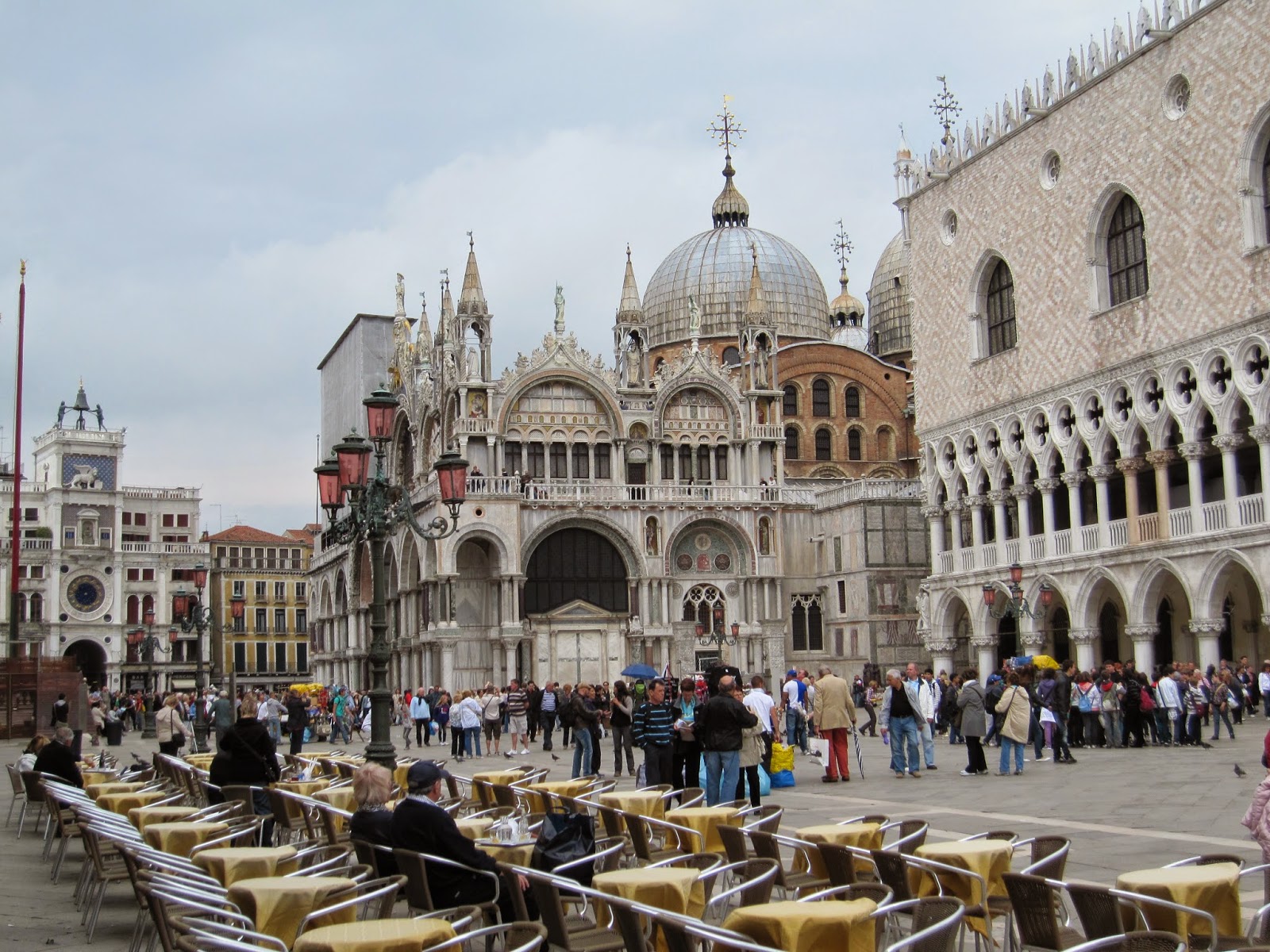
Back at Piazza San Marco, Robert Langdon approaches the basilica of St. Mark's.
Piazzetta di San Marco
St. Mark's Basilica
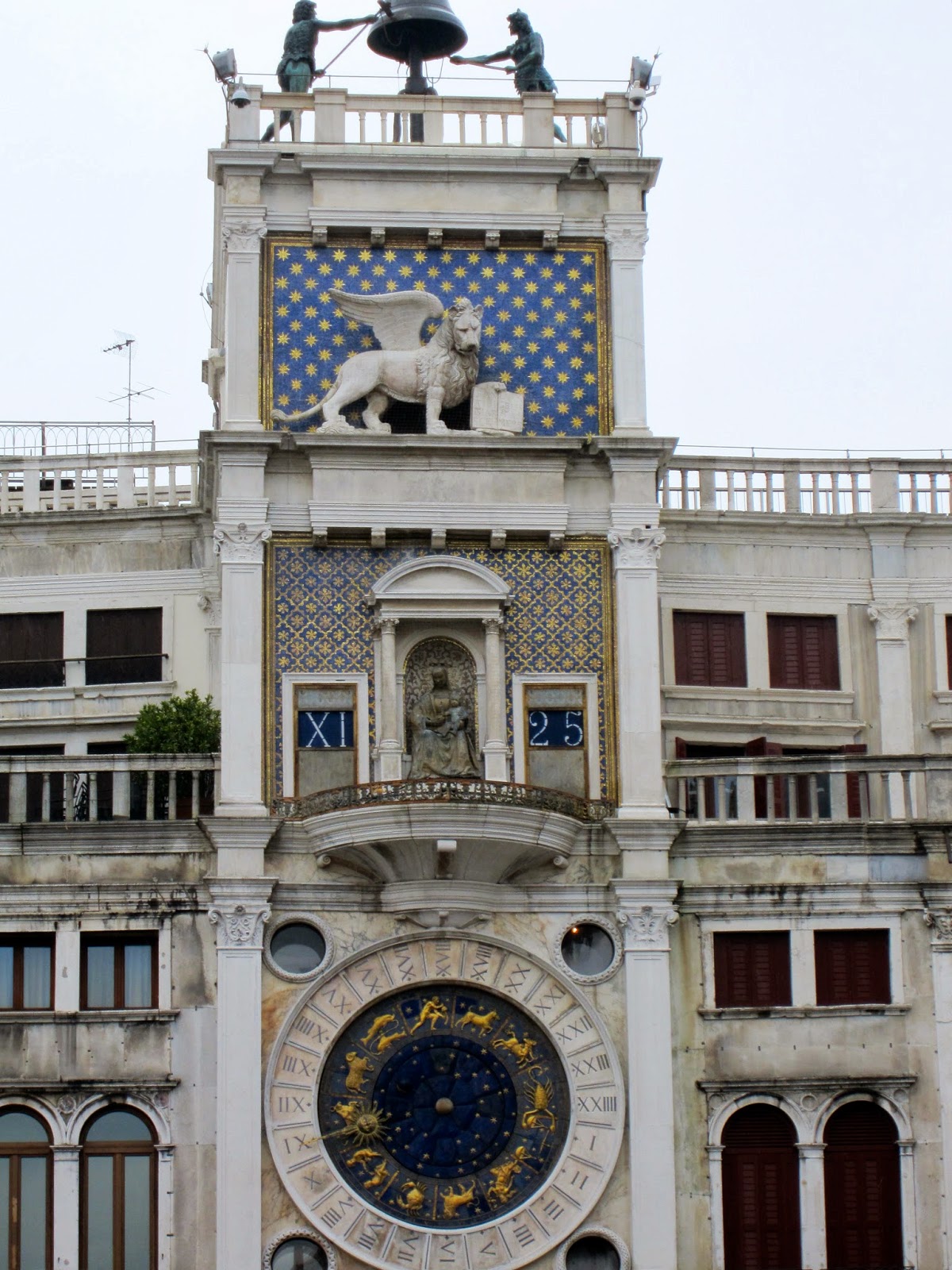
Another lion keeps watch from St. Mark's Clock Tower.
St. Mark's Clock Tower
Astronomical Clock
Beneath the Clock Tower is an archway which leads to the Mercerie, the main shopping street of Venice that runs between Piazza San Marco and the Rialto Bridge.
Clock Tower Archway
On the central peak of the basilica, a statue of St. Mark stands over the bronze horses looted from Constantinople during the Crusades. Centuries later, Napoleon sent the horses to Paris to sit on top of the Arc de Triomphe. The original horses are now inside the basilica - the ones outside are copies.
y la Omega, principio y fin, dice el Señor, el que es y que era y que ha de venir, el Todopoderoso.
16. Apocalipsis 1:11que decía: Yo soy el ALFA y la Omega, el primero y el último. Escribe en un libro lo que ves, y envíalo a las siete iglesias que están en Asia: a Efeso, Esmirna, Pérgamo, Tiatira, Sardis, Filadelfia y Laodicea.
17. Apocalipsis 2:27y las regirá con vara de hierro, y serán quebradas como vaso de ALFArero; como yo también la he recibido de mi Padre;
18. Apocalipsis 21:6Y me dijo: Hecho está. Yo soy el ALFA y la Omega, el principio y el fin. Al que tuviere sed, yo le daré gratuitamente de la fuente del agua de la vida.
19. Apocalipsis 22:13Yo soy el ALFA y la Omega, el principio y el fin, el primero y el último.
1. Mateo 5:22 Pero yo os digo que cualquiera que se enoje contra su hermano, será culpable de juicio; y cualquiera que diga: Necio, a su hermano, será culpable ante el concilio; y cualquiera que le diga: Fatuo, quedará expuesto al INFIERNO de fuego.
2. Mateo 5:29 Por tanto, si tu ojo derecho te es ocasión de caer, sácalo, y échalo de ti; pues mejor te es que se pierda uno de tus miembros, y no que todo tu cuerpo sea echado al INFIERNO.
3. Mateo 5:30 Y si tu mano derecha te es ocasión de caer, córtala, y échala de ti; pues mejor te es que se pierda uno de tus miembros, y no que todo tu cuerpo sea echado al INFIERNO.
4. Mateo 10:28 Y no temáis a los que matan el cuerpo, mas el alma no pueden matar; temed más bien a aquel que puede destruir el alma y el cuerpo en el INFIERNO.
5. Mateo 18:9 Y si tu ojo te es ocasión de caer, sácalo y échalo de ti; mejor te es entrar con un solo ojo en la vida, que teniendo dos ojos ser echado en el INFIERNO de fuego.
6. Mateo 23:15 ¡Ay de vosotros, escribas y fariseos, hipócritas! porque recorréis mar y tierra para hacer un prosélito, y una vez hecho, le hacéis dos veces más hijo del INFIERNO que vosotros.
7. Mateo 23:33 ¡Serpientes, generación de víboras! ¿Cómo escaparéis de la condenación del INFIERNO?
8. Marcos 9:43 Si tu mano te fuere ocasión de caer, córtala; mejor te es entrar en la vida manco, que teniendo dos manos ir al INFIERNO, al fuego que no puede ser apagado,
9. Marcos 9:45 Y si tu pie te fuere ocasión de caer, córtalo; mejor te es entrar a la vida cojo, que teniendo dos pies ser echado en el INFIERNO, al fuego que no puede ser apagado,
10. Marcos 9:47 Y si tu ojo te fuere ocasión de caer, sácalo; mejor te es entrar en el reino de Dios con un ojo, que teniendo dos ojos ser echado al INFIERNO,
11. Lucas 12:5 Pero os enseñaré a quién debéis temer: Temed a aquel que después de haber quitado la vida, tiene poder de echar en el INFIERNO; sí, os digo, a éste temed.
12. Santiago 3:6 Y la lengua es un fuego, un mundo de maldad. La lengua está puesta entre nuestros miembros, y contamina todo el cuerpo, e inflama la rueda de la creación, y ella misma es inflamada por el INFIERNO.
13. 2 Pedro 2:4 Porque si Dios no perdonó a los ángeles que pecaron, sino que arrojándolos al INFIERNO los entregó a prisiones de oscuridad, para ser reservados al juicio;
y la Omega, principio y fin, dice el Señor, el que es y que era y que ha de venir, el Todopoderoso.
16. Apocalipsis 1:11que decía: Yo soy el ALFA y la Omega, el primero y el último. Escribe en un libro lo que ves, y envíalo a las siete iglesias que están en Asia: a Efeso, Esmirna, Pérgamo, Tiatira, Sardis, Filadelfia y Laodicea.
17. Apocalipsis 2:27y las regirá con vara de hierro, y serán quebradas como vaso de ALFArero; como yo también la he recibido de mi Padre;
18. Apocalipsis 21:6Y me dijo: Hecho está. Yo soy el ALFA y la Omega, el principio y el fin. Al que tuviere sed, yo le daré gratuitamente de la fuente del agua de la vida.
19. Apocalipsis 22:13Yo soy el ALFA y la Omega, el principio y el fin, el primero y el último.
Surrounded by legend. Steeped in mystery. Baffling, bewildering and perplexing. These magnificent bronze horses that pranced high above the arched loggia of St. Marks Basilica in Venice for 500 years have been talked about for centuries, even to this day.
They excite me and fuel my imagination. As I did some research on their beginnings and followed their trail throughout the centuries, I was amazed. It was a trail full of twists and turns that brought them safely ‘home’ to Venice in the end.
St. Marks Basilica and square~ the bronze horses stood above the central arch over the mosaic
Horses (copies) on St. Marks Basilica today
*
Believed to have originally been part of a quadriga, four horses pulling a chariot and driver, their composition is unusual. Made of 98% copper, 1% lead and 1% tin to give a more satisfactory guild, they are the only creations of this mix to survive from antiquity. They were created with long legs and short backs as if to be viewed from below.
Quadriga on top of Victor Emanuel in Rome
Who cast the gilded bronze into these dreamlike mythical horses? Were they loot from Rome, or Greece? Why is their history so vague? So mystifying?
The dawn of their forging has been attributed to classical antiquity, created by the famed Greek sculptor Lysippos in the 4th century BC. Lysippos contrived portraits for Alexander the Great, some of which were equestrian statues.
Alexander the Great on horseback believed to be sculpted by Lysippos
Curiously, the ears of the four horses of St. Marks and Alexanders horse are almost identical. For this reason, many art historians have drawn conclusions that they were made by the same person. Hmmm….could be.
Hippodrome of Constantinople-Believed Horses stood atop Central Arch.
What is certain about the horses is that they did stand atop the Hippodrome in Constantinople, placed there by emperor Constantine in the mid 320’s, to commemorate the chariot races. And there they stayed for 900 years. But what happened prior to this time?
No one knows for sure. Speculations abound. It is thought that the four “Lysippos” horses were brought to Rome by Nero. Evidently he had it in his mind to use them as decor at his Golden Palace (Domus Aurea).
Domus-Aurea-what’s left of it.
The Fourth crusade, which became the conquest of Constantinople in the early 13th century, set out to travel by sea. Realizing their need for assistance in getting across the water, they worked out a deal with the Doge of Venice. He was up for it provided they delivered a big chunk of the booty to him as repayment. Prominent in the looted goods from Constantinople were the four horses, which the Doge claimed for himself, along with several other treasures displayed in St. Marks today.
Doge Enrico Dandolo
The four horses were not put up on St. Marks Basilica immediately, but stored in the arsenal which left them a constant temptation for metal-hungry cannon makers. A later Doge put them above the loggia of the basilica as a symbol of Venetian power. There they rested for 500 years. Yet there was more to come.
Napoleon looted Venice in 1797, escaping with crates of masterpieces, the famed winged Lion of St. Mark, and the four gilded horses. All were shipped off to Paris, where the horses, along with a chariot, set atop the Arc du Carrousel, the triumphal arch on the Tuileries end of the Champs-Elysees.
Arc du Carrousel, Paris
In 1815, Vienna sent them back to Venice. Then during world war I, they were moved to Rome for safe keeping. Later during the war (1942), they were removed yet again and hidden in a Benedictine abbey at Praglia, to be returned to St. Marks after the war.
Today, copies of the four horses stand above the central loggia on St. Marks Basilica. The original horses have suffered from pollution and are housed in the museum inside the basilica.
Original Horses housed in the museum in St. Marks Basilica
It has been a long and winding road for these remarkable bronze beauties. They prance proudly through time immortal, bearing themselves exquisitely. Their allure and magnificence, adored by the ancient Greeks and Romans, valued enough to be looted and transported from country to country, has brought these mighty beasts worldwide reverence. Who really knows when and how they came into being. They reserve the right to remain mysterious. It is enough that they stay as they are, beautiful and free, ancient yet everlasting.
“Dance above ground, never descending. Grace Incarnate, Passion on Hooves….”


 Tema anterior
 Primer