As the first test run(s) have been made and I've worked on the car a bit I've now experienced the original design, and I've come with some updates for the car. I'll share with you the bigger changes to the car:
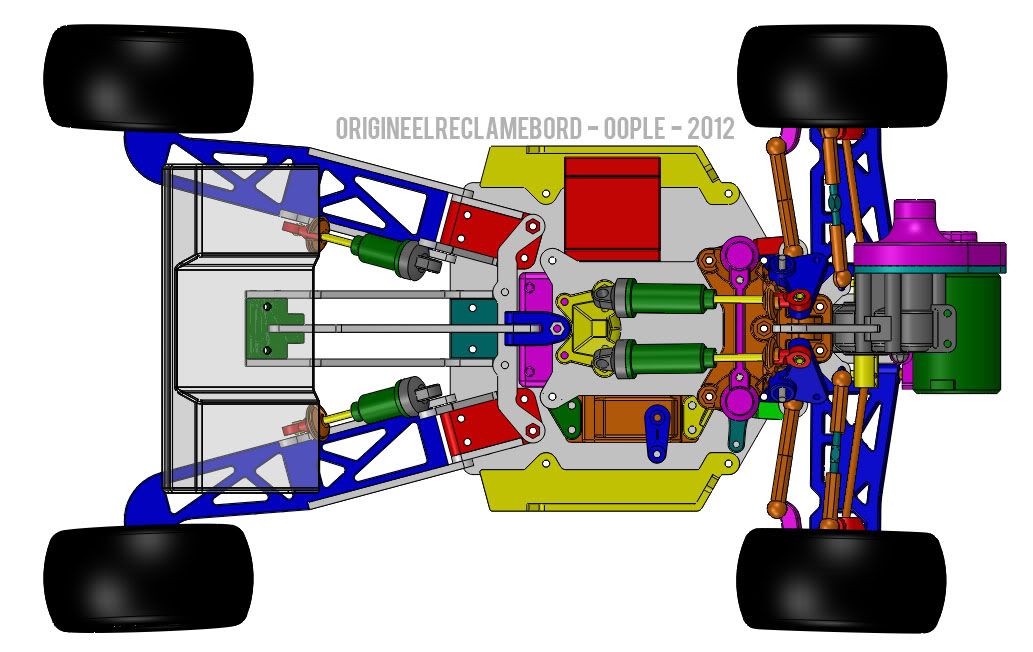
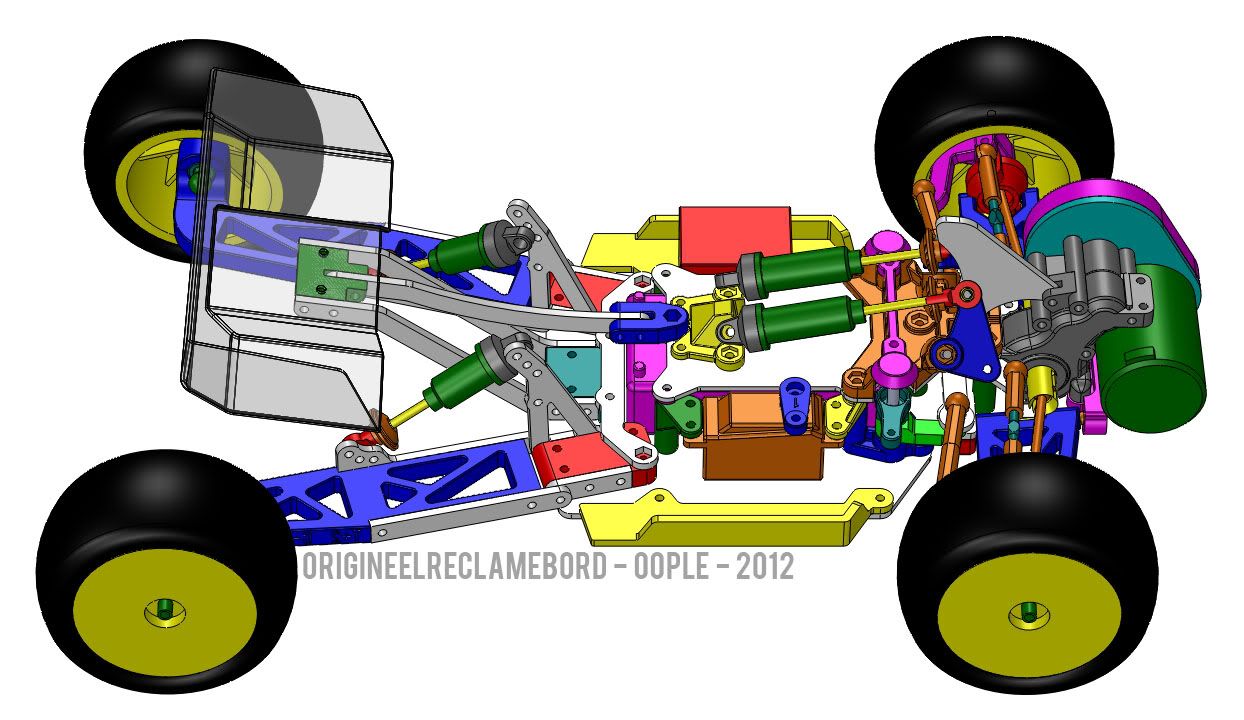
Most obvious probably is the holes in the suspension arms. This allows to increase the print fill without using more material: In short, the part is reinforced in the crucial areas.
The sidepods are not really as much a revision as something I couldn't model until I knew the approximate width of the body that would go on the car.
Keen eyes will also have spotted the following update:
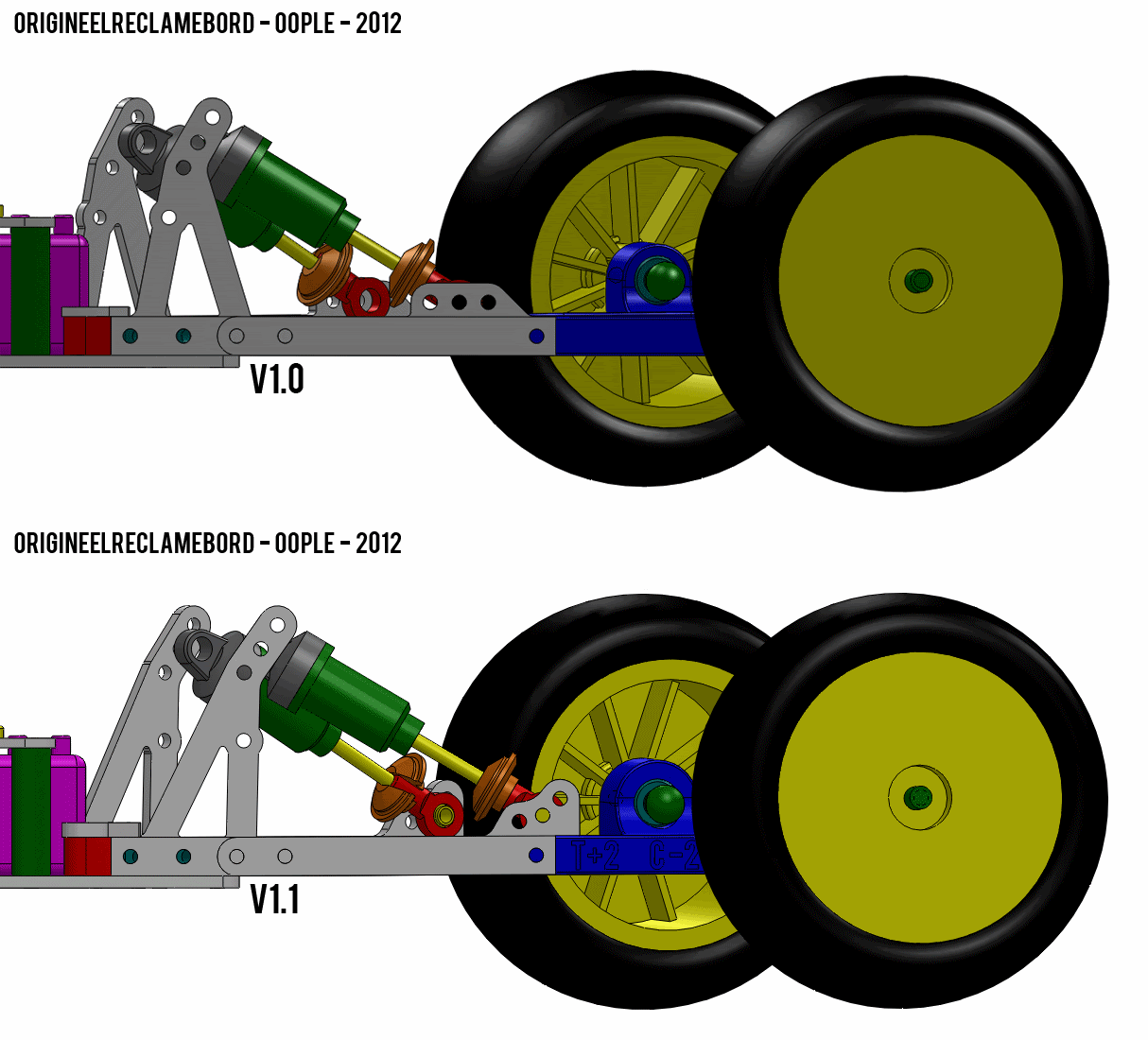
On first glance it would affect the car in a bad way: higher CoG and weight balance further to the rear (and slightly outside). Upon the build of the V1.0 parts I came across a problem: the rear end had too much suspension movement when using the upper and lower middle holes. The only solution was to use the top hole on top and the rear of the three mounting holes on the suspension arm. I also found I needed a lot of spacing (some 5mm) to mount the damper to the rear of the three holes. The revised version solves these issues, as well as making sure the outermost settings are not used for what should become the basic setup of the car.
(The image also shows extra material around the rear axle on the rear suspension arm and the text on the side instead of the top of the arm).
Moving to the front end, I found that the outside wheel didn't seem to have enough steering compared to the inside one: the Ackermann angle was off. The image below is approximation of the old and new Ackermann geometry at approximately level suspension arms:
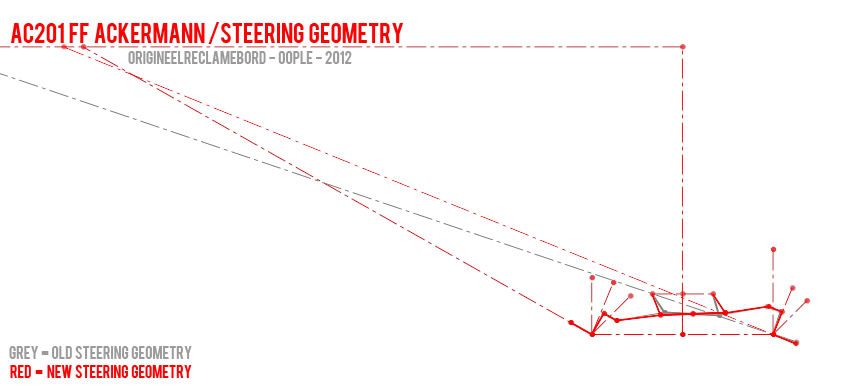
It's quite a difference

Thanks to making the steering plate 10mm? wider (and putting the ball joints, which are the pivoting points of the steering plate, also 10mm further apart) the new geometry is reached. The inside wheel should still pull to the same angle, whilst the outside wheel on the new geometry is pushed to a bigger angle than before (some 5 degrees I think)? I think this should remove some of the understeer the car had, along with less tire wear and the ability to accelerate a little earlier out of the corners. It should also have a smaller turning radius (though I'm not sure how much use that is as long as the car can run on it's 'best' racing line).
And last but not least, I did some improvements to make maintainance easier:
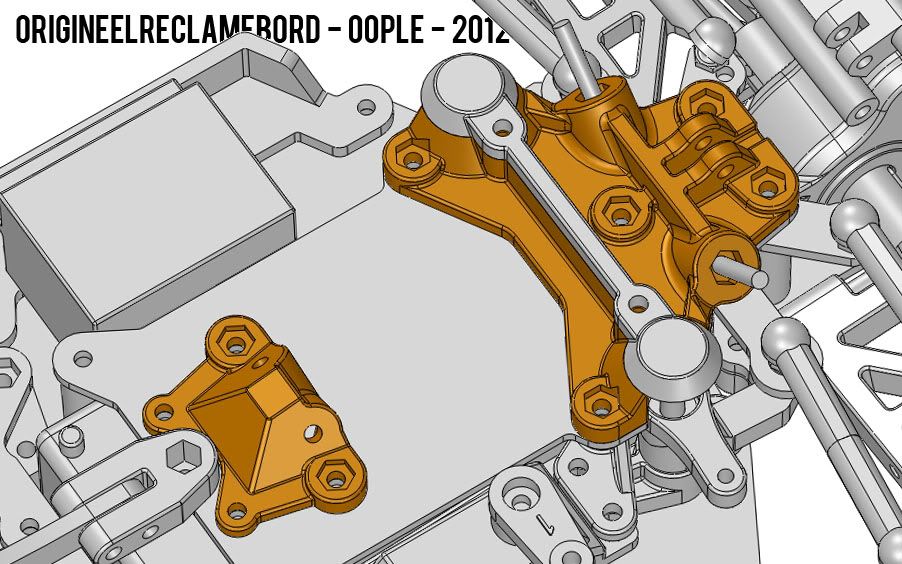
The rocker arm/steering frame was difficult to remove, making the whole top chassis time consuming to remove (which in term makes it an absolute pain to replace/setup/change anything on the front lower suspension or gearbox).
Using some embossed pieces with hex shaped debosses in them, the strength of the original part is retained whilst also enabling me to undo the part just using a screwdriver. In addition to that, I decided to add more material around the rocker arm axles, as well as using large fillets to distribute stresses better.
The frame that holds the top mounts of the dampers was also rather an unpractical part. It's still not optimal (removing it from the top chassis won't go very quickly, but at least now the dampers can actually be removed from the block without taking the whole top chassis plate off
(It's not visible how I solved that on this picture, I'll add it later).
That's all for now... I'm curious to see what effect the updates have to the track and trackside experience
